
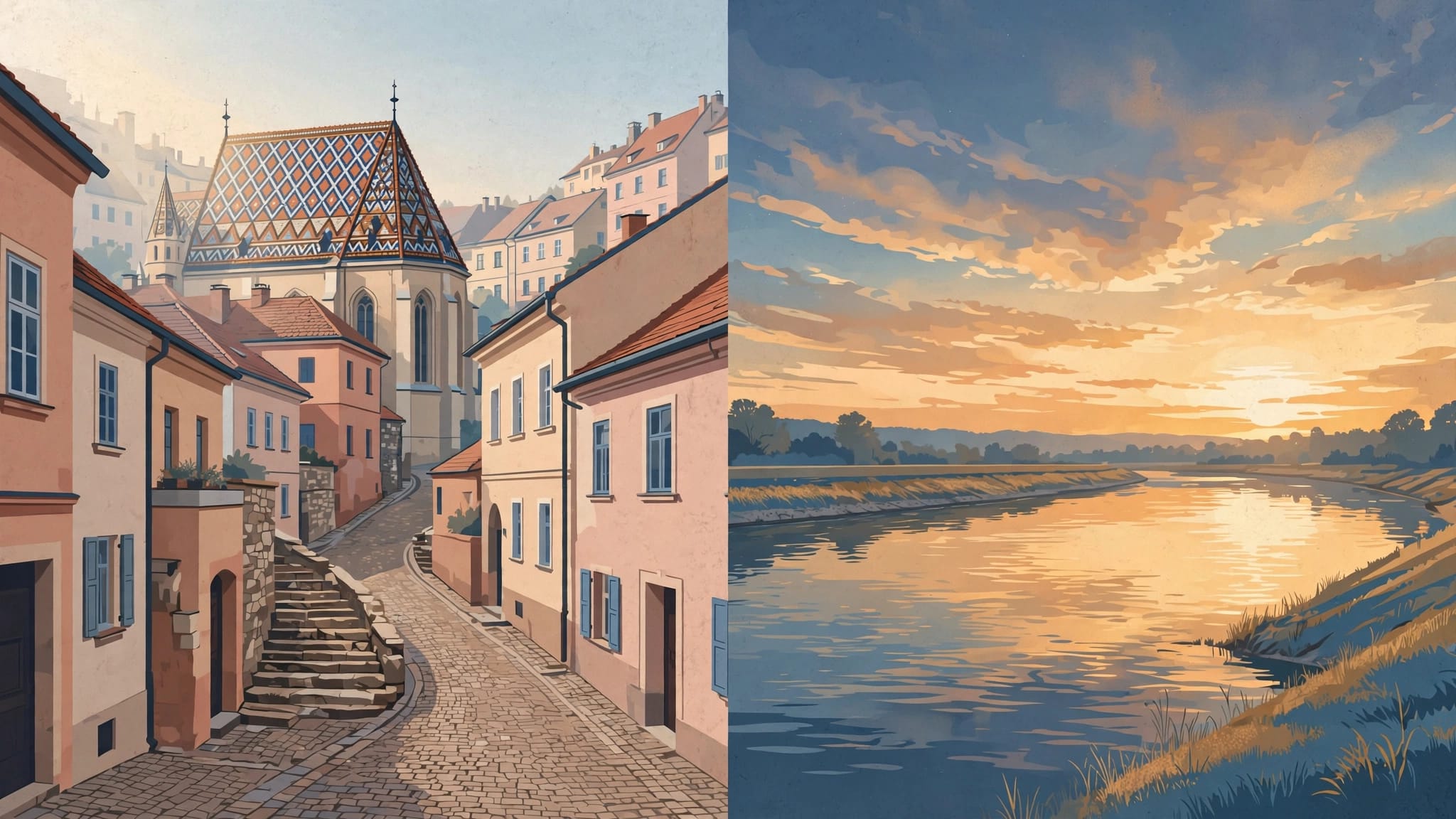
Zagreb rewards photographers who slow down. Its strongest frames often sit a few blocks apart, where a tiled church roof, worn stone steps, and a broad riverbank catch entirely different moods.
The best Zagreb photo spots pair Upper Town’s close textures with the open sky beside the Sava. Bring comfortable shoes, leave room on your memory card, and plan around changing light rather than a rigid shot list.
Why Upper Town is Zagreb’s strongest photo district
Gornji Grad, also called Upper Town, is Zagreb’s oldest core. It is compact enough to explore on foot, yet every short turn changes the composition. One lane narrows between pale facades. Another opens onto rooftops and church towers.
The official Upper Town guide confirms that the district is free to enter and open daily. Reach it uphill through Radićeva Street and Stone Gate, or use the funicular when you want to save energy for the long walk ahead.
Work the slopes, not just the landmarks
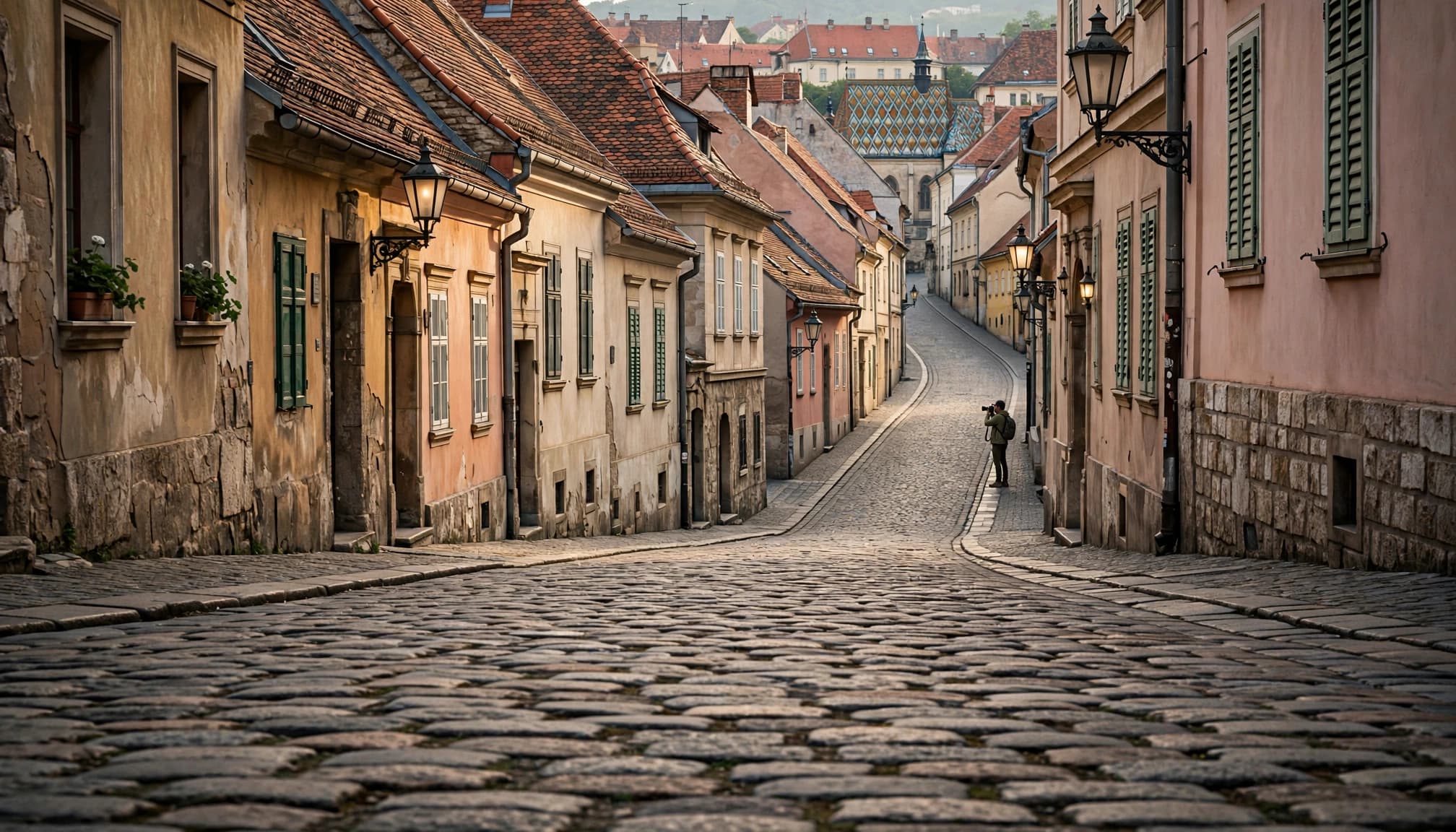
Upper Town’s inclines give street scenes a built-in sense of depth. Stand low on a slope, use a 35mm or 50mm equivalent lens, and let the paving stones run toward a doorway or tower.
Travel light. Heavy bags make the stairs miserable.
Look for frames that include a near detail, such as a lamp or wall edge, then let the street recede behind it. The old town can feel quiet even near its headline sights, especially before the cafes fill.
St. Mark’s Square without the obvious postcard frame
St. Mark’s Church is one of the most recognizable Zagreb photo spots, thanks to its patterned roof bearing the coats of arms of Zagreb and the former Triune Kingdom. The building stands in a broad square, so a standard head-on photograph is easy. A memorable image needs a different choice.
The Zagreb Tourist Board’s St. Mark’s Church page lists regular Mass times, so keep the atmosphere respectful and avoid treating worshippers as background props.
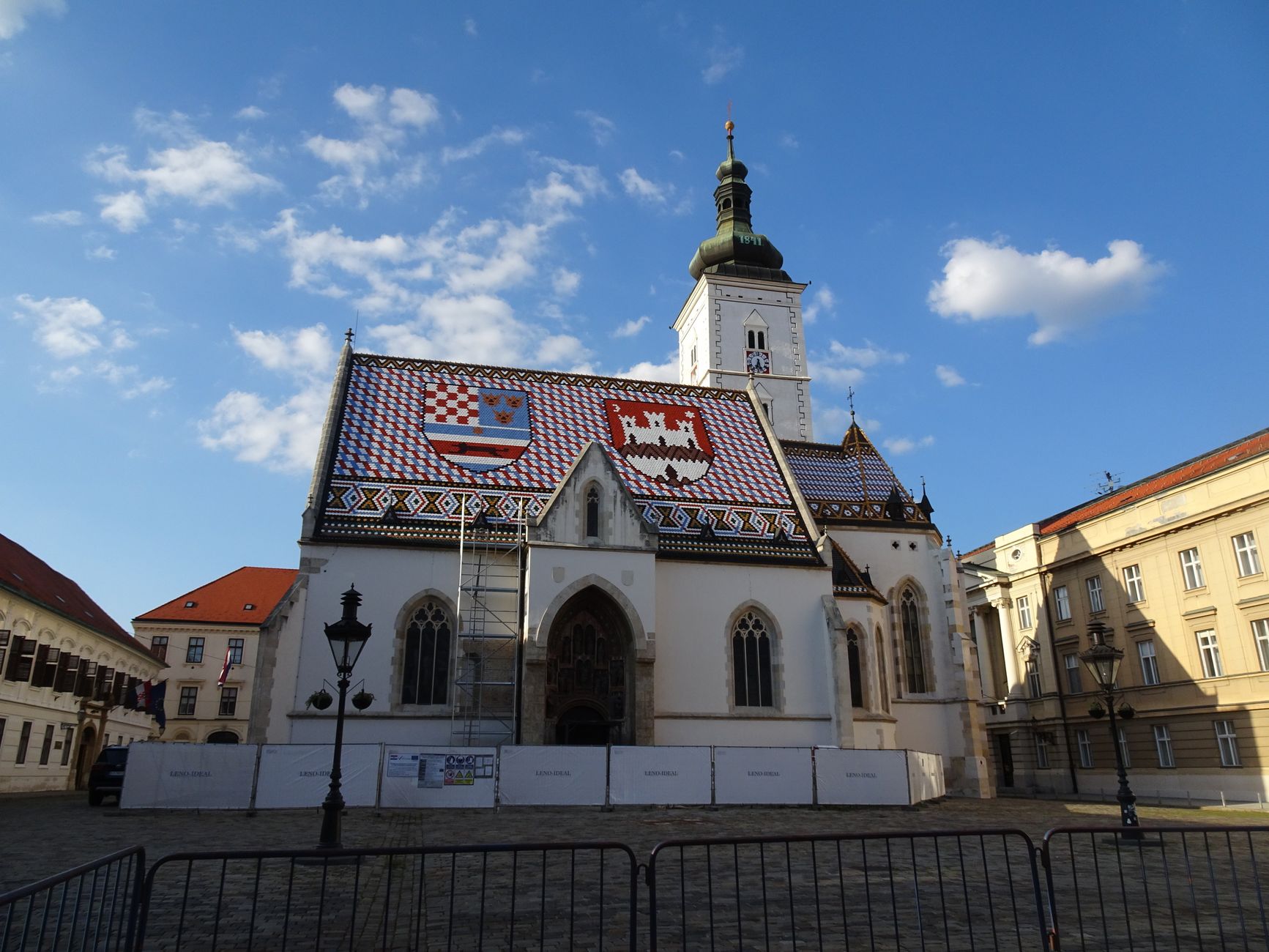
Photo by Lajos Kristóf Kántor
Use angles that make the roof work harder
Walk toward the church from the edge of the square and shoot at a slight diagonal. This gives the roof pattern a stronger sweep than a centered view. A moderate telephoto lens can also compress the tiles and pull the church closer to the surrounding facades.
In late afternoon, expose for the lighter roof rather than the shadowed walls. RAW files handle the contrast well, but clipped highlights in the white tiles are hard to recover.
No postcard sheen, either. A muted edit usually suits the square better than oversaturated reds and blues.
Include the civic setting
The square contains more than the church. Government buildings, plain walls, and open paving give the frame context. With a wide lens, place St. Mark’s off-center and leave generous negative space around it.
On one September evening, a brief shower cleared the square faster than expected. The wet paving caught a faint reflection of the tiled roof, while one umbrella crossed the frame near the church steps. That single moving figure gave an otherwise familiar scene its scale.
Stone Gate and Radićeva Street compositions
The Stone Gate is a threshold, not a quick box to tick. As the only surviving entrance to Zagreb’s old fortifications, it connects the busier lower approach with Upper Town’s smaller streets. The official Stone Gate history also describes it as the city’s most important shrine.
Photograph the passage with restraint
Inside, candles and devotional objects make the space meaningful to local visitors. Don’t block the passage with a tripod. Keep your shutter quiet if possible, avoid flash, and move aside when people stop to pray.
Frame the arch as a darker border around the light outside, then wait for one person to pass at the far end. Meter for the exterior and let the interior fall into shadow. The contrast gives the image a sense of arrival without revealing every detail.
Follow Radićeva uphill for layers
Radićeva Street is useful before and after Stone Gate because it mixes tram-era city energy with the climb toward medieval Zagreb. Step into a side position rather than standing in the center. Then use building edges to contain the movement uphill.
A 24mm lens captures the steepness and nearby facades. Switch to 70mm when you want to isolate a window, roofline, or a pedestrian against the rising street. These small, observant scenes often outlast a wide landmark shot.
Lotrščak Tower, stairs, and evening viewpoints
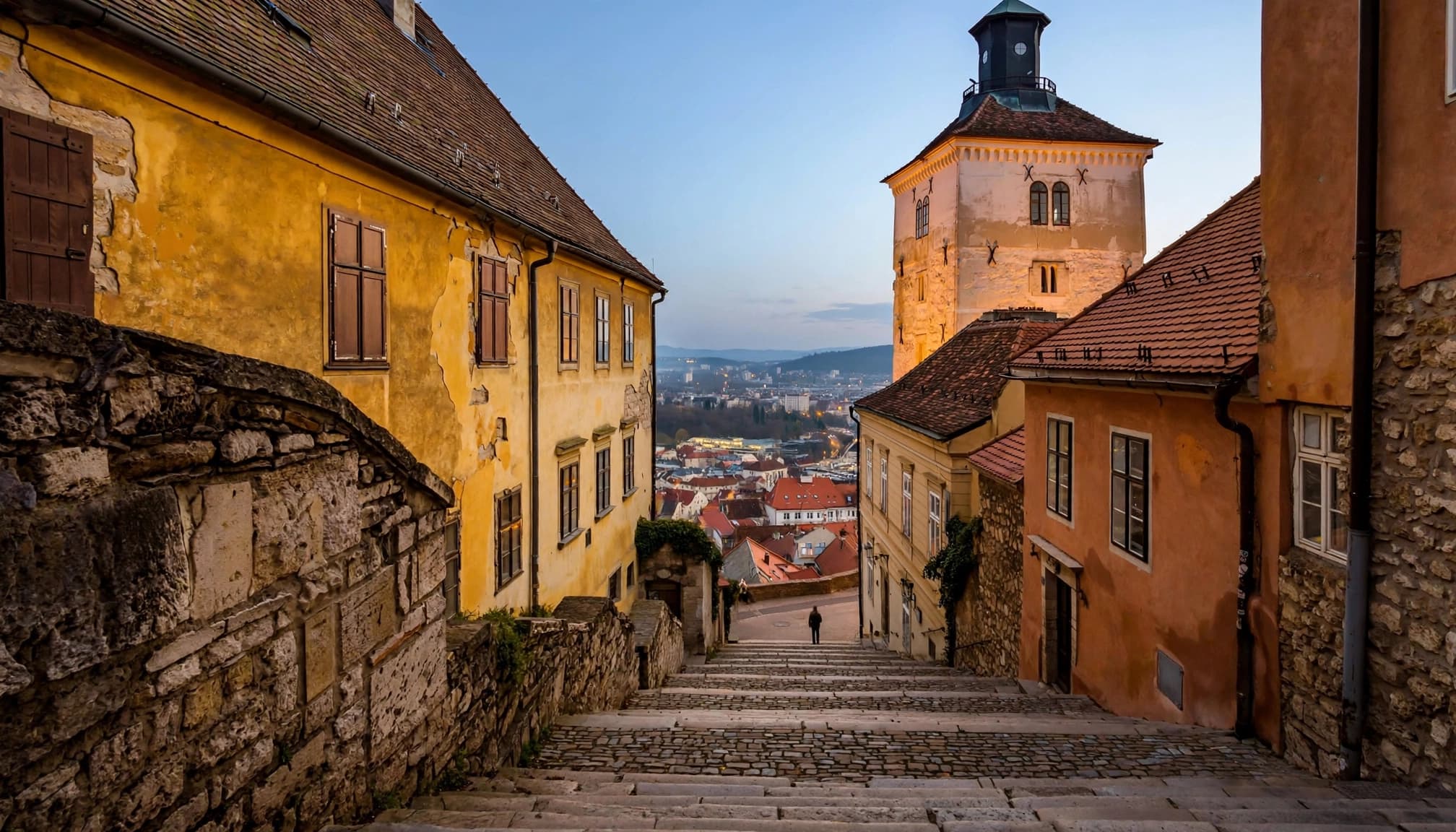
Lotrščak Tower anchors the western side of Upper Town. It sits near the funicular and the Strossmayer promenade, where the city drops away toward Lower Town. The Lotrščak Tower visitor page lists current access details, including seasonal hours, so check it before building a sunset plan around the tower interior.
Time your visit around the noon cannon
The Grič cannon fires at noon. If you are nearby then, protect your ears and keep your camera steady. The sound is abrupt, and it can interrupt a carefully timed exposure.
For architecture, arrive earlier than noon or return later. The warmer light gives masonry and painted facades more separation, while the tower’s hard angles become useful leading lines.
Let blue hour simplify busy scenes
After sunset, the blue sky can balance warm streetlights and reduce distracting color. Keep ISO low if you use a tripod, but a small tabletop tripod or stabilized hand-held setup is less intrusive on narrow paths.
Wait for rain. Damp stone holds light longer.
Strossmayer promenade is a good place to pause, but don’t expect a clear panorama at every point. Use branches, railings, and partial rooftops as framing devices. A long exposure can soften passing traffic below, although it will not remove a crowd beside you.
Upper Town photographs often improve when the landmark occupies less than half the frame and the street itself carries the story.
A practical Upper Town photo walk
Start near Ban Jelačić Square in the early morning. Walk up Radićeva Street, photograph Stone Gate with soft side light, then continue through Upper Town to St. Mark’s Square. Save Lotrščak and the promenade for the late afternoon.
This route is short on a map, but cobbles and steps slow it down. Give yourself time to revisit a frame after the light changes.
Pack for streets rather than an expedition
A full-frame body and three lenses can be useful, but they are rarely necessary here. One wide-to-normal zoom, a fast prime, spare battery, microfiber cloth, and compact rain cover fit the terrain better.
Use the following approach when space is limited:
- Keep a 24mm to 70mm equivalent lens mounted for quick shifts between streets and architecture.
- Carry a 35mm or 50mm prime if you want softer evening backgrounds and less weight.
- Bring a polarizer for wet streets or bright sky, but remove it near dusk because it costs light.
- Set automatic ISO with a minimum shutter speed around 1/125 second for walking scenes.
If you bring a tripod, use it only where you won’t restrict a public path. Upper Town is a lived-in neighborhood, not an outdoor studio.
Sava River light after the old town
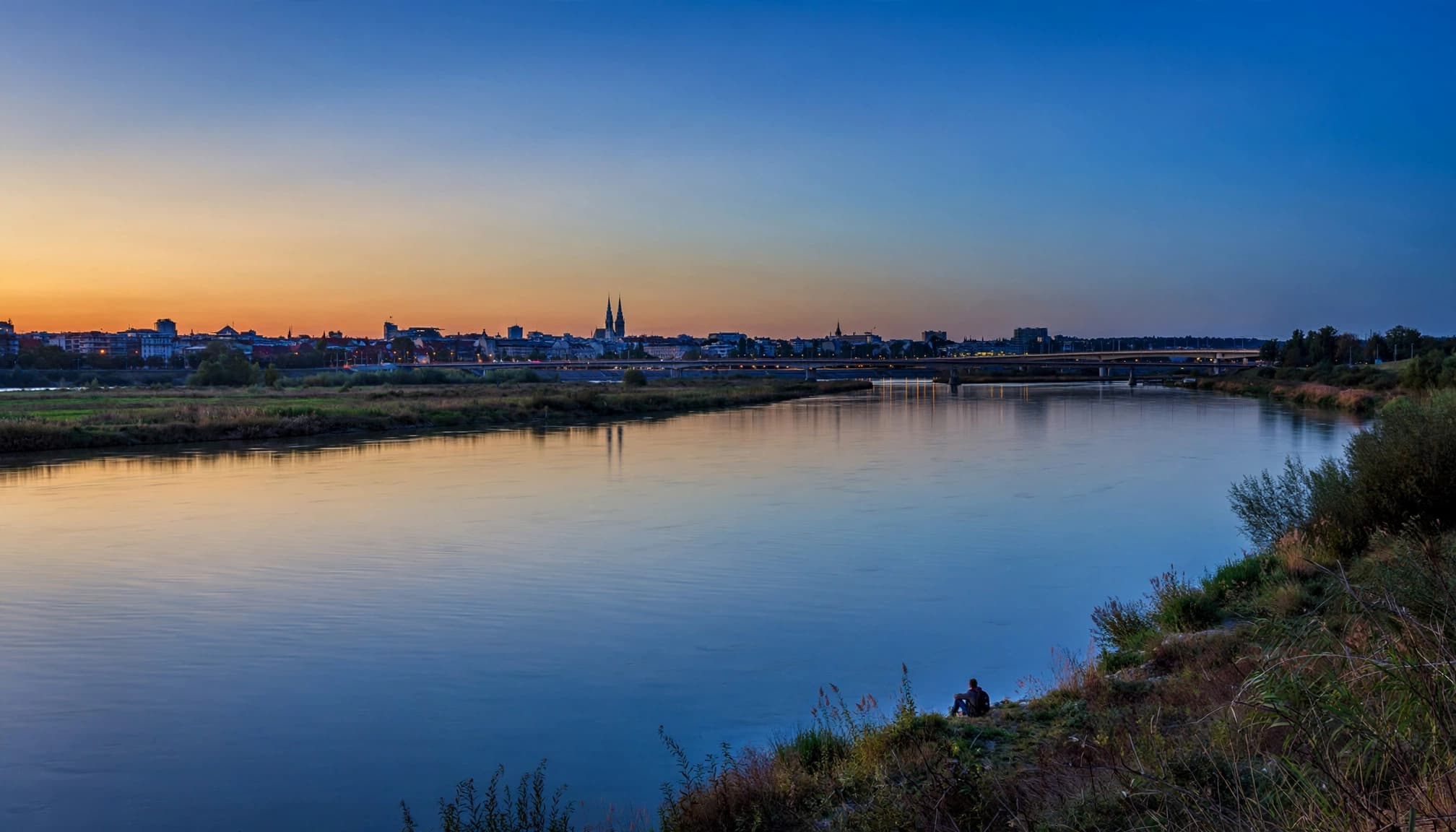
The Sava gives Zagreb a different visual rhythm. Upper Town is about compression, stone, and close detail. The riverbank offers horizontal space, changing clouds, distant bridges, and a broad band of sky.
The Zagreb tourism guide to the city’s water areas calls the Sava embankment a favored place for running and cycling with sunset views. That movement can add life to a wide composition, but keep your position clear of cyclists.
Shoot the embankment before the sun disappears
Arrive at least 45 minutes before sunset. First, look for an uncluttered view across the water, then decide whether the strongest subject is the river, a bridge, the city in the distance, or the sky.
A 70mm to 200mm lens helps compress bridge lines and isolate small pools of light. Meanwhile, a 24mm lens works when clouds develop overhead and the embankment gives you a foreground curve.
The Sava can look subdued in direct daylight, but the low sun changes its surface quickly, especially when broken clouds open near the horizon and lay narrow strips of gold across moving water.
Stay for the cooler color shift
Blue hour is often more reliable than the final orange minute. Set white balance manually if your camera drifts between the remaining daylight and city lamps. Start around 1/15 second hand-held with stabilization, then move to a tripod for longer exposures.
Watch your footing near uneven grass and unlit paths. Keep valuables close, and plan your route back before darkness settles. The quieter setting is part of the appeal, but it also demands more awareness.
Weather, people, and respectful street photography
Zagreb’s weather can turn an ordinary plan into the better shoot. A light rain darkens paving stones and clears some pedestrian traffic. Overcast skies also suit pastel facades because they reduce harsh shadows.
Check local forecasts on the day, then treat wet conditions as an opportunity rather than a failed sunny-day plan. Protect your camera before protecting the shot.
Photograph people as part of the place
A lone walker, a cyclist on the embankment, or a person climbing a street can give scale to a frame. However, avoid close, identifiable portraits without permission. In quiet spaces, distance usually produces a more natural image anyway.
Don’t stand in doorways. Don’t climb walls. Keep drones out of the plan unless you have confirmed the relevant rules and airspace restrictions.
The best Zagreb photo spots reward patience, but they also ask for courtesy. A few extra minutes waiting at the edge of a square will always beat forcing yourself into someone else’s moment.
The frame worth waiting for
Zagreb works best when you let its two speeds remain distinct. Upper Town gives you compressed lines, textured walls, and small human moments. The Sava gives you room to watch light move.
Build the day around changing conditions, not a list of compulsory angles. Zagreb photo spots become more personal when you return to a street or riverbank after the first obvious photograph.
Stay for the final blue light on the Sava, when the river holds a thin reflection beneath the darkening bridge.
