
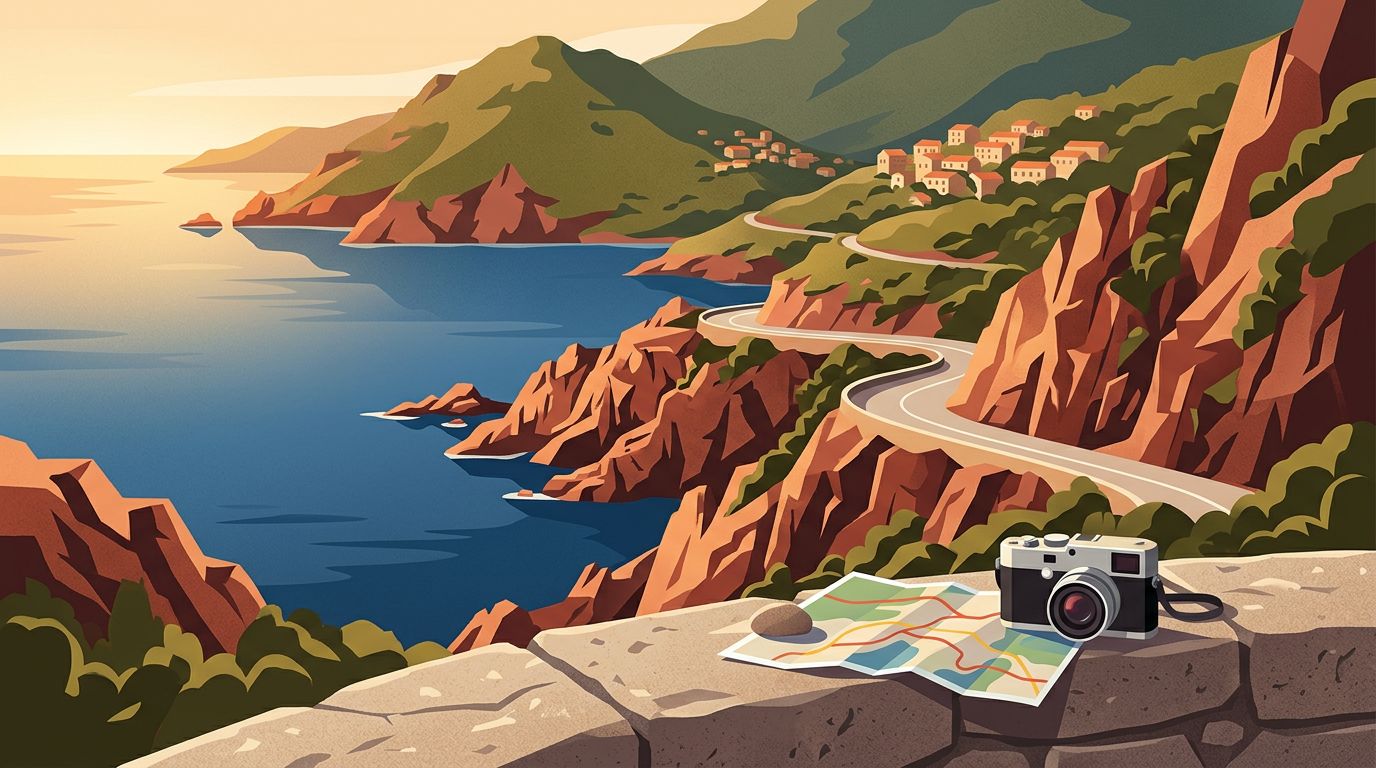
Most journeys through Corsica fail photographs before the shutter opens. Drivers try to cover too much ground, then reach the cliffs under harsh light with nowhere safe to stop.
A Corsica photography road trip works best when you protect time, not mileage. Build your days around dawn, late afternoon, and weather gaps, then let the island’s narrow roads set the pace.
Build a Corsica photography road trip around light
Corsica looks compact on a map, yet a route including Cap Corse, the Calanques de Piana, Corte, and Bavella takes full days because tight bends, passing traffic, photo stops, and weather interruptions repeatedly slow the journey.
Give yourself eight to ten nights if cliffs and mountain villages are both priorities. Shorter trips work, although you should choose either the north and west coast or the interior and south.
Before the first bend
Start before breakfast. Coastal roads are quieter, and village lanes are still empty enough for clean frames without parked cars.
Use Bastia as the northern entry point, then work through Cap Corse before heading west toward Calvi and Porto. The route south can continue inland through Corte and Zonza, then finish near Bonifacio if your return flight allows it.
A useful itinerary anecdote comes from the official North-South road trip outline, which places an overnight in Corte before a Porto and Calanques de Piana day. That order prevents an early mountain departure from swallowing your best coastal light.
Choose bases instead of long transfers
Two-night stays change the trip. Porto gives you repeat access to Piana. Corte gives you mountain weather options. Zonza places Bavella within reach before sunrise.
By sleeping near Porto after the Calanques and near Corte or Zonza for inland nights, you avoid racing across the island at noon, when your subject often sits in hard backlight and your attention belongs on the road.
Keep one day open near Porto and another around Bavella. Weather changes fast. A low cloud ceiling can erase distant ridges, while broken cloud can give granite cliffs far more shape than a cloudless afternoon.
Coastal cliffs worth the slow drive
The coast has two very different photographic moods. Cap Corse is intimate and weathered, with fishing harbors, towers, and steep slopes. Piana is larger in scale, with red rock walls above the Mediterranean.
Cap Corse: harbors, headlands, and old towers
Follow the peninsula slowly through Erbalunga, Nonza, Pino, Centuri, and Macinaggio. Each stop has a different visual rhythm, so don’t treat the circuit as a drive-through attraction.
Erbalunga works for stone houses and its ruined Genoese tower. Nonza is stronger as a graphic scene, with its dark beach below the village. Centuri offers boats, low stone walls, and a harbor tucked beneath the slopes.
The north Corsica travel guide from Bon Traveler is useful for shaping this part of the trip around village stays, wild shorelines, and unhurried driving. Spring and early autumn bring more comfortable walking conditions and fewer busy roadside pull-offs.
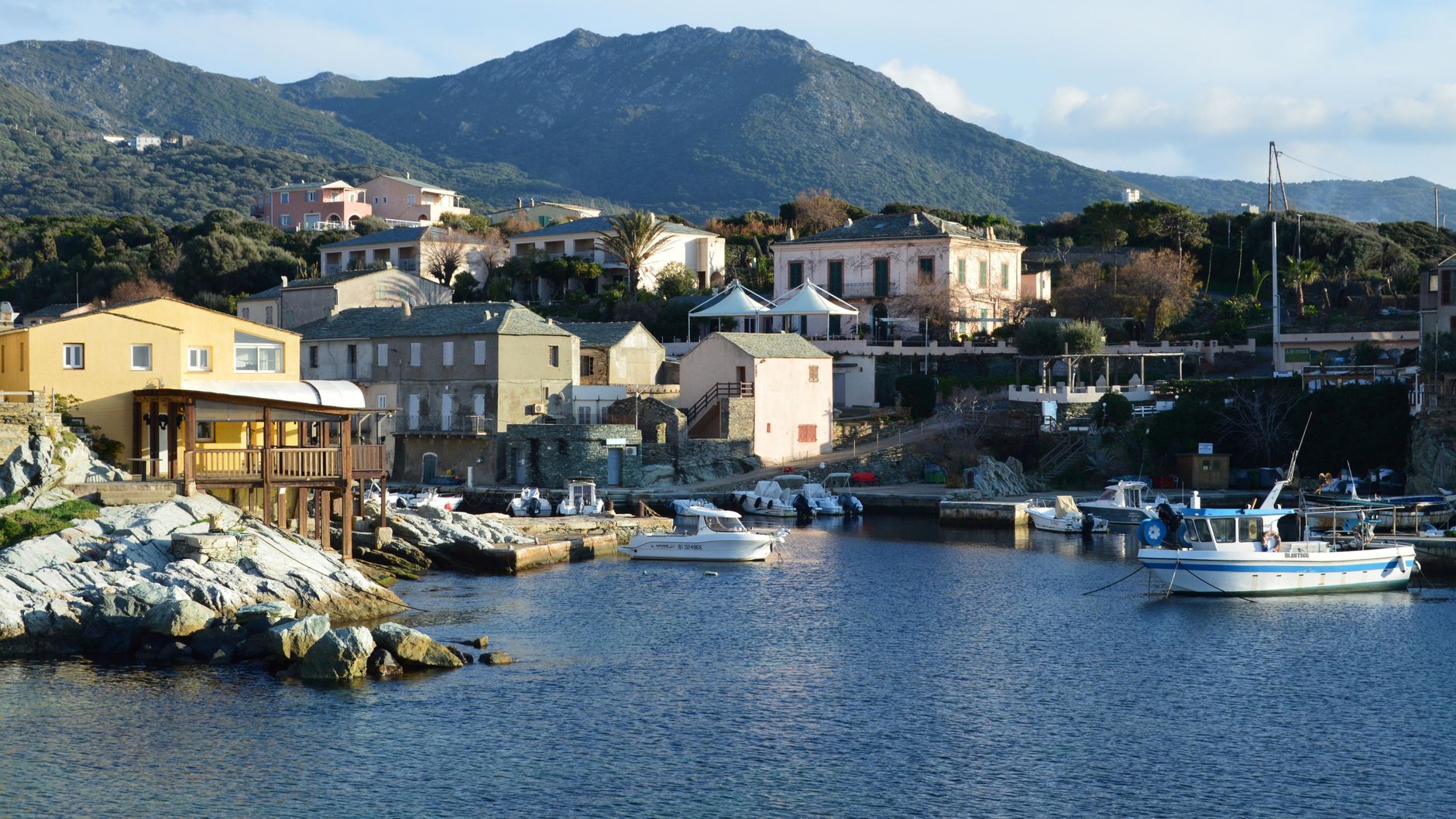
Photo by SlimMars 13
Piana and the D81
The D81 through the Calanques de Piana is a road where photography and driving compete for attention. Red granite forms arches, stacks, and fractured walls above the sea, but the bends are narrow and traffic can build quickly.
Visit early, then return late if the forecast allows. The cliff faces point in several directions, so check a sun-position app before choosing a particular formation. Midday has its place, especially when you want sea color and deep shadow shapes, but it rarely flatters every part of the scene.
The Visit Corsica Grand Tour route describes this stretch as a small pink corniche road, which is a fair description of both its color and its limited width.
Mountain villages and granite peaks
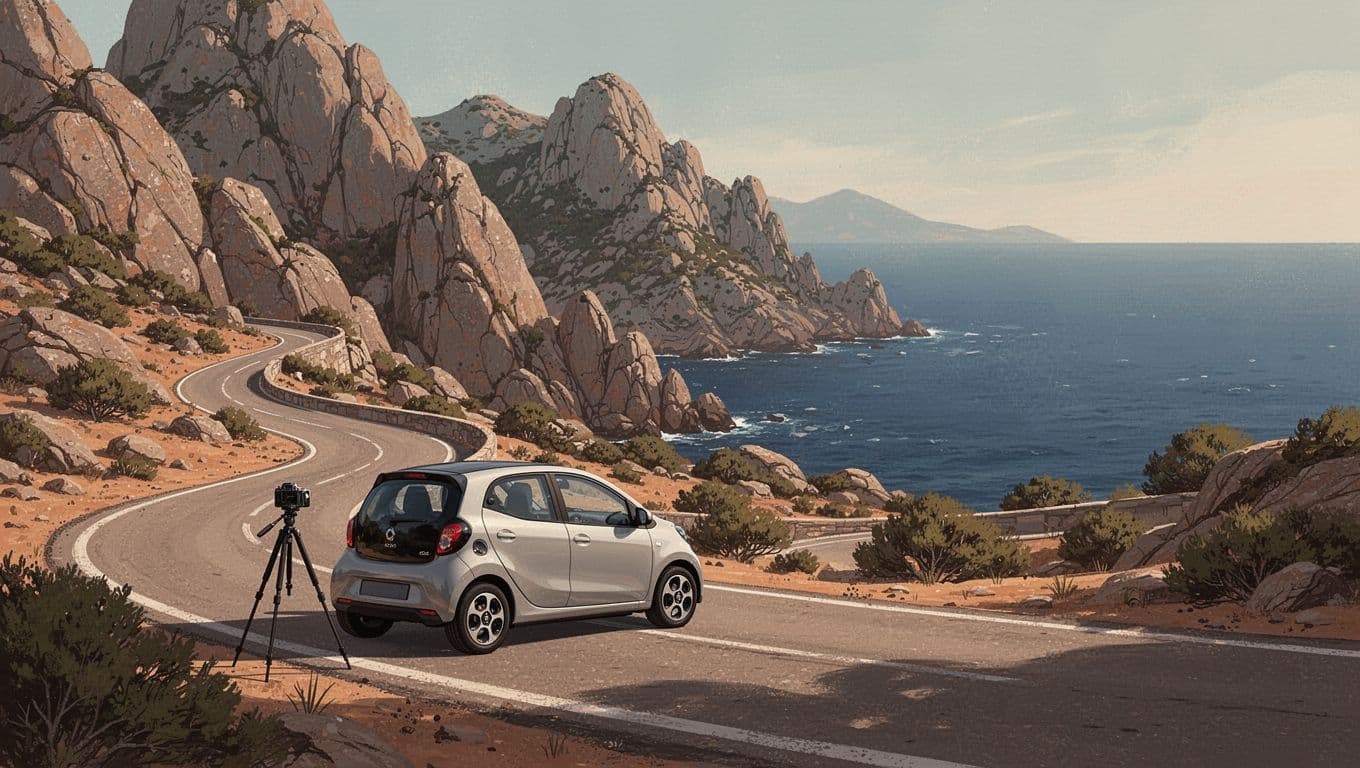
After several days on the coast, Corsica’s interior feels more enclosed. Forested valleys soften the light, while high granite ridges appear and vanish behind cloud.
Corte for scale and weather
Corte makes a practical inland base because its citadel rises above dramatic mountains and the roads fan toward several valleys. Photograph the town early from a distant viewpoint, then work closer for shutters, stone walls, and the contrast between old buildings and sharp ridgelines.
Avoid treating the mountains as a single wide-angle subject. A longer lens can isolate the citadel against a pale slope or pull distant rock faces forward through morning haze.
Carry a light rain cover. Afternoon storms and sudden mist can arrive when the forecast looked calm at breakfast.
Zonza and the Aiguilles de Bavella
Zonza is the better base for the Aiguilles de Bavella, a jagged granite range above dense forest. The road near the pass provides broad views, yet small compositions often work better: a single pine against a spire, a stone wall beneath cloud, or a rider-sized curve disappearing into the trees.
Don’t rely on one visit. Cloud can sit across the peaks for hours, then split for a few minutes near sunset. Return if conditions improve, even if it means dropping another planned stop.
Drive for photographs, not time targets
Corsican roads demand calm concentration. Many rural stretches are narrow, unmarked, and two-way, with tight corners that hide approaching vehicles. Livestock can also wander onto the road, especially around dusk.
Stop only where the car is safe
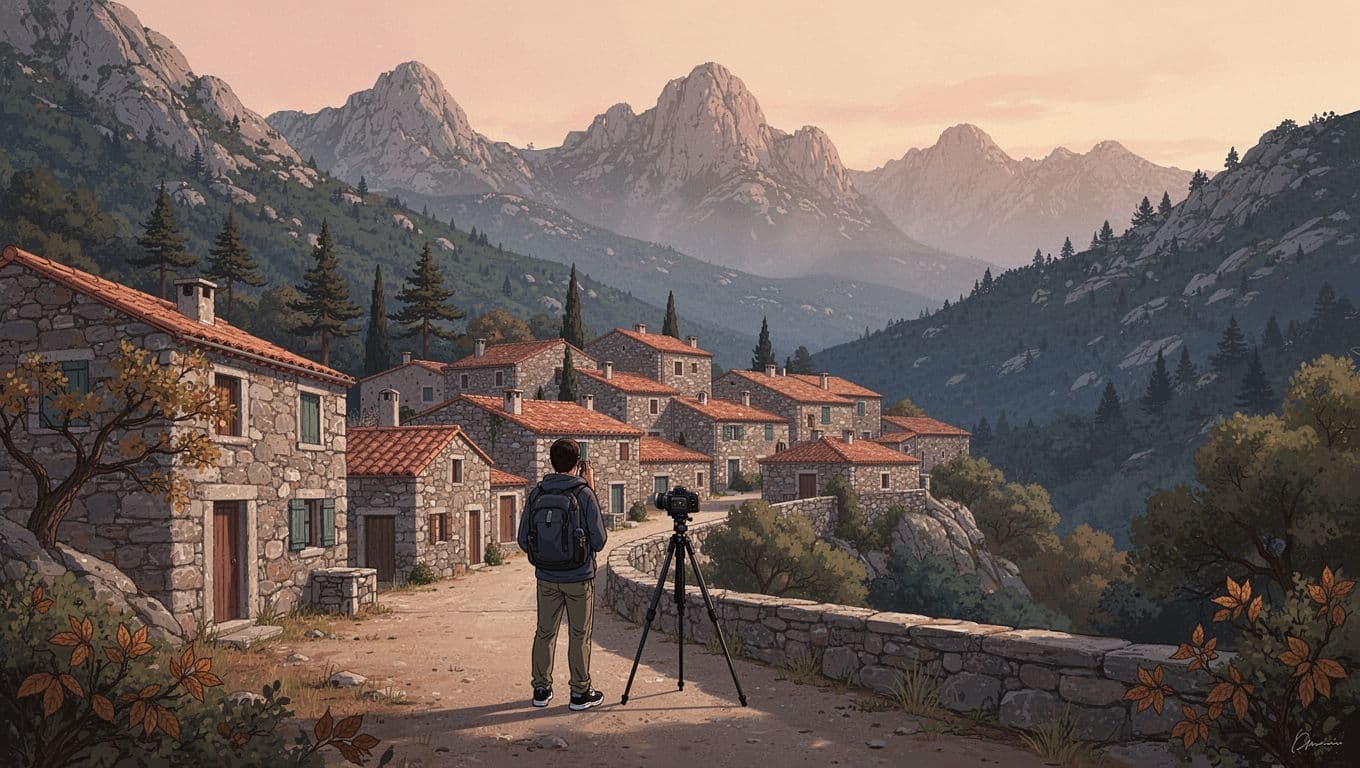
Never brake hard because a composition appears around the next curve. Continue until you find a proper pull-off, then walk back only if the roadside is safe and local restrictions allow it.
On Corsica’s narrow roads, a viewpoint only counts when your car is fully out of the traffic lane.
Rain after a long dry period can make the surface slippery. Therefore, slow down before the first wet bend rather than testing grip halfway through it. Drive on the right, use headlights when visibility drops, and leave room for local drivers who know each curve.
Let weather revise the route
A Corsica photography road trip needs room for changes. If cloud hides Bavella, photograph shaded villages near Zonza. If the coast turns hazy, move inland for texture in chestnut woods and stone lanes.
The one-week Corsica itinerary ideas show how quickly drive times add up around Cap Corse and the mountain routes. Treat driving estimates as a floor, not a promise.
Pack for changing subjects
Bring a kit that works for both broad cliffs and compressed mountain views. A large camera bag becomes a burden on village steps, so keep the daily setup simple.
Use three focal-length roles
A wide zoom around 16-35 mm suits Piana’s roadside walls and close foreground rocks. A standard zoom around 24-70 mm handles villages, harbors, and travel details. A 70-200 mm lens is often the difference between a general mountain record and a focused frame.
A polarizing filter can deepen water and cut glare from leaves, although it can create uneven skies with very wide lenses. Use it with care. Pack spare batteries, a microfiber cloth, and a compact tripod that you can carry without blocking a lane.
A nine-night route with breathing room
This route favors repeat visits over constant relocation.
| Night | Base | Primary photo focus |
|---|---|---|
| 1 | Bastia | Old port and evening color |
| 2 | Centuri or Pino | Cap Corse harbors and headlands |
| 3 | Calvi | Balagne villages and coast |
| 4 | Porto | Piana late light |
| 5 | Porto | A second Calanques session |
| 6 | Corte | Citadel and mountain weather |
| 7 | Zonza | Village lanes and forest light |
| 8 | Zonza | Aiguilles de Bavella |
| 9 | Bonifacio | Limestone cliffs and departure access |
This shape protects two separate sessions at Piana and Bavella. If rain arrives, use the spare morning for a village rather than forcing a long wet drive.
The frame to wait for
Cliffs don’t reward a rushed schedule. Protect time for a second attempt, especially where clouds or traffic interrupted the first one.
On a calm morning, leave the D81 before the road fills and stop only at a proper pull-off. Let the final frame hold red Piana granite above blue water, with no car door open into the lane.
