
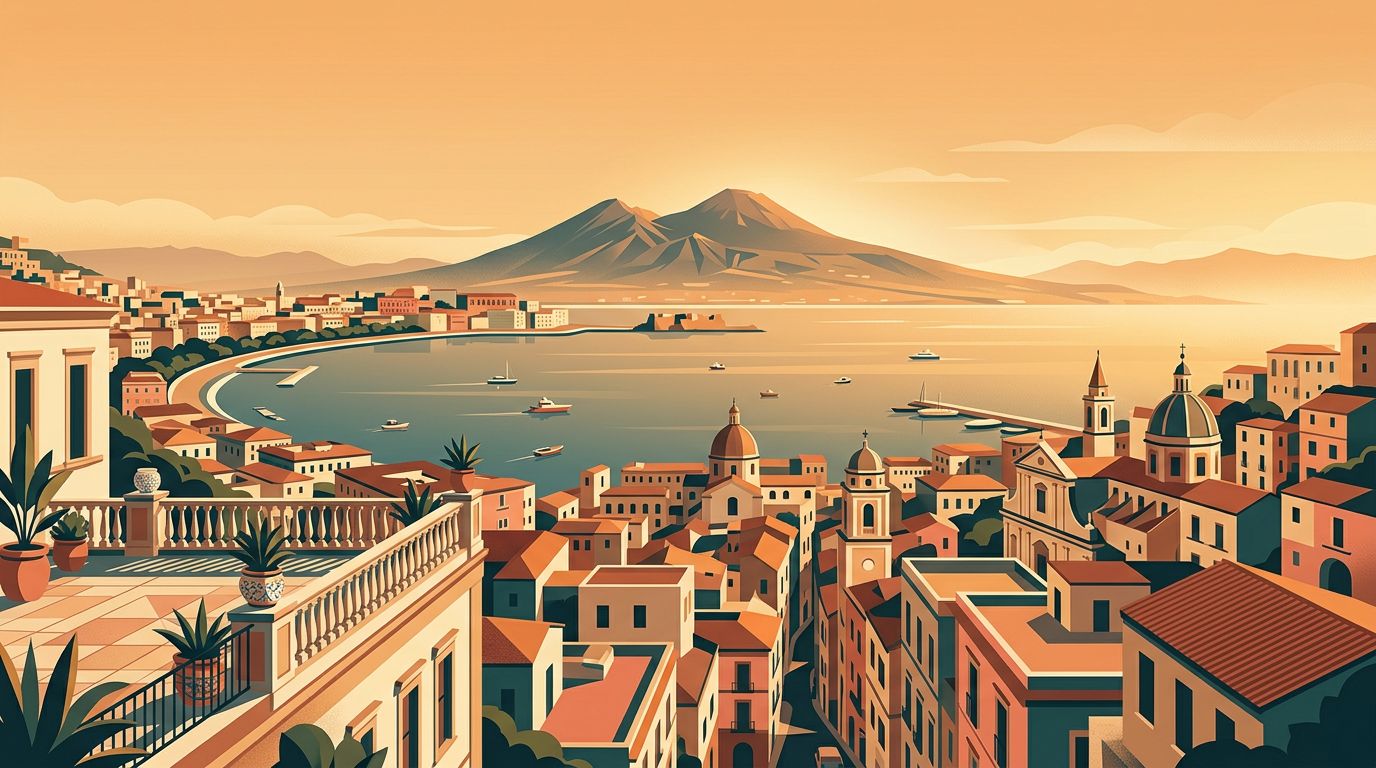
Naples is hardest to photograph when you rush it. Naples photography spots reward patience, because Vesuvius visibility, focal length, and timing matter more than racing between locations. Midday haze may hide it, then sunset can bring back a crisp silhouette above the bay.
This guide is for Naples, Italy, not Naples, Florida. Start before the city wakes, then plan a photo walk linking elevated views, waterfront scenes, and historic streets. Treat these points of interest as a flexible route, reserving late afternoon for elevated views and the waterfront.
Key Takeaways
- Plan around light and air clarity: photograph historic streets early, then save elevated viewpoints and the waterfront for late afternoon, sunset, and blue hour.
- Certosa di San Martino and Castel Sant’Elmo provide the strongest elevated views of Naples, the bay, and Vesuvius.
- Via Partenope, the Lungomare, and Castel dell’Ovo offer lower waterfront compositions with boats, harbor lights, and the volcano in the distance.
- Spaccanapoli, Via dei Tribunali, Porta Nolana, Piazza del Plebiscito, and Castel Nuovo reveal the city’s historic streets, architecture, and everyday movement.
- Keep your kit light, check Vesuvius visibility before changing plans, and use public transport or walking to protect your best light.
Naples Photography Spots That Put Vesuvius in Frame
Vesuvius sits east-southeast of central Naples, so its position shapes your plan. Morning light reaches east and southeast-facing facades first, making the old center look best before crowds fill the lanes. In the evening, the sun stays behind you when you face the volcano from western viewpoints.
August rewards an early alarm. Sunrise falls shortly after 6:00, while sunset arrives a little after 20:00. The golden hour runs late, but haze builds over the bay on hot days. Check Vesuvius before committing to a viewpoint. If its rim looks pale from street level, use the time for historic churches and alleys, then return when the air clears.
A 70-200mm lens makes the volcano loom behind harbor buildings and passing boats. A 24-35mm lens works better on Vomero, where the whole bay fills the frame. Bring a cloth for salt spray. Sea air quickly leaves marks on a front element.
Shoot RAW if you can. Bright water and dark stone push a camera’s dynamic range, especially near sunset. A modest exposure bracket is more useful than forcing shadow detail from one file.
A clear Vesuvius photo depends more on air clarity than dramatic color. A soft pink sky cannot rescue a volcano lost in haze.
The most productive Naples photography spots also require a little restraint. Don’t place Vesuvius dead center in every image. Use foreground elements, such as a dome, fortress wall, or ferry wake, to give the distant cone scale.
Elevated Vesuvius Views Above the Bay
Certosa di San Martino and Castel Sant’Elmo
Vomero gives you the classic Naples view, with dense rooftops flowing toward the port and Vesuvius across the water. The terrace at Certosa di San Martino creates the stronger layered city composition. Castel Sant’Elmo offers a wider, more open panorama from its hilltop walls.
At the Certosa di San Martino terrace, a 35mm frame can hold the old center below, the blue sweep of the bay, and Vesuvius beyond the port. The perspective keeps the city from shrinking into an anonymous foreground.
Start uphill. These viewpoints are monument sites, so check admissions and closing times before planning a sunset shoot. If you travel via Montesanto, consult the current ANM funicular timetable on the day. August service changes can disrupt a tightly timed plan.
Use a normal or short telephoto lens at Sant’Elmo for graphic rooftop patterns. A wider frame works when cloud shadows move across the bay. Leave some space above the volcano, since a cramped skyline makes the mountain feel smaller.
Via Partenope, Lungomare, and Castel dell’Ovo
For a lower viewpoint, walk Via Partenope and the Lungomare Caracciolo. Vesuvius sits across the water, while Castel dell’Ovo and small boats add foreground structure. The scene works best from promenade level rather than a rooftop.
The curve near the Fontana del Gigante offers a useful angle toward Castel dell’Ovo. Visit Naples highlights the fountain as a waterfront subject, and its pale stone can balance a darker evening sky.
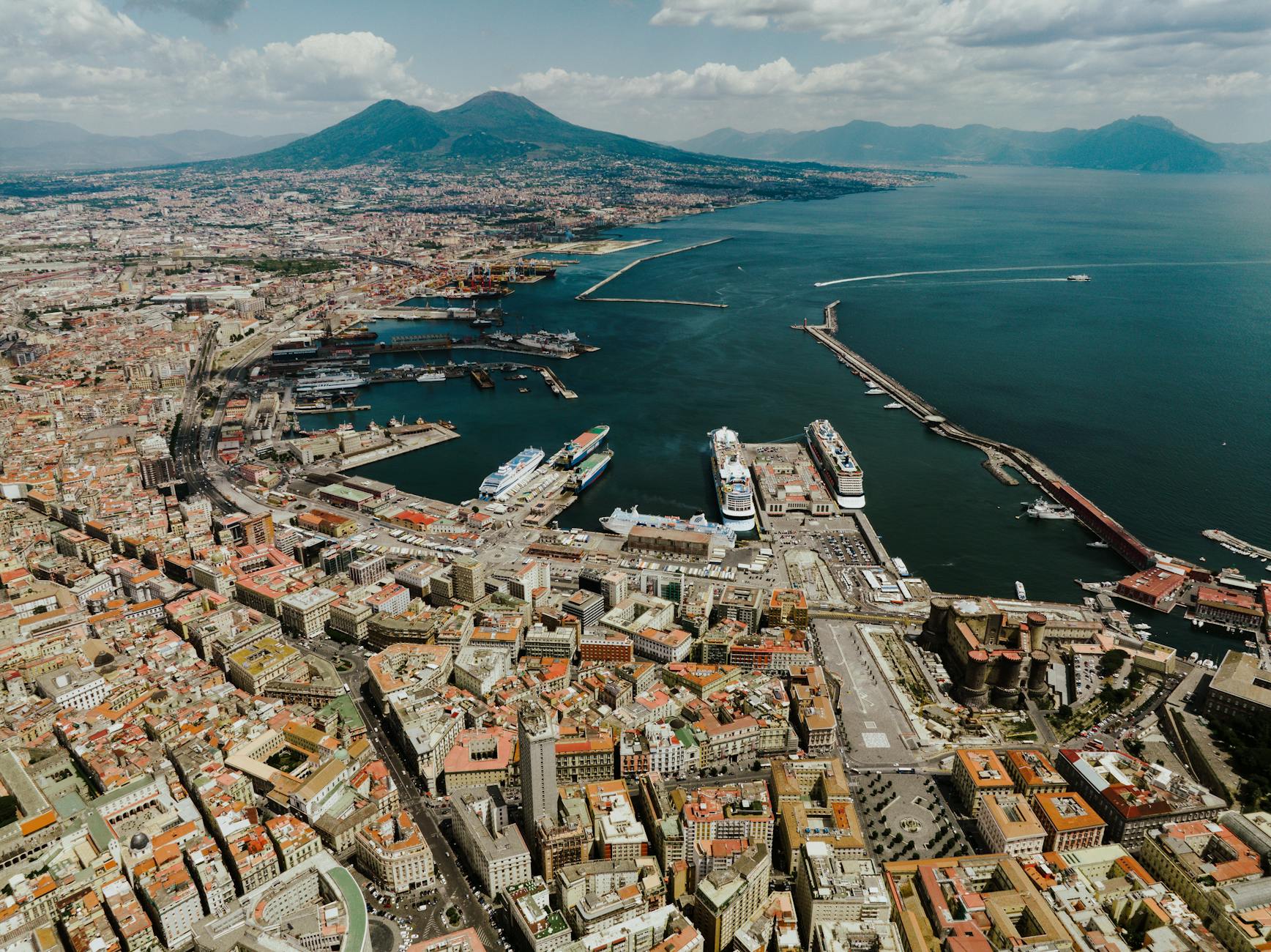
Photo by K
Arrive early enough to scout the whole stretch. Photograph the promenade during golden hour, when warm light gives the harbor shape. As the light fades, runners and families give way to restaurant reflections and harbor lights. The official Naples sunset guide also points toward this coast, including views around Santa Lucia and Posillipo.
After the waterfront lamps switch on, stabilize a tripod, check the horizon, and make a second exposure. Blue hour works best here.
Historic Streets for Street Photography in Naples
Piazza del Plebiscito
Piazza del Plebiscito trades the packed energy of the old city for space and symmetry. Frame the colonnade of San Francesco di Paola head-on for strong repetition, or move toward the Royal Palace and let a lone pedestrian cross the open stone.
Early morning gives the square a calm, formal look. By late afternoon, light can skim along the palace facade and pick out details in the paving. A 24mm lens captures the architecture, but a 50mm lens often produces cleaner compositions by excluding modern signage and parked vehicles.
Castel Nuovo
Castel Nuovo, also called Maschio Angioino, works as a heavy medieval foreground against a bright sky. Photograph the exterior near Piazza Municipio after rain, when dark paving separates the fortress from surrounding traffic. The city currently lists Castel Nuovo opening hours as Monday through Saturday, 9:00 to 18:00, with final entry at 17:30, excluding holidays. Confirm before visiting.
Don’t force a Vesuvius view here. The castle is the subject. Its towers, moat, and hard angles suit black-and-white work.
Spaccanapoli, Via dei Tribunali, and Porta Nolana
The historic center is where Naples loses its postcard polish and becomes more personal. Spaccanapoli is an east-west corridor of weathered facades, shrines, laundry, scooters, occasional wall art, and sudden shafts of light. It belongs to the UNESCO-listed Historic Centre of Naples, a district whose streets retain layers of Greek, Roman, medieval, and later city life.
A local naming anecdote helps with orientation: “Spaccanapoli” means “Naples splitter,” but it doesn’t appear as one continuous street name. Follow the straight line through the center and watch the signs change beneath your feet.
Photograph the narrow alleys early, before delivery traffic and visitors close every clean sightline. Work with the shadows instead of lifting them all in editing. A person passing through a bright doorway can carry an entire frame.
Via dei Tribunali has more visual noise, and its narrow alleys compress sightlines around moving subjects. Look for pizza ovens outside a pizza place, religious icons, and scooter mirrors that catch fragments of the street behind you. Keep your camera close and use a quick shutter speed, around 1/250 second or faster, when people move through mixed sun and shade.
At the Porta Nolana market, start with the old gate, then look for ice boxes and handcarts among the local markets. Messy, but close. Ask before making a close portrait of a vendor, and don’t block shoppers while you wait for a frame.
A Practical Naples Photo Walk for One Day
A full day works better when you group the city’s main points of interest by light and location. Historic streets need soft early light, while the hill and waterfront are best saved for late afternoon, golden hour, and the glow before sunset.
| Time | Location | Best subject | Useful lens |
|---|---|---|---|
| Shortly after sunrise | Piazza del Plebiscito | Colonnade and empty paving | 24mm or 50mm |
| Morning | Spaccanapoli | Doorways, shrines, passing locals | 35mm |
| Late morning | Via dei Tribunali | Street movement and shopfronts | 35mm or 50mm |
| Late afternoon | Certosa di San Martino | Rooftops, bay, Vesuvius | 24-70mm |
| Sunset to blue hour | Via Partenope | Castel dell’Ovo and volcano | 70-200mm |
Use public transport for the hill, then walk through the center. Parking near the waterfront can consume the light you came for. The historic center is also too narrow and busy for a car to help much.
Keep gear light. One wide zoom, one short telephoto, a spare battery, water, and a thin rain cover are enough for most days. A tripod is useful at the waterfront, but never leave it set up where it narrows a busy walkway.
Weather can change the route. If cloud or haze hides Vesuvius, head to the old center and photograph under awnings or inside open courtyards instead of chasing the mountain through narrow alleys. When the mountain returns, take the funicular or a taxi uphill rather than hoping to catch it through an alley.
Frequently Asked Questions
What are the best Naples photography spots for seeing Vesuvius?
Certosa di San Martino and Castel Sant’Elmo offer the strongest elevated views across the rooftops and bay. For a lower perspective, photograph from Via Partenope, the Lungomare Caracciolo, or near Castel dell’Ovo.
When is the best time to photograph Naples?
Early morning is best for quiet historic streets, soft light, and fewer people. Late afternoon through blue hour works well for the hilltop viewpoints and waterfront, especially when the harbor lights appear.
What lenses should I bring for Naples photography?
A 24-35mm lens suits broad city and bay scenes, while a 35mm or 50mm lens works well for streets and architecture. Bring a 70-200mm lens if you want Vesuvius to appear larger behind harbor buildings and boats.
What should I do if haze hides Vesuvius?
Use the time to photograph churches, alleys, courtyards, and historic buildings in the old center. Check the volcano again later, since visibility can improve as the light and air change.
Can I photograph Naples in one day?
Yes, if you group locations by light and geography. Start at Piazza del Plebiscito and the historic center, then travel uphill in the late afternoon before finishing along Via Partenope at sunset and blue hour.
Let the City Set the Pace
Naples offers grand views only after you climb or wait. Its most revealing images often arrive at street level, when a doorway opens, a scooter passes, or a church bell catches the edge of the frame.
Leave room on the memory card for evening. In August, wait until around 8:10 p.m. for the first harbor lights to appear behind Castel dell’Ovo.
