
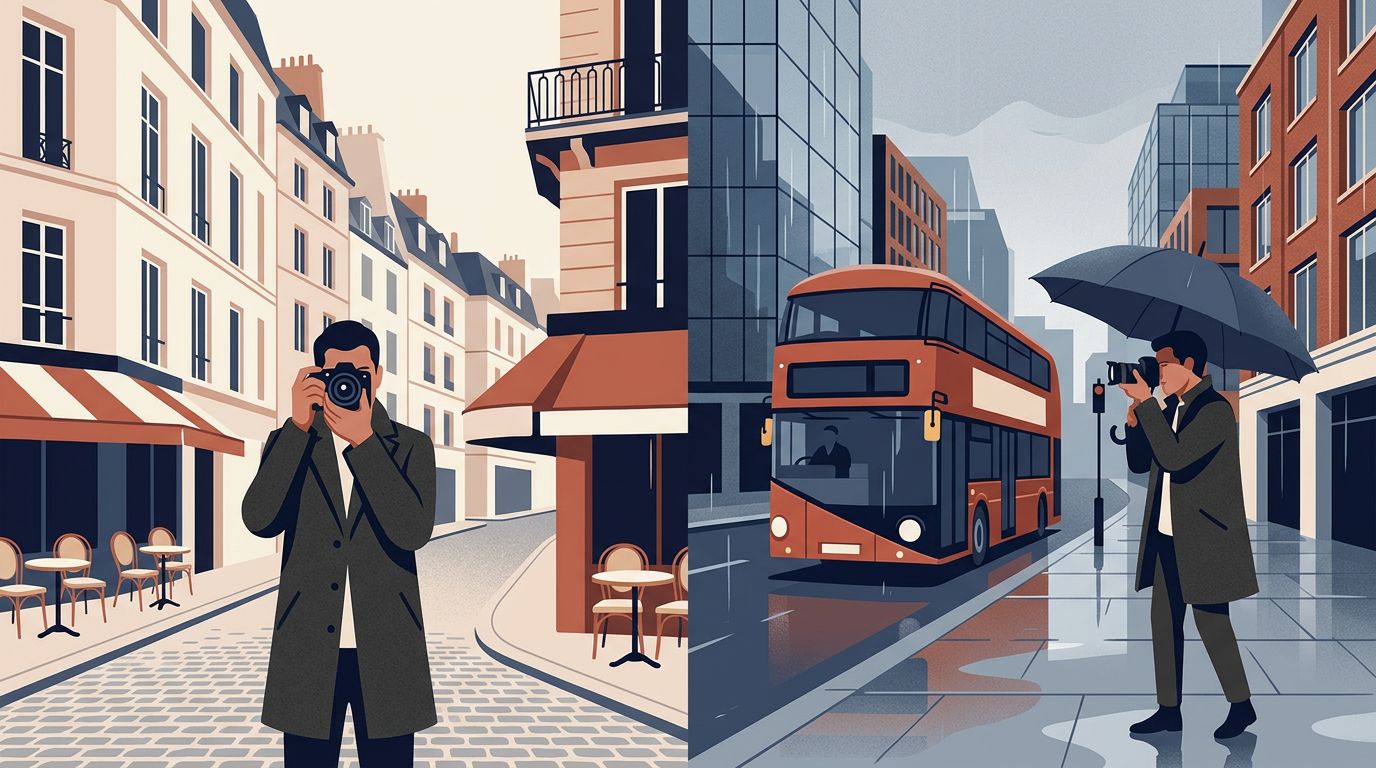
A weekend street shoot can turn on one small choice: Paris vs London photography. Paris gives you compressed scenes, pale stone, and tight visual rhythm. London gives you speed, weather, and a wider range of faces within a few blocks.
Both cities reward patience. Yet they ask for different habits behind the camera.
Choose the city that matches how you see, then plan your two days around light, foot traffic, and the places where public space stays genuinely public.
Paris vs London Photography: Match the City to Your Eye
Paris often feels composed before you lift the camera. Haussmann facades create clean edges, cafés push life toward the pavement, and narrow side streets can turn a single pedestrian into the entire frame. A 35mm lens works well when you want foreground layers, while a 50mm helps isolate gestures against the city’s repeating geometry.
London is more restless. A red bus might cross a polished office tower, then a cyclist cuts through a market crowd under low cloud. You can work in strong color, deep shadow, or plain documentary observation without changing neighbourhoods. The city gives you friction, which is useful when your pictures need tension.
Paris compresses its visual drama into ordered streets and long sightlines, while London scatters it among markets, transport hubs, housing estates, and commercial districts that can change character within one Underground stop.
| Weekend priority | Paris | London |
|---|---|---|
| Architectural framing | Strong symmetry and stone backgrounds | Bolder contrasts of old and new |
| Candid energy | Slower, more intimate street pace | Dense, unpredictable movement |
| Rainy-day shooting | Reflections on pavements and café windows | Umbrellas, buses, neon, and wet crossings |
| Working with strangers | More caution needed before publishing faces | More freedom for editorial street work |
| Walking rhythm | Compact central districts | Bigger distances, stronger use of transit |
The Paris vs London photography decision isn’t about which city is more photogenic. It is about whether you prefer to wait for a scene to settle or keep moving until a collision appears.
Paris rewards a frame built around place. London rewards a frame built around change.
Paris: Shape, Repetition, and Early-Morning Space
Paris is at its best before the pavements fill. Start around Palais Royal, Galerie Vivienne, or the streets north of the Seine near Pont Neuf. Morning light can catch the cream facades at a low angle, and delivery workers add a useful human note before the tourist rush.
The Canal Saint-Martin area gives you a looser Paris. Bridges, locks, dog walkers, and people sitting near the water create slower scenes. For heavier foot traffic, work around Rue des Martyrs, Belleville, or the edge of Le Marais. These areas offer everyday life without relying on postcard landmarks.
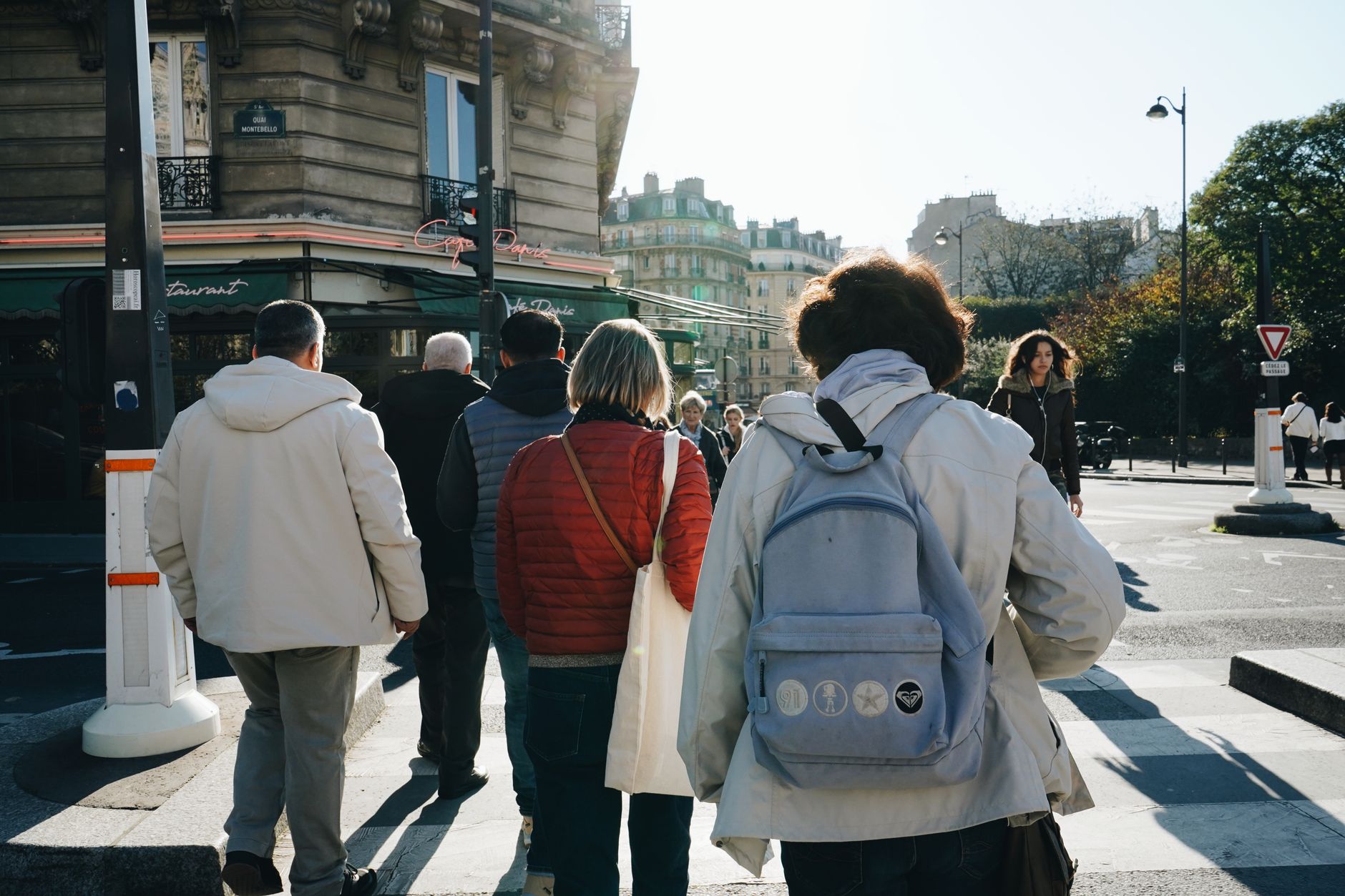
Photo by Swapnil Sharma
Light changes fast around tall buildings. In bright midday sun, use hard shadows under arcades or wait at crossings where the background falls into shade. A small camera helps, especially in tight streets. Keep the strap short and avoid stopping in the middle of a narrow pavement.
Henri Cartier-Bresson made Behind the Gare Saint-Lazare in 1932 by shooting through a fence near the station, catching a man mid-jump above a flooded surface. That image still offers a practical lesson: find the structure first, then let life enter it. Rain on glass.
For a useful starting map and thoughts on working without staging scenes, see this Paris street photography discussion. You don’t need an Eiffel Tower view. A repeated row of café chairs and one passing figure can say more.
France requires extra care with identifiable people. Public shooting and publishing are separate matters. French image rights can affect whether you distribute or commercially use a recognizable person’s portrait, so avoid treating a quick street frame as automatic permission to post everywhere. Wide scenes, silhouettes, motion blur, and people within a larger crowd reduce the issue while preserving the atmosphere. This guide to Paris street photography also suggests approaches that keep subjects less identifiable.
London: Fast Scenes, Mixed Light, and Useful Disorder
London gives you more raw material per hour, but it can punish a loose plan. Pick one side of the river each morning. Shoreditch, Soho, Brixton, South Bank, and the streets around King’s Cross each have enough movement for a half-day.
For graphic layers, stand near a bus stop or a pedestrian crossing and wait. London traffic creates color blocks that can divide a frame. A bus passing behind a person in a bright coat can produce a strong image without aggressive close-range shooting. Watch the reflected light in shopfronts too, especially when cloud cover softens contrast.
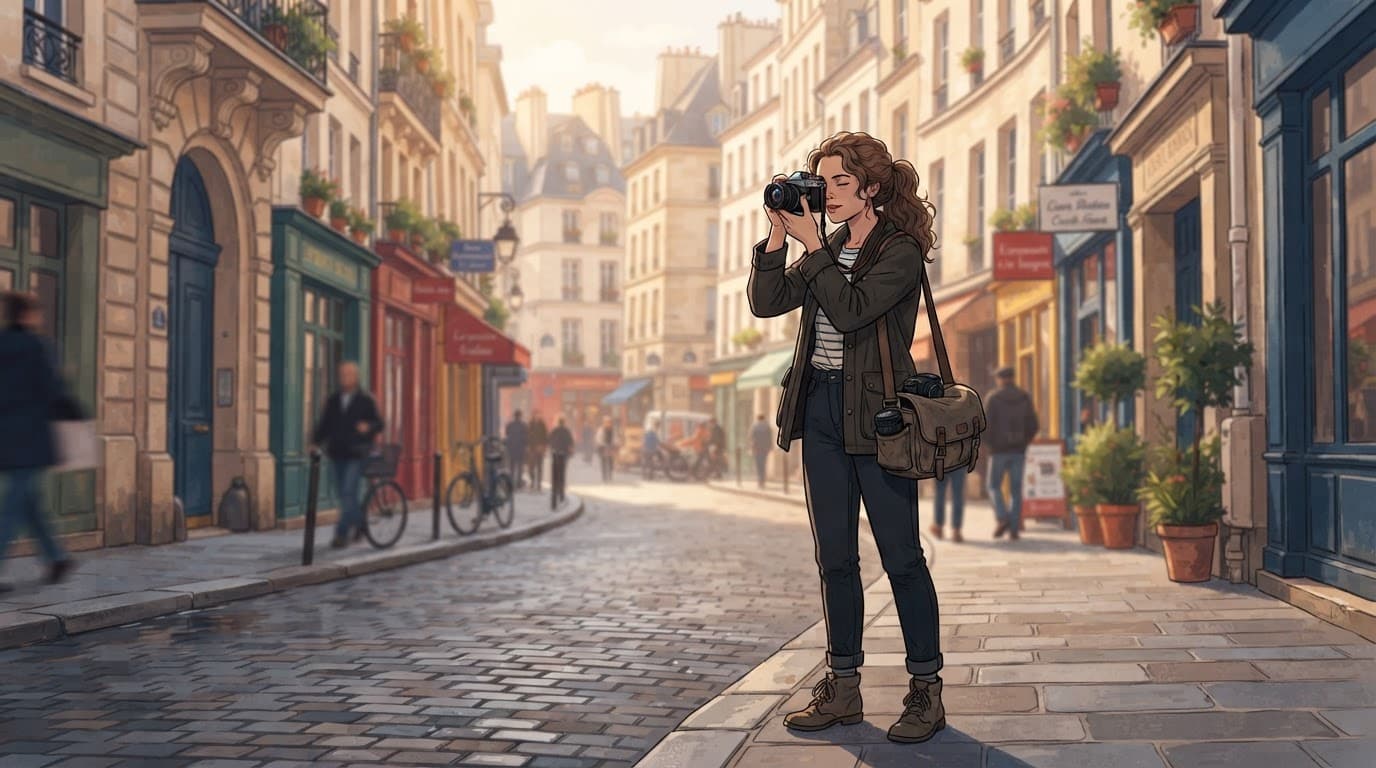
Covent Garden and South Bank look public, but parts of these areas have private management. Canary Wharf and many shopping centres are similar. Security staff can ask you to stop or leave, even when the location feels like an open street. Keep your most sustained work on pavements and public rights of way.
London lets you move between immigrant food markets, financial districts, public housing, theatre crowds, and park paths in a day, so a cohesive project needs a simple visual rule before you set out.
Use rain rather than hiding from it. A compact umbrella, lens cloth, and weather-sealed bag are more useful than a large kit. At dusk, boost ISO, protect highlights from shop signs, and let the dark edges of the frame stay dark. The city can look better when it isn’t trying to be bright.
The UK is generally more permissive about taking photographs in public spaces for personal, artistic, or editorial purposes. Still, don’t block a pavement, chase subjects, or photograph into homes. Commercial use is a different matter, and privately controlled spaces have their own rules. The broader ethical questions are worth reading before you travel, especially in this overview of street photography privacy rules.
Plan the Weekend Around Access, Safety, and Editing
Arrive with one body, two batteries, spare cards, and a lens you know well. Weekend travel is a poor time to test a new 85mm or learn a complicated menu system. A 28mm, 35mm, or 50mm prime keeps the bag light and makes your approach consistent.
In Paris, use a cross-body strap and keep a hand near your bag in dense tourist zones, major stations, and crowded Métro platforms. In London, do the same around Oxford Circus, Leicester Square, Camden, and busy transport interchanges. Neither city needs paranoia. Both reward basic awareness.
Give each day a shape. On Saturday, start early in a neighbourhood with strong visual character, then shoot through lunch when the streets get busy. Use the late afternoon for a second area with lower light and a different pace. Sunday can be slower: revisit your strongest location, work a market, then edit before your return journey.
A workable weekend outline might look like this:
- In Paris, pair Palais Royal or Le Marais at dawn with Belleville or Canal Saint-Martin later in the day.
- In London, shoot Shoreditch or Brixton in the morning, then move to South Bank, Soho, or King’s Cross for evening layers.
- Leave landmark shots for transitional moments, when you need to reset your eye or change locations.
Don’t judge the city by your first hour. Paris can feel overly polished until you find a less formal street. London can feel visually messy until you choose one visual thread, such as red, reflections, or people waiting.
The Paris vs London photography comparison becomes clearer once you edit. Paris often produces a tighter set with recurring form and quieter gestures. London often produces more variety, although the strongest sequence may come from cutting half of it.
The City You Carry Home
Pick Paris if you want to slow down, build frames with architecture, and return with a restrained visual set. Pick London if you want volume, weather, and chance encounters that pull the picture in unexpected directions.
Your best weekend won’t come from chasing every famous corner. It will come from staying long enough at one crossing to recognize the rhythm of its traffic and pedestrians.
On Sunday evening, the frame worth keeping may be a single umbrella reflected in a puddle outside Brixton station, or one cyclist crossing the Canal Saint-Martin bridge.
