
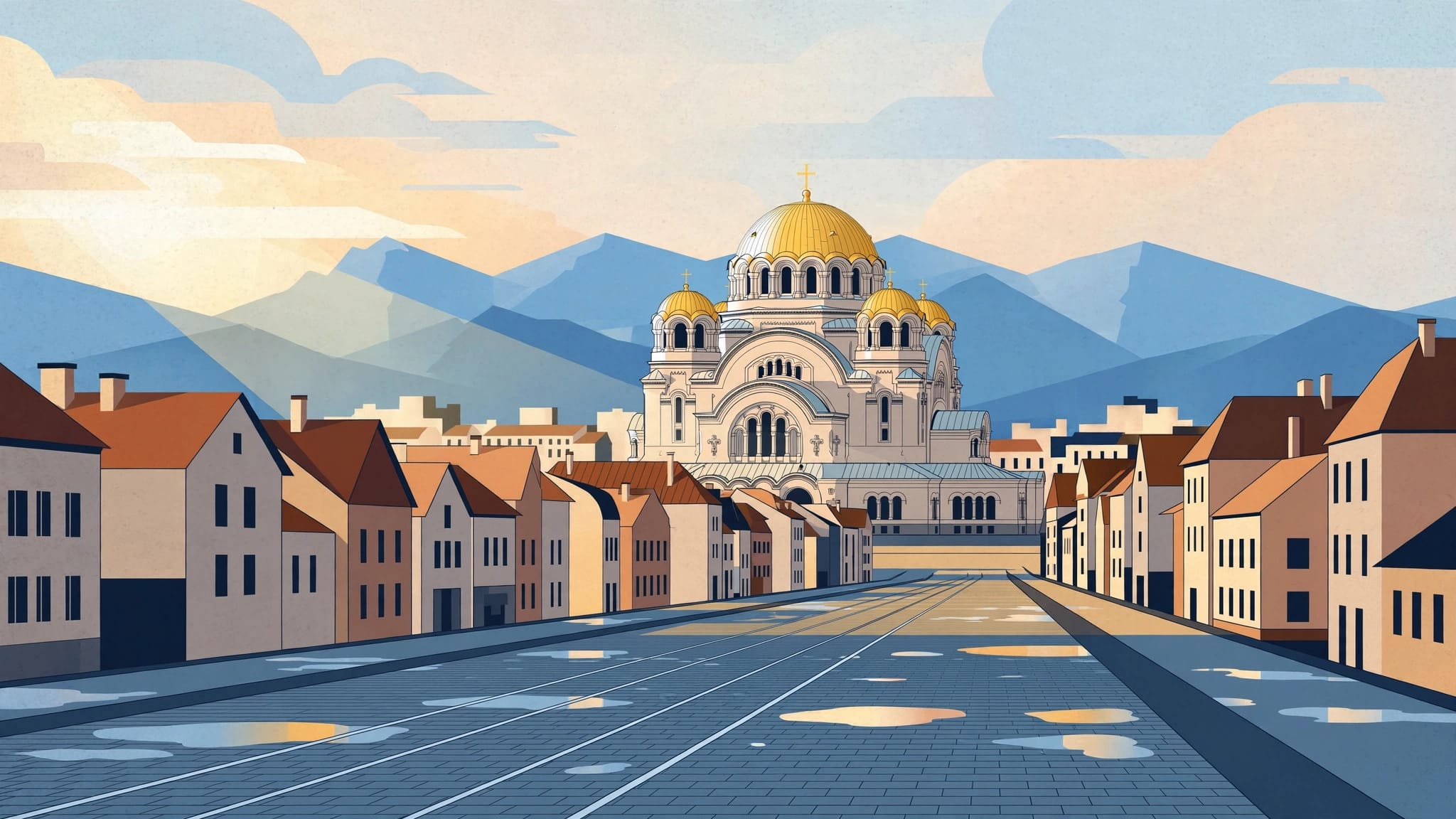
Sofia rewards photographers who slow down. Its grand domes, cracked paving, tram lines, and mountain backdrop can fit into the same afternoon, but Sofia photography looks stronger when you treat each subject on its own terms.
The city has a practical scale. You can photograph a cathedral at sunrise, chase street reflections after rain, then watch Vitosha turn blue above the rooftops before dinner.
Start with the light, then let the details lead you.
Read Sofia’s Light Before You Choose a Route
Sofia sits at the foot of Vitosha Mountain, so weather changes the mood of every frame. Low clouds can soften church facades, while a clear evening gives the mountain a sharp, dark edge behind the city.
Morning works best.
Early light reaches Alexander Nevsky Square before the crowds thicken. In summer, the pale stone warms quickly, while the gold-plated domes catch the first direct sun. A phone’s HDR mode can help, but lower the exposure slightly so the sky keeps its color.
Rain changes surfaces. Wet cobbles on Tsar Osvoboditel Boulevard and around Saint Nedelya Church pick up reflections from lamps, trams, and headlights. Carry a small microfiber cloth because one raindrop across a phone lens can blur an otherwise clean architectural shot.
Use weather as part of the composition
Don’t wait only for blue skies. A bright overcast sky is excellent for carved stone, mosaics, and decorative metalwork because it reduces harsh shadows.
When cloud gaps appear above Vitosha, set the mountain against a darker patch of sky and expose for the highlights in the clouds, since the city will otherwise look flat and pale in a wide frame.
For foreground interest: wet paving, a tram rail, or the curve of a stone balustrade.
Sofia’s mountain is often strongest as a background shape, not the main subject. Leave it space in the upper third of the frame.
Sofia Photography for Cathedral Details
Alexander Nevsky Cathedral is the obvious starting point, yet it doesn’t need an obvious photograph. The building has a huge footprint, so a straight-on wide shot often makes the central dome look smaller than it feels in person.
Walk the perimeter first. Look for arched entrances, bronze doors, drum windows, crosses, and small shifts in the stone color. A 2x or 3x phone lens, or a short telephoto lens on a camera, will simplify the scene and make the ornament feel more graphic.
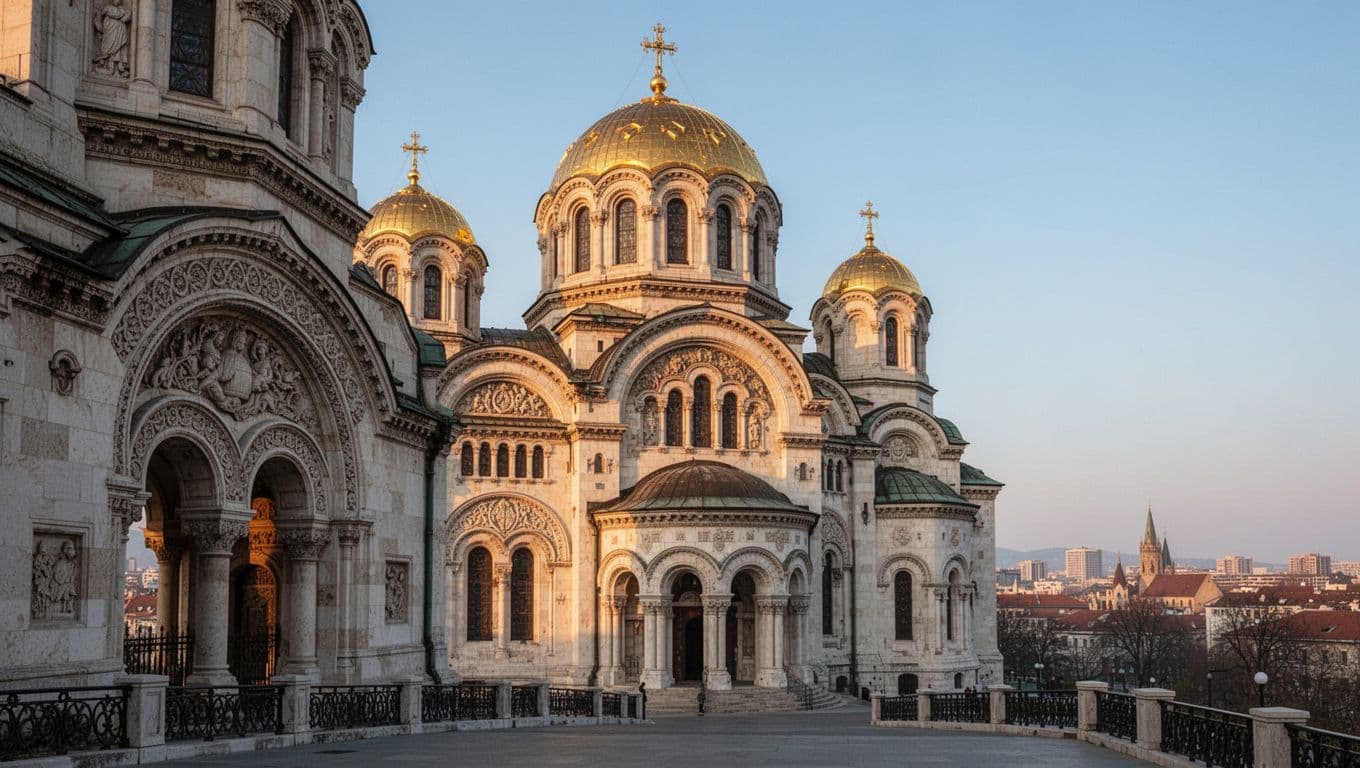
Frame Alexander Nevsky without distortion
Stand farther back than you think, then use a longer focal length. This keeps vertical lines straighter and prevents the domes from ballooning at the edge of a wide-angle image.
The official cathedral visitor page lists daily access information and worship times. Check it on the day, especially if you want a quiet exterior or plan to visit the crypt. Services change the atmosphere around the entrance, and they should take priority over photographs.
A small historical anecdote sits in the cathedral’s name. Bulgaria dedicated the church to St. Alexander Nevsky in memory of Russian soldiers who died in the Russo-Turkish War of 1877-78. The building is more than a postcard backdrop, so skip intrusive portraits at doors where people are arriving to pray.
Photograph interiors with restraint
Interior rules can change, and flash is a poor choice in any church. The current visitor guidance for Alexander Nevsky notes restrictions on photography in the nave, while allowing it in the crypt. Ask a staff member before raising your camera.
If photography is permitted, use a quiet shutter, turn off focus-assist light, and keep your exposure conservative. Dark frescoes and bright windows can fool automatic modes. On a phone, tap a bright area, drag exposure down, and hold still against a column or wall.
Saint Sofia Church and Saint Nedelya Church also reward close observation. Focus on exterior forms if a service is under way. One clean detail has more feeling than a rushed collection of dim interior snapshots.
Find Human Scale Around the Monumental Buildings
Cathedrals can dominate a travel gallery. Sofia becomes more personal when you pair them with the city’s everyday movement.
Near Alexander Nevsky Square, wait for pedestrians to cross at the edge of your frame instead of placing someone directly in front of the facade. A single figure can show scale without turning a sacred site into a prop. Keep faces unrecognizable if you plan to share the image publicly.

Photo by Lubomir Vladikov
Use streets to connect Sofia’s landmarks
Tsar Osvoboditel Boulevard gives you yellow cobbles, traffic, and formal architecture in one frame. Around the National Assembly and Sofia University area, look for long sightlines that place a dome or mountain slope beyond the road.
A wide lens works when you have a clear foreground, but it needs discipline: keep lamp posts away from a cathedral’s dome, and level the horizon before pressing the shutter.
For a quieter scene, photograph the Russian Church’s green and gold exterior through nearby branches. In contrast, Saint Nedelya works better with the surrounding streets visible, because the rounder structure gains context from the city around it.
The Discover Sofia walking overview is useful for placing central landmarks within a short route. Build in time to revisit a location when the light improves rather than trying to photograph every stop once.
Plan Vitosha Views Before Late Afternoon
Vitosha is visible from much of Sofia, but the best city-to-mountain photographs depend on atmospheric clarity. After rain, the ridges often separate cleanly from the city. On humid days, they can fade into a grey band by sunset.
For a view of Vitosha, look for open stretches near large boulevards, parks, or higher terraces. Put a church dome, a rooftop, or a tram wire low in the frame. That anchor keeps the mountain from becoming a distant strip with no connection to Sofia.
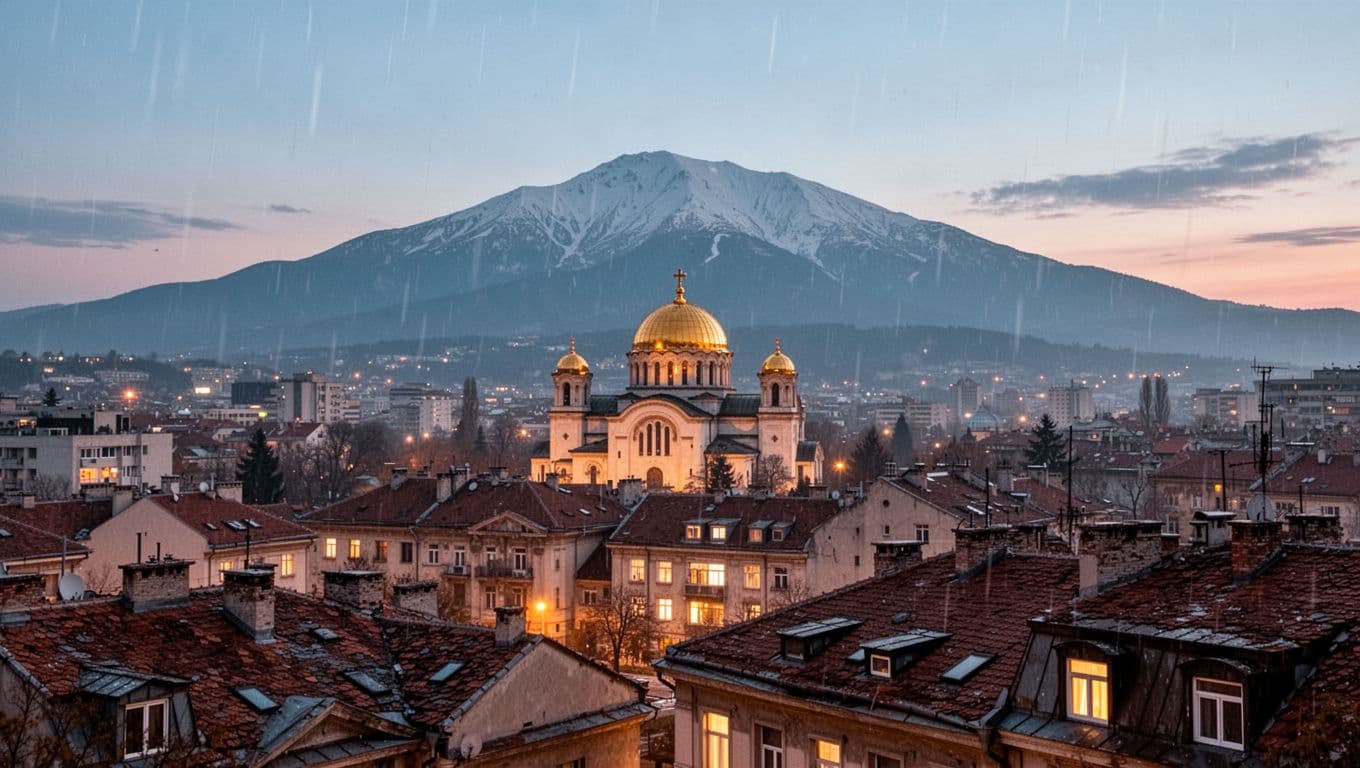
Shoot down toward the city from the mountain
For the reverse view, Vitosha gives you scale that central rooftops can’t offer. The upper slopes near Aleko and the Zlatnite Mostove area are common starting points for walks, though weather can change quickly at elevation.
Bus 66 reaches the Hotel Moreni area, while bus 63 runs toward Zlatnite Mostove. This Vitosha bus access guide outlines the usual routes, but check Sofia’s live timetable before leaving. Published mountain transport schedules can change by season.
In April through October, Vitosha Nature Park lists a last mountain bus service at 20:00. Don’t rely on a late descent after sunset without confirming the current schedule and having a backup plan.
Keep the city readable in a mountain panorama
The skyline becomes tiny from high viewpoints. A standard 24-70mm lens, or a phone’s 2x lens, often gives better city detail than an ultra-wide view.
If you use a phone panorama, rotate your body slowly and keep the device level. Shoot one normal frame too. Panorama stitching can bend streetlights, ridgelines, and cathedral domes.
Clouds change everything here. A passing storm can hide the city, while late sunshine may illuminate one section of rooftops beneath a dark ridge.
Camera and Smartphone Settings That Hold Up
You don’t need a heavy kit for good Sofia photography. A smartphone, spare battery, cloth, and compact power bank cover a full day in the city. If you carry a camera, bring one wide lens and one moderate telephoto lens rather than changing equipment constantly on busy streets.
Set exposure for domes and skies
Gold domes and white clouds are easy to clip. Use exposure compensation at minus 0.3 to minus 1 stop when sunlight hits the cathedral. Then lift shadow detail later if needed.
For a camera, shoot RAW when you expect mixed light. That gives you room to recover stone texture and blue shadows. On a smartphone, use the main lens whenever possible because it usually has the best sensor and stabilisation.
Try these starting points:
- Use f/8 to f/11 for daylight cathedral facades when you want foreground and domes sharp.
- Choose 1/250 second or faster for handheld street scenes, especially around moving trams.
- At blue hour, brace the camera and keep ISO low before reaching for a noisy high-ISO shot.
- Switch off flash near churches, monuments, and reflective wet streets.
Work with people respectfully
Sofia’s public squares are lively, but a close portrait needs consent. Photograph wider scenes, silhouettes, or people from behind if you haven’t asked. Avoid blocking pavements with tripods during rush hour.
Tripods also draw attention around religious sites. A small tabletop support or hand-held night mode is usually enough for exterior evening photos. Patience pays here.
Leave Sofia With Images That Feel Observed
The strongest photographs won’t come from copying the same postcard angle at every stop. They come from noticing how cold mountain light meets warm stone, or how a dome appears between bare tram wires after a shower.
Keep one final frame for Alexander Nevsky Square after sunset, when the dome lights sit above the dark pavement and the last pedestrians cross the open space.
