
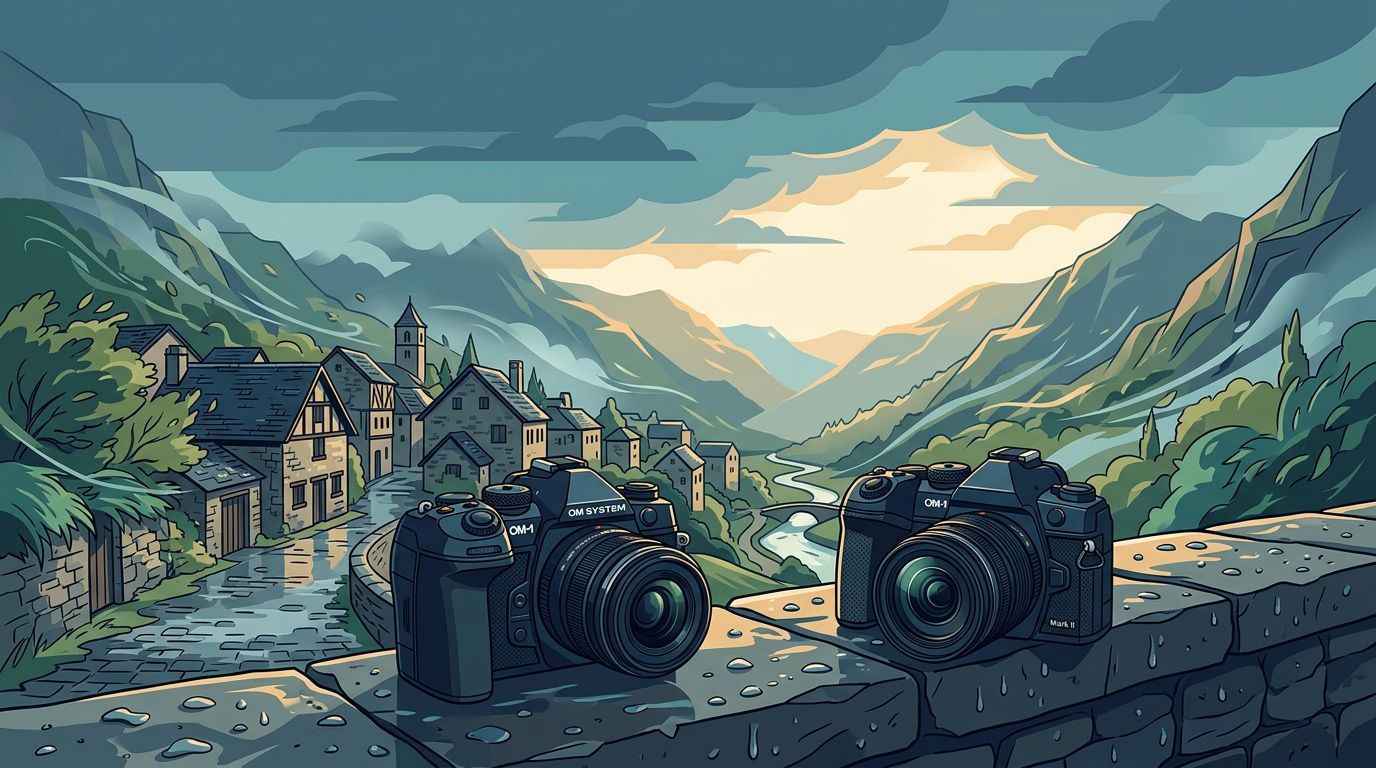
A camera left in the hotel cannot catch the light after rain. The best weather sealed cameras let you keep shooting when a city walk turns wet or a mountain forecast changes before lunch.
Europe asks a lot of travel gear. You may face mist on the Isle of Skye, wind-blown spray on a Croatian ferry, or snow beside an Austrian trail. Weight changes every decision. Choose a camera that can handle bad weather and still feels welcome after a full day on foot.
What weather sealing means on a travel camera
The weather problem is familiar: wet cobbles, no shelter. Weather sealing gives dust and moisture fewer paths into a camera, especially around buttons, doors, dials, and joins in the body.
An IP rating tells you more
Manufacturers use weather-resistant, dust-resistant, and splash-resistant in different ways. Those terms don’t promise equal protection.
An IP rating follows a defined ingress-protection standard. The OM SYSTEM OM-1 Mark II has IP53 certification, while several rivals describe general resistance without listing an IP rating. That distinction matters when comparing weather sealed cameras for a trip with persistent rain.
Still, no model here is waterproof. Don’t treat any of them as safe for surf, a soaked bag, or a prolonged downpour.
The lens and weak points matter too
A sealed body needs a sealed lens. Water can enter through an unprotected lens barrel, open card door, or exposed mount during a lens change.
Even a tough camera body becomes the weak link if you attach an unsealed lens, swap glass in wind-driven rain, or leave a soaked strap pressed against its battery compartment for hours.
Weather resistance belongs to the whole shooting setup, not the camera body alone.
A lens hood helps keep droplets off the front element. Carry a small microfiber cloth in an outer pocket, then dab moisture away instead of dragging grit across the glass.
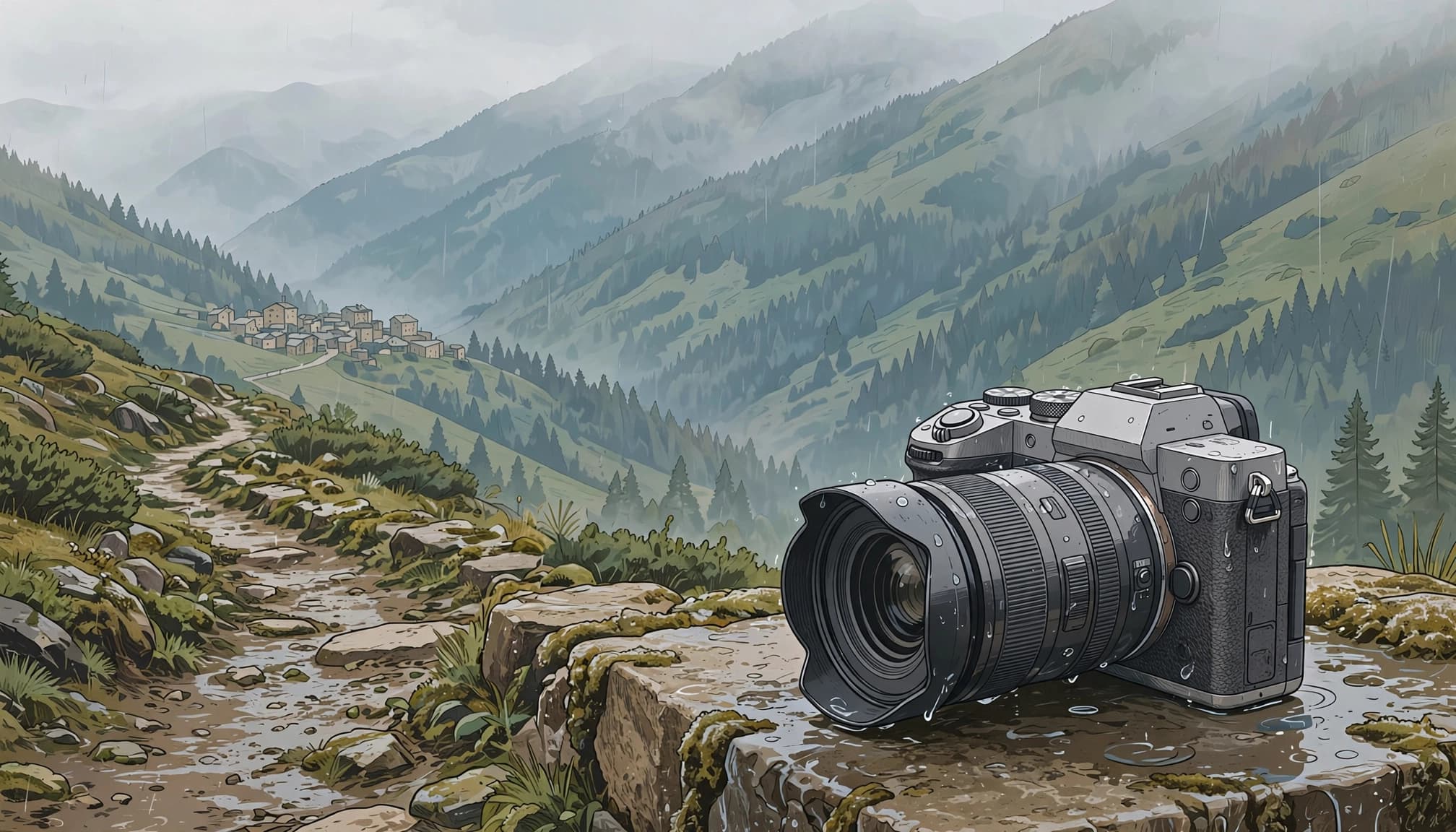
Best weather sealed cameras for lighter travel kits
For many European itineraries, a lighter APS-C or Micro Four Thirds kit makes more sense than a large full-frame body. The savings in size become clear on stairs, trains, and long museum days.
OM SYSTEM OM-1 Mark II for wet and cold trips
The OM SYSTEM OM-1 Mark II is the strongest pick when weather protection comes first. Its 20.4-megapixel Micro Four Thirds sensor won’t match the resolution of some full-frame options, yet the body has IP53-certified sealing and is described as dustproof, splashproof, and freezeproof.
That makes it a serious choice for hikers, bird photographers, and travelers heading into Scottish rain or alpine snow. The OM-1 Mark II’s IP53 protection is a clearer claim than most competing bodies offer.
Its smaller sensor also supports compact lenses, which can keep your day bag manageable.
Fujifilm X-T5 for compact detail
The Fujifilm X-T5 pairs a 40.2-megapixel APS-C sensor with a body that weighs 557 g with battery and card. Fujifilm states it has 56 weather-sealed points and operates down to -10 C.
That combination suits city photographers who want high-resolution files without carrying a full-frame system. The Fujifilm X-T5 weather-resistance details make it an appealing fit for winter markets, rainy street scenes, and landscapes with fine architectural detail.
The physical dials also make exposure changes quick when gloves make touch controls awkward.
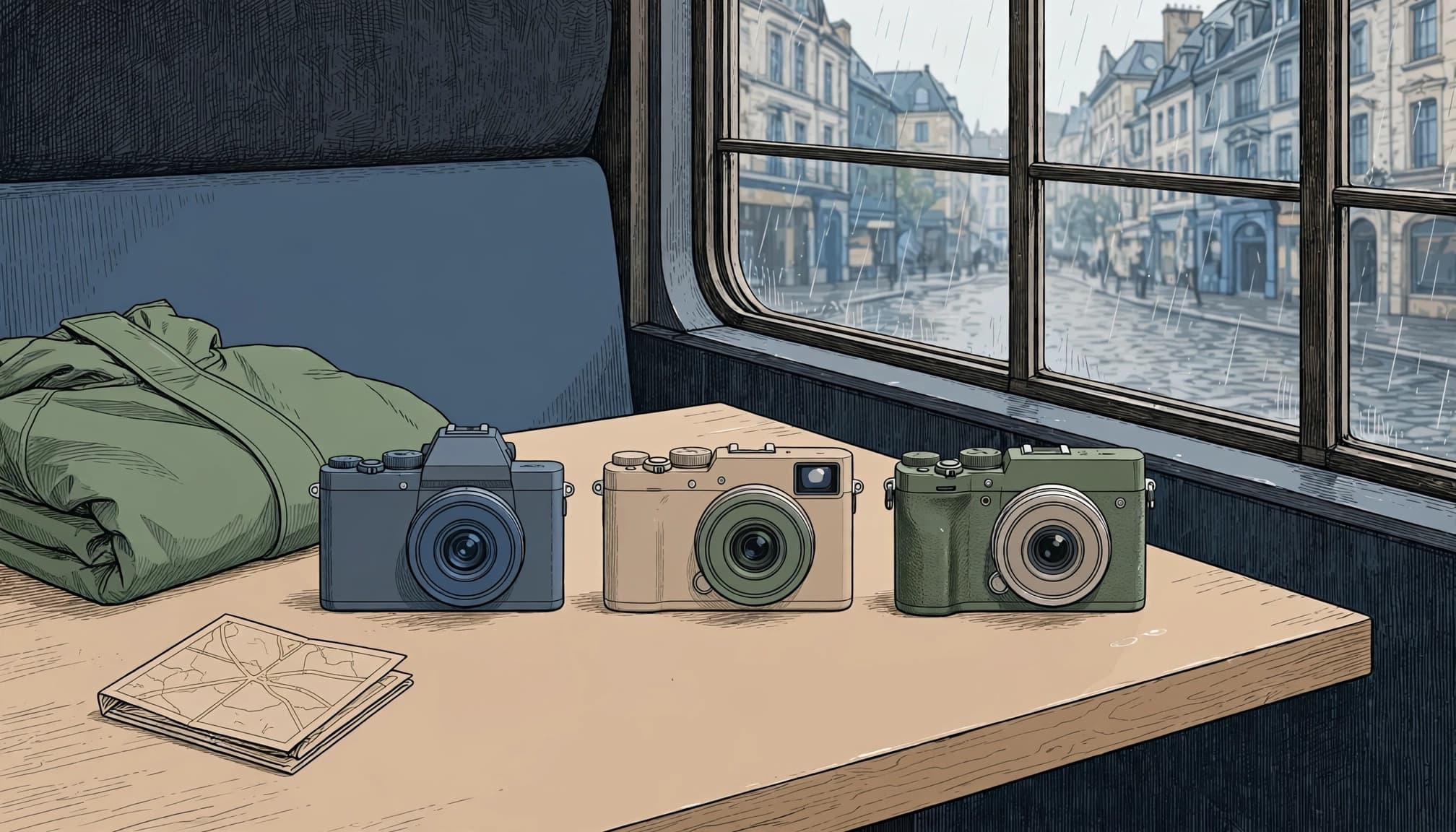
A compact kit encourages more photographs. That matters more than an impressive specification sheet when the light breaks through clouds for five minutes.
Full-frame cameras for rain and low light
Full-frame sensors help when you photograph dim interiors, blue-hour streets, and winter afternoons. However, bodies and lenses often add noticeable weight.
Canon EOS R5 Mark II for demanding files
The Canon EOS R5 Mark II has a 45-megapixel full-frame sensor and weighs about 746 g with battery and card. It suits photographers who want generous cropping room for landscapes, architecture, and distant mountain details.
Canon describes the body as dust- and water-resistant, but its EOS R5 Mark II specifications also state that resistance cannot completely stop dust or water droplets entering the camera. Pack a rain cover for sustained weather rather than relying on sealing alone.
This is a powerful travel camera, although the total kit becomes heavy once you add professional RF zooms.
Nikon Z8 for cold-weather work
The Nikon Z8 offers a 45.7-megapixel full-frame sensor in a body built for serious stills and video work. It weighs about 910 g with battery and memory card, so it earns its place when you need its autofocus, resolution, or rugged build.
Nikon says the Z8 has sealing around exterior covers, buttons, and tilting mechanisms. It is also rated for operation down to -10 C, as outlined on the Nikon Z8 product page.
Cold drains batteries quickly. Carry at least one spare close to your body.
Sony Alpha 7 IV for a versatile system
Sony’s Alpha 7 IV combines a 33-megapixel full-frame sensor with a weight of about 658 g including battery and card. It is a sensible middle ground for photographers who want full-frame image quality but don’t need the larger bodies above.
Sony describes a dust- and moisture-resistant design, while the Alpha 7 IV specifications do not list an IP rating. Treat it as capable in passing rain, then protect it when conditions worsen.
Panasonic LUMIX G9II for active travel
The Panasonic LUMIX G9II is another compelling Micro Four Thirds option for travelers who shoot both stills and video. Panasonic describes it as dust- and splash-resistant, with a body built to handle harsh conditions.
Its appeal is practical. Micro Four Thirds lenses can stay relatively small, and that makes room for a waterproof layer, food, and a spare battery in the same day bag.
Panasonic also warns that dust and splash resistance does not guarantee protection against direct contact with water. Read the LUMIX G9II resistance note before treating the camera as a rainproof tool.
Salt spray needs attention. Wipe down the exterior after any day near the sea.
Choose the camera you will carry
A camera’s protection level matters, but it should match your pace and the scenes you want to photograph.
Put carry weight before bragging rights
Halfway up Lisbon’s Alfama steps last spring, a friend stopped to shift his heavy full-frame body and fast zoom while I kept shooting with a lighter camera as a yellow tram rounded the corner.
The lighter kit got the frame because it was already out. For many travelers, an X-T5, OM-1 Mark II, or G9II makes more sense than a heavier full-frame setup.
If you shoot interiors, night scenes, or large prints, a full-frame model may justify the load. Otherwise, spend time comparing complete kits, not camera bodies alone.
Match the lens to the weather claim
A weather-sealed body paired with an unsealed travel zoom creates an obvious gap. Look for lens wording that matches the camera’s intended use.
For example, Nikon describes its NIKKOR Z 24-70mm f/2.8 S as fully weather-sealed, with a fluorine coating that repels water, dust, and dirt.
A standard zoom reduces lens changes in rain. Bring a small prime only when you know you will use it after dark.
A simple rain routine that protects your gear
Good habits protect cameras better than confidence in a marketing label. Keep the camera accessible, but don’t leave it exposed between shots.
Before you leave the hotel
Check the lens mount, battery door, and card door. Confirm that every seal sits cleanly and closes fully.
Pack a fitted rain cover or a simple protective sleeve. Most travelers need a response to sudden drizzle, not expedition-grade equipment. Keep the camera in a sealed section of your bag when crossing water or riding in heavy rain.
During and after the shoot
Use the hood. Shield the camera with your body when you change settings. If droplets build on the front element, dab them gently with a clean cloth.
Once indoors, dry the exterior before opening any door or removing a lens. Let the kit air out in a warm, dry room, away from direct heat. Avoid charging a battery if the compartment is damp.
Key Takeaways
- The OM-1 Mark II has the clearest protection claim here because it carries an IP53 rating.
- Fujifilm’s X-T5 gives lighter-travel photographers 40.2 megapixels and cold-weather operation to -10 C.
- Canon R5 Mark II and Nikon Z8 suit demanding full-frame work, but their bodies make a heavier travel kit.
- A sealed lens, hood, rain cover, and dry cloth matter as much as a weather-resistant camera body.
Frequently asked questions
Can weather sealed cameras handle steady rain?
They can handle more than an unsealed camera, but don’t assume steady rain is risk-free. Manufacturer wording sets the limit, and only the OM-1 Mark II in this group carries an IP53 rating. Use a cover during extended rain, avoid lens changes, and dry the camera before opening compartments.
Is an APS-C camera good enough for European travel?
Yes. An APS-C camera such as the Fujifilm X-T5 can produce detailed files for prints, city scenes, and landscapes. It also reduces carry weight, which often matters after a long day. Full frame remains useful for low-light work, but it is not required for strong travel images.
The camera should stay in your bag
The best weather sealed cameras make poor forecasts less disruptive, yet they don’t remove the need for care. Pick the body and lens combination you will still bring on a wet walking day.
A lighter kit often gets used more. A tougher kit gives you more confidence when clouds close in. Pack the camera dry, keep the hood attached, and leave one microfiber cloth in the top pocket.
