
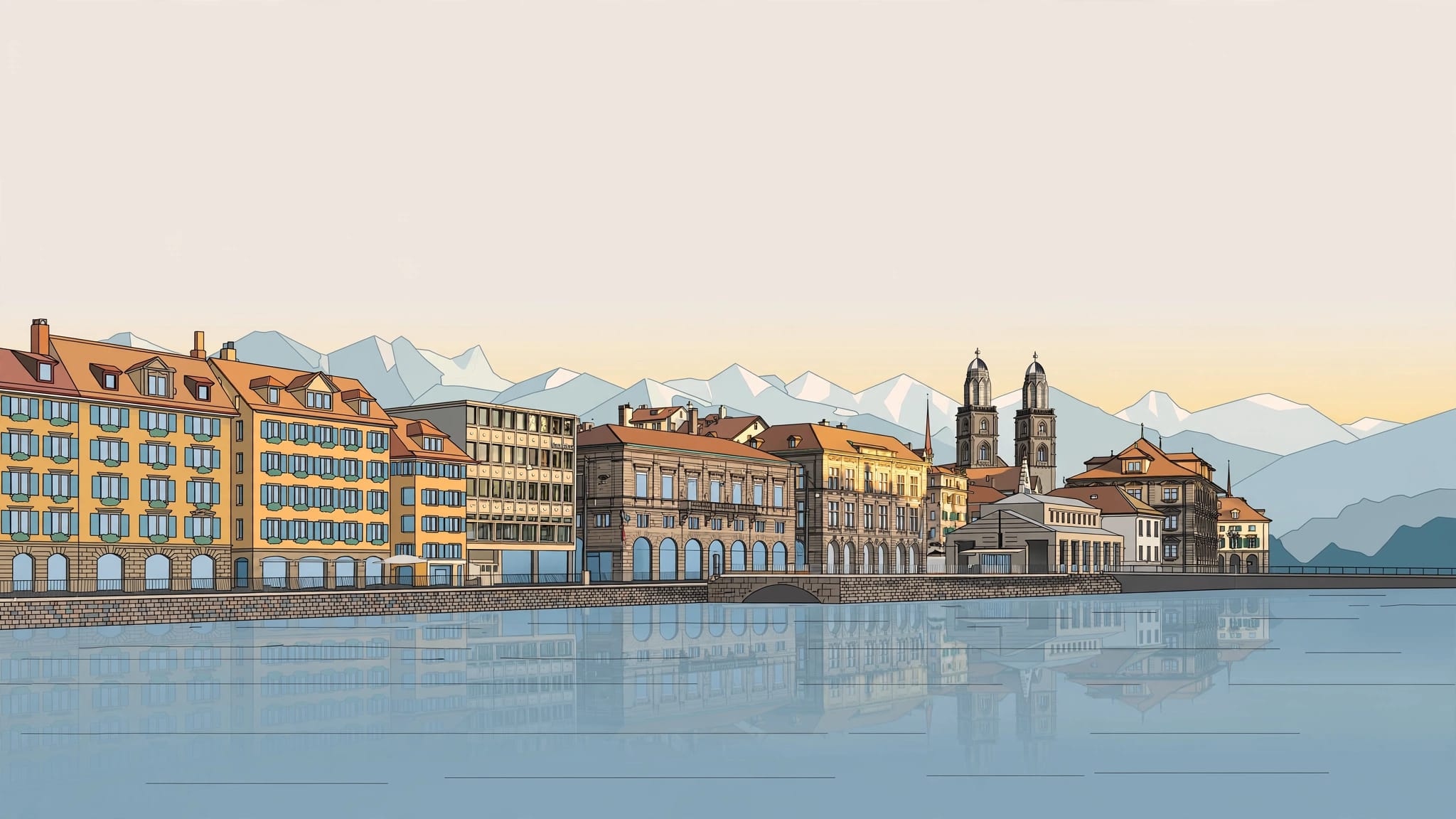
Zurich rewards photographers who slow down. The lake can turn glassy before breakfast, while a few streets uphill, painted shutters and weathered stone catch the first clean light.
The best Zurich photography spots are close together, yet each asks for a different approach. A wide lens suits the waterfront; a short telephoto reveals patterns in the Old Town. Plan around light and walking time, and you’ll come home with more than the standard postcard frame.
Start with a simple shooting plan
Zurich is compact, but its best compositions change quickly with weather and foot traffic. Put lake scenes early in the day, then move into the alleys when shopfronts are still closed and pavements are clear.
Wind is the deciding factor.
A clear morning can give you crisp mountain outlines across Lake Zurich. However, even a light breeze breaks reflections into bright, distracting fragments. Watch the water before unpacking a tripod.
Give each location a visual job
Avoid shooting every place with the same wide lens and eye-level view. Decide what each stop should contribute to your set.
- Use the lakefront for symmetry, open water, and long lines of light.
- Look for layered rooftops and towers at elevated overlooks.
- Save Old Town lanes for doors, fountains, signs, windows, and textured walls.
This approach keeps your images from feeling repetitive. It also makes a two-hour walk feel more focused than a rushed hunt for landmarks.
A useful central route
Begin around Bürkliplatz or Quaibrücke, walk north beside the Limmat, then climb to Lindenhof. Continue through Schipfe and cross toward Grossmünsterplatz. The route has frequent changes in height, subject distance, and direction of light.
If clouds roll in, stay with the details. Stonework often looks better under soft skies than harsh sun.
Zurich photography spots for Lake Zurich reflections
Lake Zurich is broad enough to feel open, but the northern waterfront still keeps church towers, boats, and distant hills within reach. For reflections, shoot close to the shore where your foreground can anchor the frame.
Quaibrücke gives you the classic axis
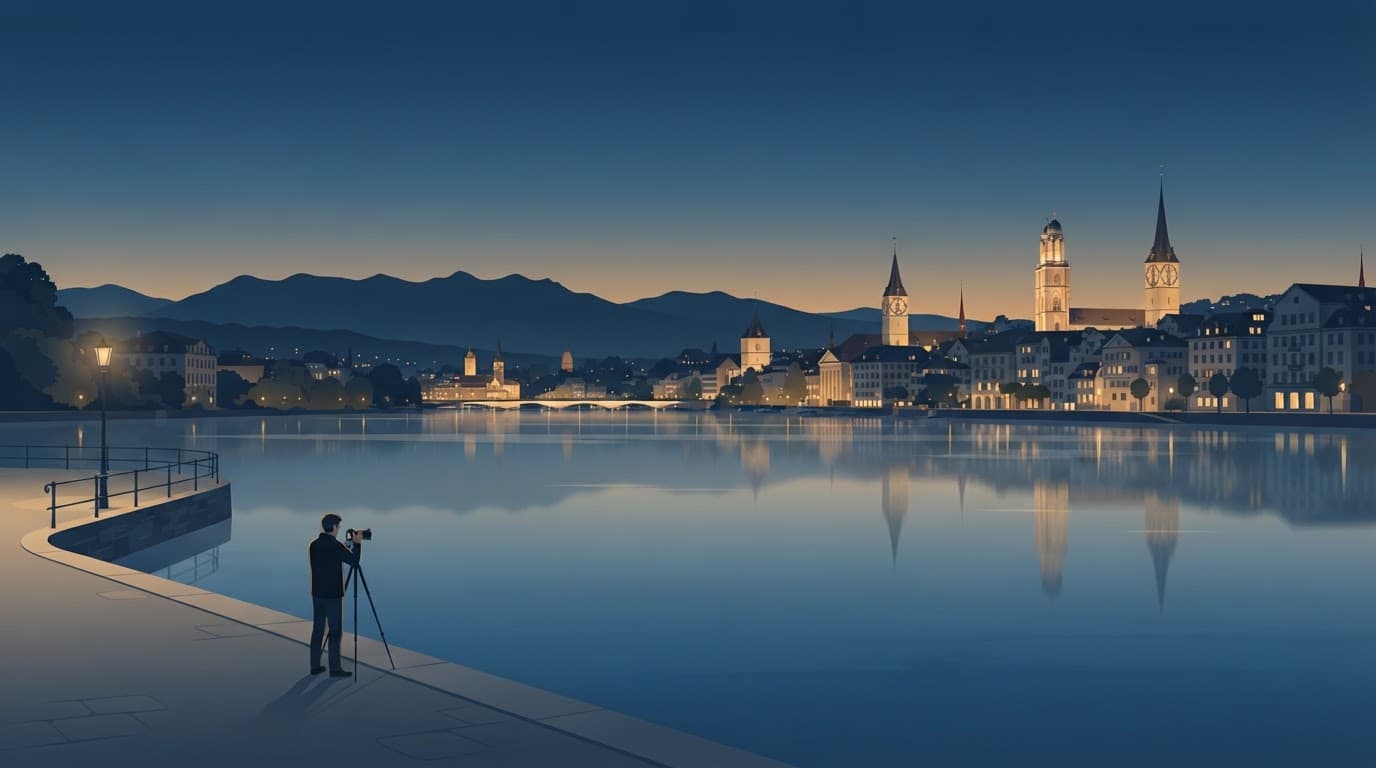
Quaibrücke sits at the lake’s northern end, where the Limmat meets the water. Stand along the bridge or nearby quays to frame the lake against the city, with Grossmünster’s twin towers adding a clear focal point.
Morning is usually calmer. At blue hour, lights along the water can form long broken streaks when the lake has only a slight ripple. Keep the horizon level, because the lake makes even a tiny tilt obvious.
A 24 to 70 mm lens is flexible here. Start wide for waterfront scale, then zoom closer to isolate a boat, tower, or reflection.
Bürkliplatz and Bellevue allow more space
Bürkliplatz offers a generous view south across the water. It works well when the Alps are visible, although haze often softens them in warmer months. Bellevue, farther east, puts the city closer behind you and gives cleaner views along the quay.
One early September morning, a photographer at the Bürkliplatz steps found that a parked white boat created a stronger foreground than the distant skyline. Shifting only a few meters lowered the boat into the reflected band of pale sky, turning an ordinary lake view into a balanced vertical composition.
Reflections don’t need perfect stillness. A gentle ripple can stretch lights and add movement after sunset.
Time the light instead of chasing landmarks
Great Zurich photography spots are often ordinary places at the right hour. The lake’s mood changes faster than the architecture, so build your day around conditions rather than a rigid checklist.
Shoot before breakfast for clear water
Arrive around sunrise, then spend 30 to 45 minutes on the waterfront. The lower sun gives the façades warm side light, and fewer people cross bridges or gather along the railings.
Later in the morning, move into narrow streets. Their tall buildings create shade, which reduces contrast on ornate façades. Overcast weather is also useful for close-up work because it avoids bright highlights on pale stucco.
| Condition | Best subject | Practical adjustment |
|---|---|---|
| Calm sunrise | Lake reflections | Use low ISO and a level horizon |
| Bright midday | Dark alleys and details | Expose for highlights on pale walls |
| Soft overcast | Doorways and façades | Look for color and texture |
| Blue hour | Bridge and waterfront lights | Stabilize the camera and shoot several frames |
The strongest lake images often come just after the sun drops, when the sky remains blue but the city lights have begun to appear.
Use exposure with restraint
For daylight reflections, start at ISO 100 and expose carefully for the bright sky. If the lake looks flat, lower your viewpoint and allow more water into the frame.
At dusk, a tripod helps, but don’t block narrow pavements or bridge paths. Handheld photographers can raise ISO and use image stabilization rather than forcing a long exposure.
Carry a microfiber cloth. Lake spray and sudden drizzle show up quickly on a front element.
Find Old Town details beyond the skyline
Zurich’s Altstadt has grand landmarks, but its smaller scenes often feel more personal. Look below the roofline and outside the obvious squares. Door knockers, drainpipes, faded paint, cobbles, and fountains give your gallery a sense of place.
Walk Schipfe slowly
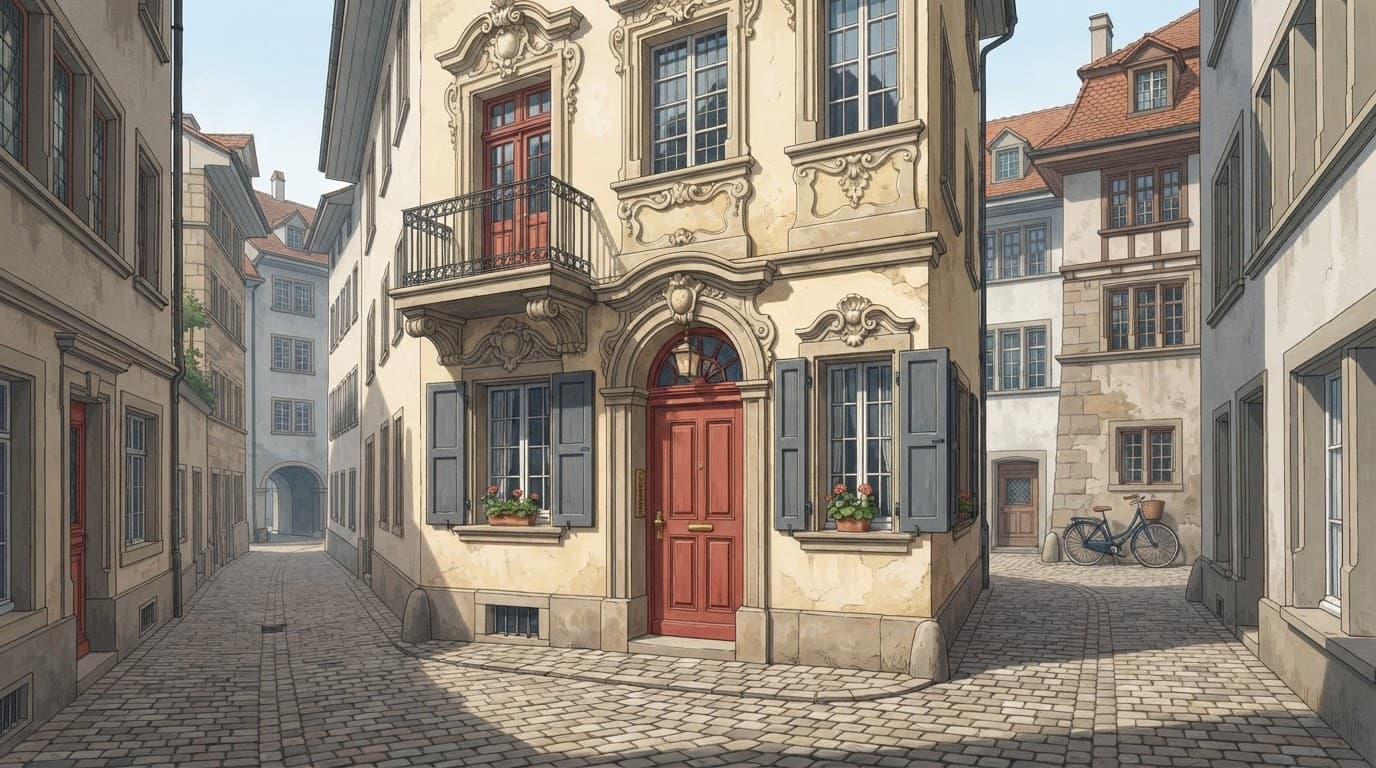
Schipfe runs beside the Limmat below Lindenhof and has a quieter feel than the major shopping streets. Its close-set buildings create natural frames, while the river occasionally opens between them.
Use a 35 mm or 50 mm lens here. Those focal lengths let you capture a doorway in context without flattening the scene. Step back when you can, then wait for clean gaps between pedestrians.
The Zurich Old Town guide is useful for placing Schipfe within a wider walk that includes the city’s major churches and alleys.
Work the Münsterbrücke corridor
Münsterbrücke connects Fraumünster and Grossmünster, creating one of Zurich’s most recognizable architectural pairings. Photograph it straight on for symmetry, then move upstream or downstream to build diagonal lines with the riverbank.
Don’t point your camera only upward. Reflections of church façades in the Limmat, a tram passing behind a tower, or cyclists crossing the bridge can give the familiar view more life.
Keep voices low. Residents live above many of these streets.
Use high viewpoints with a clear purpose
An overlook should offer more than a higher version of the same scene. In Zurich, each major viewpoint gives a different relationship between the Limmat, Old Town roofs, and the lake.
Lindenhof is ideal for layered city frames
Lindenhof is a public hilltop terrace above the Old Town. Its view looks across the Limmat toward Grossmünster, City Hall, clustered roofs, and the university side of the city.
The official Lindenhof visitor page confirms the range of landmarks visible from this compact overlook. Arrive early if you want clean railings and space to compose without people stepping into the foreground.
Try a moderate telephoto lens. At roughly 70 to 100 mm, rooftops and towers stack into a tighter frame, while the river curves through the scene.
Karlsturm and Uetliberg broaden the frame
Grossmünster’s Karlsturm gives a high-angle view over the Old Town and Lake Zurich. Check current opening hours before visiting, because tower access can vary by season.
For a larger city-and-lake panorama, take the S10 from Zurich Main Station to Uetliberg. The city viewpoint guide highlights both Karlsturm and Uetliberg among Zurich’s major outlooks.
One wide panorama is enough. Spend the remaining time looking for smaller, more distinctive frames.
Choose gear that fits Zurich’s streets
You don’t need a heavy kit. A camera body, two lenses, spare battery, cloth, and a compact tripod cover most of the city. Zurich’s slopes and cobbles make every unnecessary kilogram noticeable by midday.
Bring a wide lens and one tighter option
A 16 to 35 mm lens works for Lake Zurich, bridges, church interiors where photography is permitted, and narrow lanes. Pair it with a 50 mm prime or a 70 to 200 mm zoom for details across the river.
Phone photographers can still make strong images here. Use the standard lens for architecture, avoid extreme digital zoom, and tap to protect highlights in a bright sky.
For long exposures, carry a small neutral-density filter if you want silky water during daylight. At dusk, skip it and keep shutter speeds practical.
Edit for texture, not exaggerated color
Zurich’s palette is already subtle: cool water, limestone, muted roof tiles, warm façades, and green hills. Push saturation too far and the city starts to look artificial.
Instead, recover highlights in the sky, add modest contrast to masonry, and keep blues believable. Crop distractions at the edges before adding effects.
Respect access, weather, and everyday life
Most waterfront viewpoints and Old Town streets are public, but a respectful approach makes the day easier. Don’t set a tripod in a narrow passage, on steps, or in a busy cycle lane. Keep private courtyards private.
Build transport around your light window
Public transport makes it easy to connect the lake, Old Town, and Uetliberg without a car. Check current ZVV routes and fare zones before leaving, especially if you plan to travel outside central Zurich.
The Zurich sightseeing overview can help you pair photographic stops with museums, churches, or waterfront walks. If rain begins, choose covered arcades and close architectural studies instead of waiting at the lake.
Photograph people with care
Street scenes can add scale, but don’t treat passersby as props. Ask before taking a close portrait, especially in quieter lanes or markets. For wider scenes, wait for natural spacing and avoid blocking someone else’s route.
September weather can shift within an hour. Pack a light rain cover and keep your camera accessible, because wet cobbles and soft cloud light can make the Old Town more photogenic.
Final frames before you leave
Zurich works best when you shoot with patience. Let the lake settle, let the streets empty, and look for the small visual links between river, stone, and spires.
The most memorable images often come after you have already captured the obvious view. At Quaibrücke, wait until the tram lights settle as thin gold lines on the water.
