
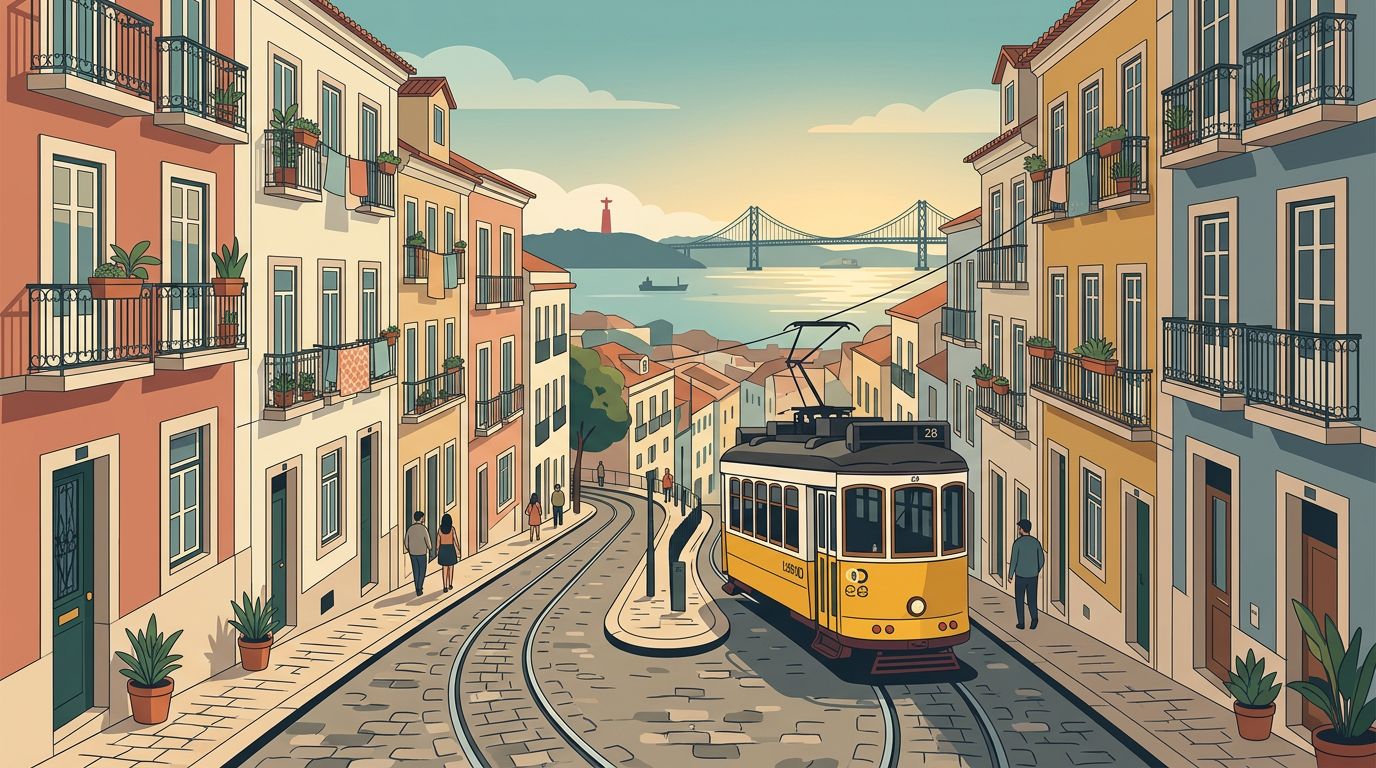
The hardest part in Lisbon isn’t finding beauty. It’s choosing where to point the camera before the light shifts and the crowds arrive.
The best Lisbon photo spots for yellow trams and river viewpoints reward early starts, uphill walks, and patience at corners where tracks bend. Get those three right, and the city starts handing you frames that look almost staged.
Where the yellow trams look most Lisbon
The classic tram photo isn’t about the tram alone. It needs steep stone, tight facades, a hint of laundry, and a curve in the track that pulls your eye forward. Early light wins.
Graça and Sao Vicente for tight street shots
Graça is where tram 28E looks its most cinematic. Around Rua da Graça and Calçada de Sao Vicente, the tram squeezes through lanes that feel one car wide, so you can frame yellow paint against pale stone and weathered pastel walls.
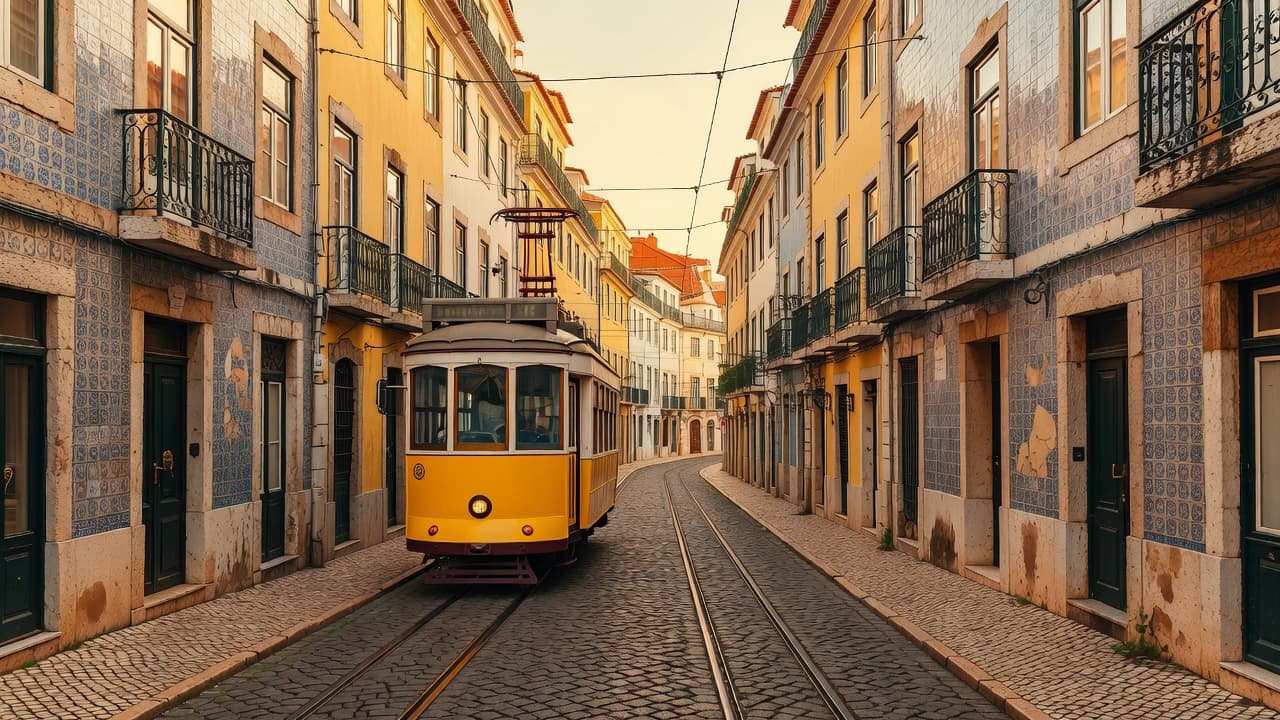
Get there before 8:00 AM if you want space to work. Trams begin running early, often around 7:00 AM, and the stop boards usually beat printed schedules when traffic starts slowing things down. Because the route is fixed, you can pre-compose at a bend and wait instead of chasing the tram uphill.
One early morning on Calçada de Sao Vicente, a delivery van held a tram for less than a minute, and that tiny delay gave everyone on the corner enough time for a clean side-on frame that usually slips away in seconds. Patience pays here.
Bica and Bairro Alto for steep lines
Bica gives you another look entirely. The slope is sharper, the street feels narrower, and the tracks cut a strong line through the frame. If you want the tram to feel woven into the hill, this area works better than the flatter central streets.
Bairro Alto also has strong tram angles, especially where the route threads past tiled walls and older shopfronts. The scene is messier than postcard Lisbon, which is why it often photographs better. You get texture, shadow, and people moving through the shot.
The cleanest tram photo often comes from one good corner and five quiet minutes.
Praça do Comercio and Belém for more breathing room
If you prefer wider compositions, move toward Praça do Comercio. The pillars and open square give the tram room, while the Tagus sits close enough to add a river mood without crowding the frame.
Belém is different again. Tram 15E isn’t the old wooden icon most visitors picture, but it can work well if you want tracks, waterfront light, and broader skies. For more street-by-street backup locations, this tram photo guide for Lisbon is handy.
River viewpoints worth the climb
Lisbon’s miradouros aren’t all the same. Some are best for broad skyline shots. Others work because they layer rooftops, church towers, and a slice of river in one compact frame. Crowds build fast.
Santa Luzia and Portas do Sol for classic terraces
Santa Luzia is the softest of the famous viewpoints. The pergola, tile panels, and terrace edge give you foreground options, while the river opens out beyond Alfama’s roofs. At blue hour, the scene loses contrast and gains atmosphere.
Just next door, Portas do Sol gives a wider, cleaner view. If Santa Luzia feels intimate, Portas do Sol feels open. Both are strongest late in the day, when sunlight angles across the rooftops instead of flattening them.
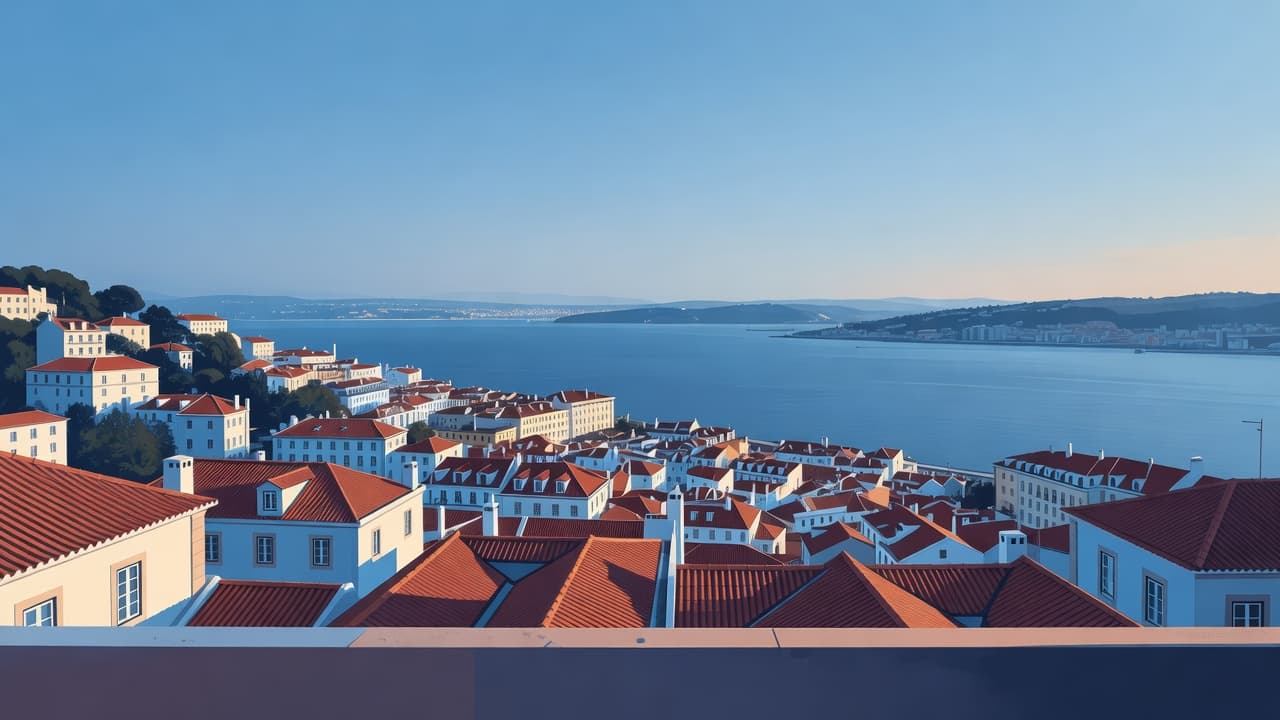
At Santa Luzia, the terrace can look almost too polished at first, yet if you wait until the sun drops lower, the railing shadows stretch across the tiles and the river picks up a silver band that phones often miss on auto. Worth the climb.
Graça and Senhora do Monte for bigger scale
Miradouro da Graça feels more local, even when it’s busy. You still get rooftops and river, but the frame has more breathing room and a stronger sense of height. It’s a good place to switch to a longer lens and compress layers of buildings.
If you only have one sunrise in Lisbon, go to Senhora do Monte, because the height gives you rooftops, Castelo de Sao Jorge, church domes, and the Tagus in one frame before haze softens the distance and before the terraces start filling with people.
Bring a tripod if you want blue-hour city lights. Also bring water. The climb is short, but steep.
East-facing river views near Parque das Nacoes
For a different mood, head east toward Parque das Nacoes and the riverfront near the Vasco da Gama Bridge. This isn’t old Lisbon. That’s the point. The light is cleaner, the lines are simpler, and sunrise reflects well off the broad water.
If you’re building out a longer shot list, this complete Lisbon photography spots guide adds more viewpoints and skyline angles across the city.
Light, timing, and camera choices that make the shot
Good Lisbon photos often come down to minutes, not hours. Blue hour and sunrise are your safest windows for both trams and viewpoints, because hard midday light turns white walls harsh and flattens the river.
For crisp tram shots, use shutter priority or manual mode and start around 1/500 sec. If the tram is closer or moving faster downhill, go to 1/1000 sec. When you want motion blur, slow to 1/30 or 1/60 sec and pan with the tram as it passes. The wheels blur nicely, but the body can stay sharp if your movement is smooth.
Continuous autofocus helps. So does pre-focusing on a bend, a doorway, or a stop sign where you expect the tram to appear. If you shoot with a phone, tap to lock focus and exposure before the tram enters the frame. Otherwise, the bright yellow body can trick the meter.
For viewpoints, wide lenses help, but they aren’t the whole story. A 70 to 200 mm lens can compress rooftops and make the river feel closer, which is useful when haze reduces depth. Meanwhile, a small tripod lets you keep ISO low at blue hour when city lights begin to flick on.
Tram timing matters, yet it isn’t exact. Check the Carris app or stop boards, then expect delays from traffic, parked cars, or loading vans. That sounds annoying, but it often helps photographers more than it hurts them.
A simple photo day that links trams and viewpoints
If you want one efficient route, start high and finish high. The middle hours can stay flexible.
This quick plan keeps travel simple and puts the best light where it matters most:
| Stop | What to shoot | Best time |
|---|---|---|
| Senhora do Monte | Wide skyline and Tagus | Sunrise |
| Graça and Sao Vicente | Tram 28E in narrow lanes | Early morning |
| Praça do Comercio or Belém | Open tram frames near water | Late afternoon |
| Santa Luzia or Portas do Sol | Rooftops, river, blue hour | Sunset to dusk |
After sunrise, walk down from Senhora do Monte into Graça instead of taking the tram right away. You’ll see the tracks before you hear the bell, which gives you time to line up doorways, cobbles, and shadows.
Later, use the flatter center for a break. Baixa and Chiado are good for coffee, people shots, and looser city scenes between planned locations.
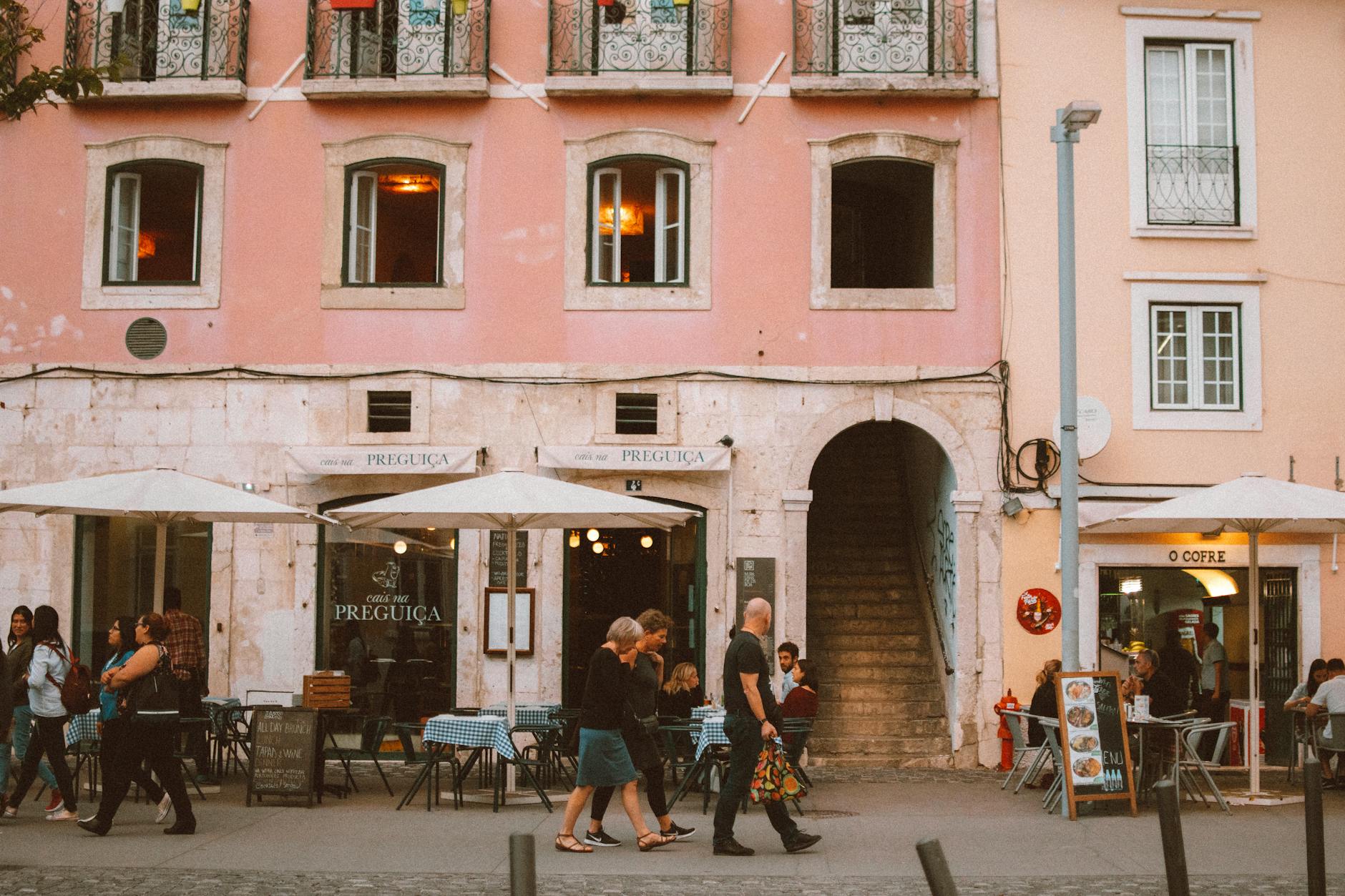
Photo by Lisa from Pexels
If you enjoy street scenes as much as landmarks, these Lisbon street photography spots fit nicely around the tram route. A daily public transport pass also helps, because you can hop between hills without debating every fare.
One last practical note: don’t block tram doors, tracks, or viewpoint railings. Lisbon rewards patience more than speed, and locals still need to move through the city while you’re making pictures.
Final thoughts
The city gives you two gifts: movement on the hills and space above the river. The strongest frames come when you pair them with the right hour, then stay put long enough for the scene to settle.
So pick fewer spots, arrive earlier, and wait for the bell instead of chasing it. When the church clock nears eight at Portas do Sol and another tram sound rises from Alfama, will you still be packing your bag?
