
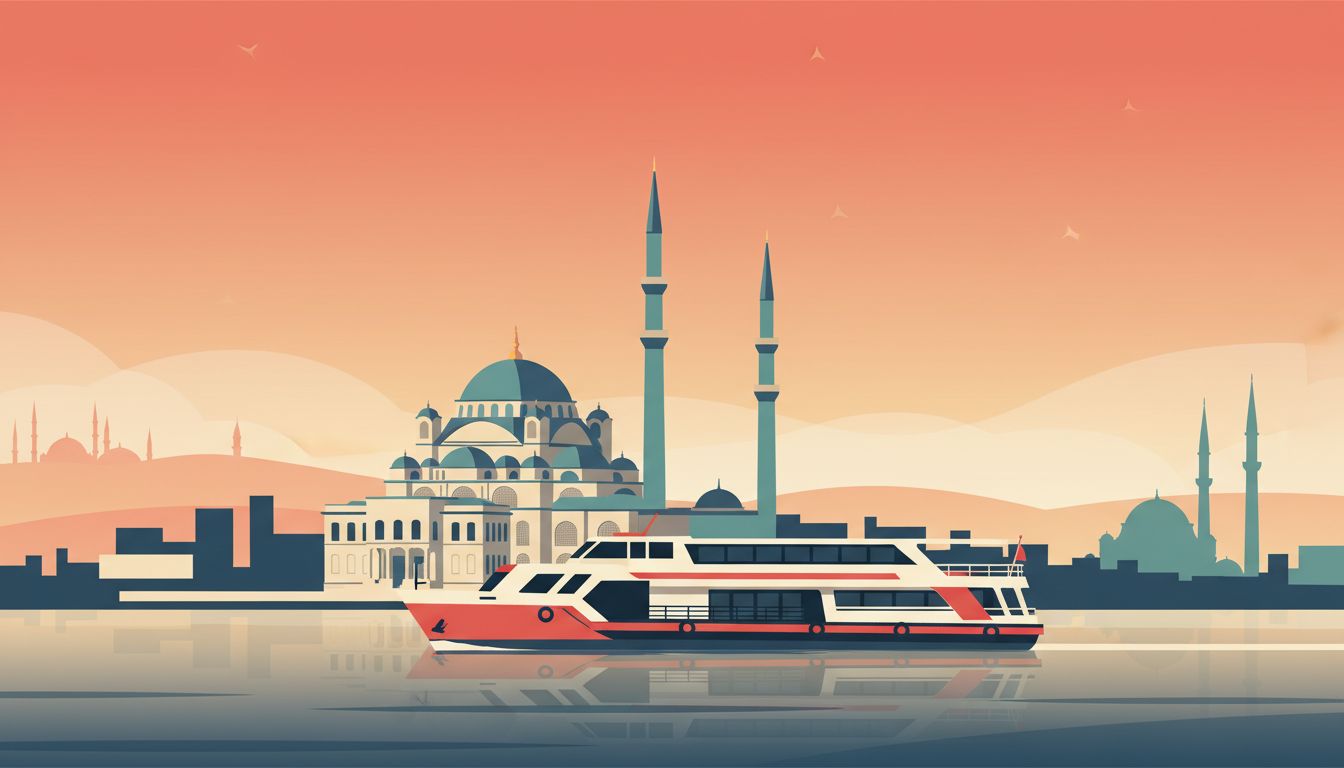
Few cities put moving subjects and monumental backdrops in one frame. In Istanbul, a commuter ferry can glide beneath domes and minarets within minutes.
The strongest Istanbul photo spots sit beside the water, but timing matters as much as location. Wind, crowds, ferry schedules, and prayer times can quickly reshape a scene.
Begin along the Bosphorus, then head inland toward the old city’s rooftops and steep back streets.
Key Takeaways
- The strongest Istanbul photo spots combine moving ferry traffic with monumental skylines, especially around Ortakoy, Uskudar, Galata Bridge, and the Dolmabahce Palace waterfront.
- Sunrise suits Sultanahmet, Galata Tower, and Balat, while the final 45 minutes before sunset work best for Bosphorus viewpoints, ferry decks, and blue-hour scenes.
- Use regular public ferries and an Istanbulkart to move flexibly between viewpoints, and carry a microfiber cloth for salt spray and damp railings.
- Pack a light camera setup and avoid full-sized tripods inside active mosques or other attractions unless staff give clear permission.
- Respect residents and worshippers by dressing appropriately, keeping walkways open, and asking permission before photographing people at close range.
Istanbul photo spots beside the Bosphorus
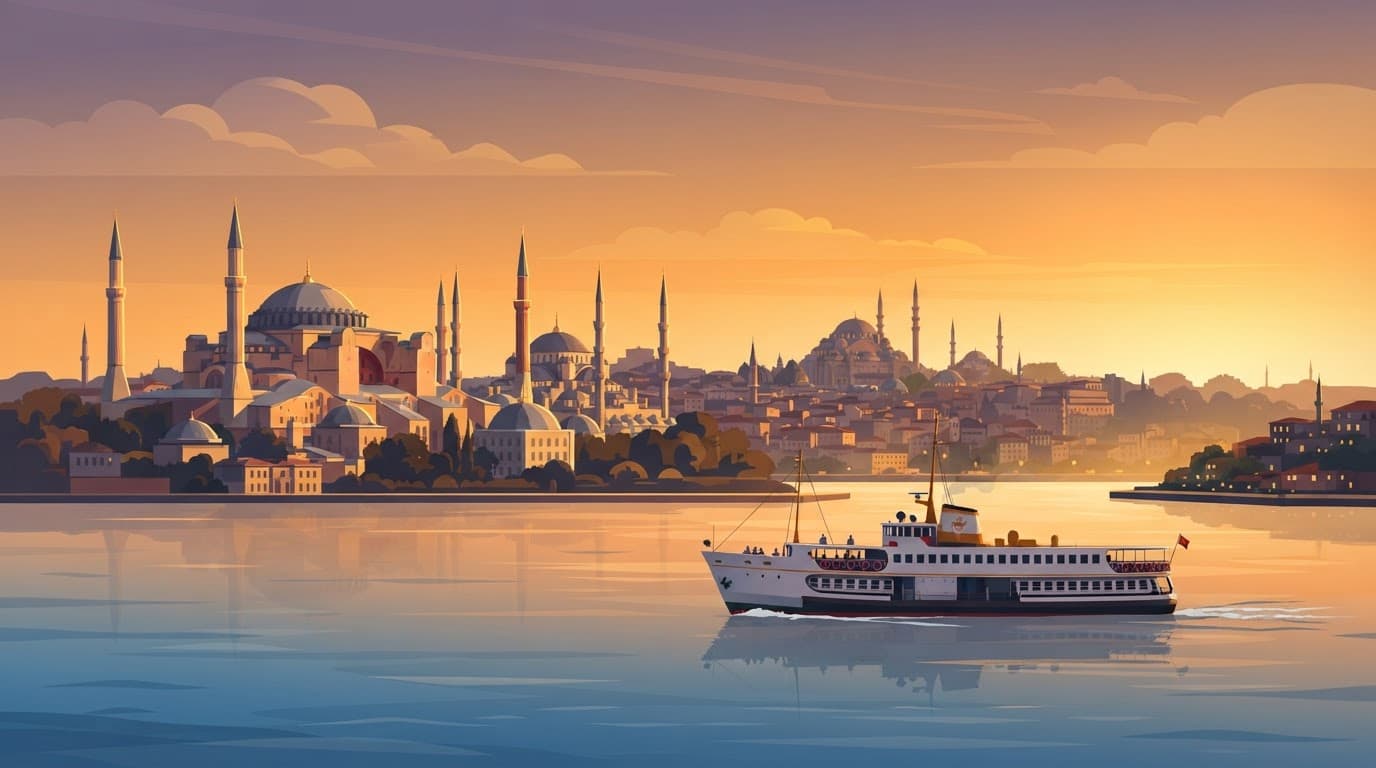
A pause between ferry wakes.
Water gives Istanbul’s mosque skylines breathing room. Public piers stay busy. Still, the ferry traffic gives a photo a sense of scale that no empty-water view can match.
Ortakoy Mosque and the bridge
Ortakoy Mosque is one of the easiest places to pair an ornate mosque with the Bosphorus. Its pale facade sits low beside the water, while the 15 July Martyrs Bridge fills the distance behind it.
At Ortakoy Mosque, settle beside the waterfront railings as golden hour begins. Compose the mosque with open water on one side, then wait for a ferry to enter the clear gap between the minarets and bridge. A 24-70mm lens gives you flexibility as each passing boat changes the composition.
Use a faster shutter speed when the wind pushes chop across the water. Around 1/500 second freezes the ferry and gulls, while a lower ISO keeps Ortakoy Mosque and the sky’s warm tones clean.
Dolmabahce Palace waterfront route
The waterfront around Dolmabahce Palace offers a clean side view of the ornate facade, with open water behind it. Wait for a ferry to align with Dolmabahce Palace, leaving space above it for the upper facade.
Late light catches Dolmabahce Palace’s stone details before the shoreline falls into shadow. From Kabatas, walk along the waterfront to Dolmabahce Palace, then continue toward the piers if the light shifts.
Uskudar and the Salacak shore
Across the water, Uskudar faces the historic peninsula and gives you a wide view of the old city. Walk south toward Salacak for a calmer shoreline and a more open sightline toward Hagia Sophia, Topkapi Palace, Maiden’s Tower, and the clustered minarets beyond Eminonu.
Choose a public ferry from Karakoy or Eminonu instead of a Bosphorus Cruise when you want flexible photo timing. Regular crossings let you move between decks, shoot through open sections, and step off when the light looks promising. A traveler discussion of ferry sunset views also offers useful perspective on why regular crossings can be more rewarding than a rushed sightseeing itinerary.
Blue hour is brief. Stay after sunset until the mosque lights brighten and the water turns steel blue.
Frame the Golden Horn and Sultanahmet skyline
Galata Bridge gives you a direct, busy view toward Eminonu. Head for its western end and point across the Golden Horn toward Yeni Cami, also called the New Mosque. Fishers, ferry wakes, and the bridge’s railings can all work as foreground layers.
From the western approach, look beyond Yeni Cami toward Suleymaniye Mosque for an elevated skyline alternative. Suleymaniye Mosque’s position across the Golden Horn lets boats and ferry wakes build a layered composition.
Stand back from the main pedestrian flow if you can. A longer focal length compresses the mosque and boats, while a wider lens makes the bridge feel more active. Framework Films’ Galata Bridge location notes highlight the appeal of this waterfront angle, where the mosques rise over a working harbor instead of an empty postcard view.
A scheduled ferry often creates a better frame than a tour boat. Its plain white hull and familiar route add a sense of everyday Istanbul.
Sultanahmet Square at first light
Sultanahmet is for architectural scale, not peaceful solitude. Arrive for sunrise photography and work around the gardens, fountains, and paths between the Blue Mosque and Hagia Sophia before large tour groups gather.

Photo by Toygar Par
In Sultanahmet, a carefully composed scene needs patience. One coach group, security barrier, or maintenance screen can change the foreground in seconds, especially on the paths between Hagia Sophia and the Blue Mosque.
Both buildings are active religious sites. Keep shoulders and knees covered, and carry a scarf for head covering if you plan to enter. Hagia Sophia’s visitor arrangements and paid upper-gallery access can change, so confirm current hours and ticket rules at the official entrance on the day.
For low light or poor weather, the Basilica Cistern offers an indoor backup. Its columns and reflections suit low-light photography when outdoor contrast is flat.
Check the Basilica Cistern’s current entry arrangements, timed access, and opening hours before setting out. Pair the Basilica Cistern with the square, then return outdoors if the weather clears.
After Sultanahmet, take a longer historic-peninsula walk past Topkapi Palace and toward the Grand Bazaar. For a waterfront-oriented market route, detour through the Egyptian Bazaar before returning to the ferry docks.
Schedule Topkapi Palace early, before the market route, to keep the longer walking stretch comfortable.
For a view from a rooftop terrace, Seven Hills Restaurant looks over the Blue Mosque and Hagia Sophia. Reserve early, request terrace seating, and treat the meal as part of the experience rather than expecting a private photo studio.
Galata Tower streets and Balat color
For Galata Tower, skip the temptation to shoot only from its viewing platform. The stronger street frames appear around Buyuk Hendek Caddesi and the steep lanes below the tower, where old facades funnel the eye upward.
Shoot vertically if you want the tower to feel imposing. However, a horizontal frame with one small pedestrian near the lower edge can show its true height. Keep your camera strap close on the narrow pavements, since delivery scooters and cars still use these streets.
Together, the Galata lanes and Balat make a varied street photography route, with Istiklal Caddesi offering a practical walking extension. On Istiklal Caddesi, move into side streets rather than photographing only the busiest stretch. You can also continue downhill toward the waterfront and Dolmabahce Palace.
Photographer Vito L. Tanzi has built his Istanbul photography guide on more than 10 visits. That repeat-visit approach suits Galata, where a street that feels crowded at noon can be nearly empty after breakfast.
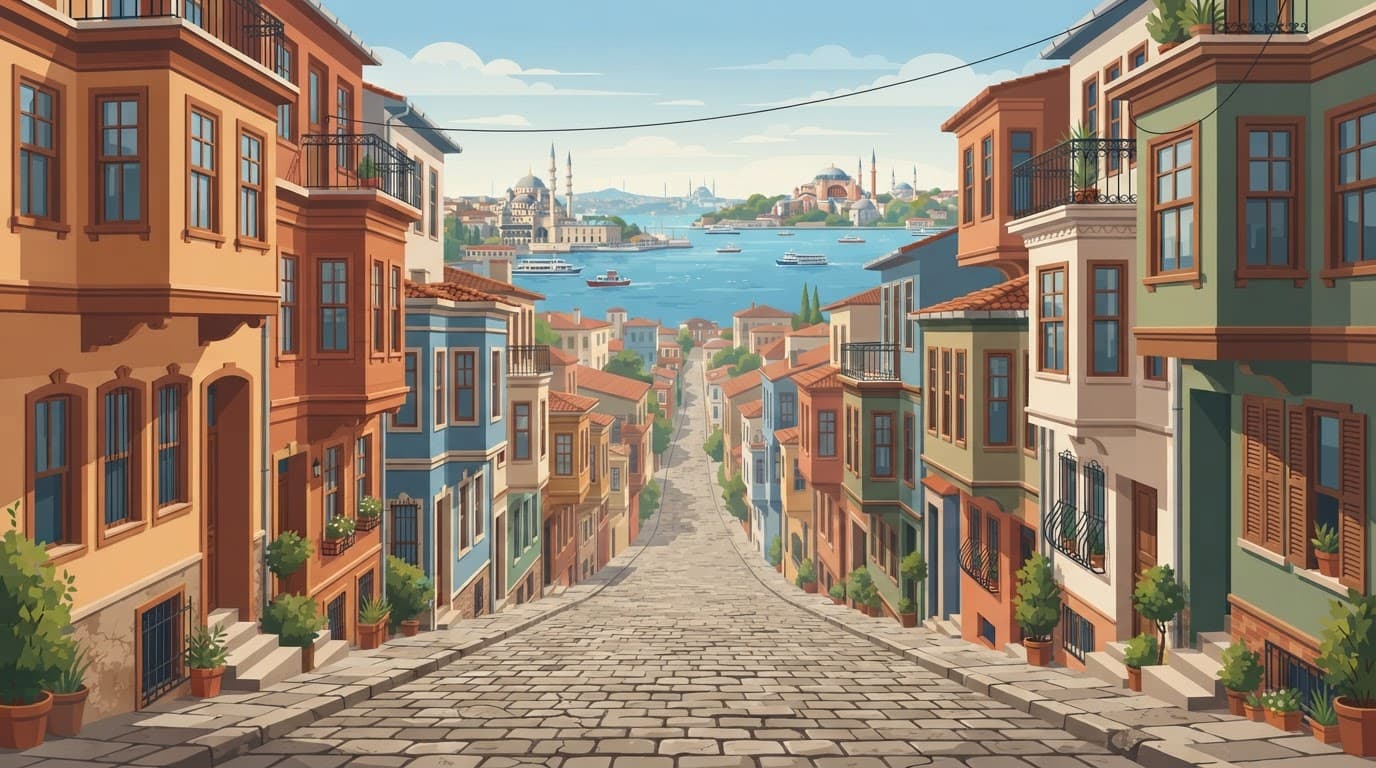
The Balat neighborhood offers a different mood. Walk Kiremit Caddesi and the neighboring slopes for painted wooden houses, small stairways, laundry lines, and textured doorways. The appeal is real, yet residents live here.
Responsible street photography means respecting privacy on narrow pavements. Don’t block doorways or photograph people at close range without permission. Step aside when a cart, child, or neighbor needs the pavement; patient observation buys cleaner frames.
Getting to the viewpoints with an Istanbulkart
Istanbul’s public transportation connects Istanbul Airport to the city via the M11 metro line, which reaches Gayrettepe. From there, the M2 line is useful for Taksim, Istiklal Caddesi, and Sisli. The Galata side of Beyoglu offers a practical walking loop along Istiklal Caddesi. Havaist airport coaches can be less complicated for Sultanahmet-area hotels if a stop is close to your accommodation.
Buy an anonymous Istanbulkart at airport or station machines, load credit, then tap at metro gates, tram platforms, and ferry turnstiles. As of August 2026, the standard electronic fare is 46.20 TL, while an anonymous physical card costs about 165 TL before travel credit. Fares change, so leave a balance that covers an extra ferry crossing.
The T1 tram is particularly useful for photo days. It links Kabatas, Karakoy, Eminonu, Sultanahmet, and Beyazit, with Topkapi Palace near Sultanahmet and the Grand Bazaar near Beyazit. It also connects Galata Bridge, the old city, and the Bosphorus waterfront, so you can move between them without relying on taxis.
Kabatas is the closest practical stop for Dolmabahce Palace and its waterfront. After visiting Dolmabahce Palace, use a nearby ferry or the T1 tram for the next viewpoint.
The Sultanahmet tram stop is a useful arrival point for the Basilica Cistern. Pair the Basilica Cistern with the square, or keep it as a rainy-day backup.
Keep a microfiber cloth handy. Salt spray and damp ferry railings leave marks on lenses quickly.
Timing, tripods, and a lighter camera bag
These two windows produce the most reliable light.
| Time window | Best use |
|---|---|
| Sunrise to mid-morning | Sultanahmet, Galata Tower streets, Balat |
| Final 45 minutes before sunset | Golden hour at Ortakoy, Uskudar, Galata Bridge, ferry decks, and the Dolmabahce Palace waterfront |
For silhouettes, place the sun behind a mosque or ferry and expose for the bright sky. For detailed domes, turn toward side light and avoid the harsh middle of the day.
Treat a full-sized tripod as prohibited inside active mosques unless staff give clear permission. Prayer spaces need open walkways, and staff may change access rules without notice. Indoor attractions can also restrict tripods, so bring a stabilized camera or a small lens with a wide aperture instead.
Pack light enough to board ferries quickly. One camera body, a wide-to-standard zoom, a short telephoto, and spare battery coverage are usually enough for these locations.
Frequently Asked Questions
What are the best Istanbul photo spots for ferry and mosque skyline views?
Ortakoy Mosque, Uskudar’s Salacak shore, Galata Bridge, and the Dolmabahce Palace waterfront offer some of the most reliable combinations of ferries and mosque skylines. Each location gives you a different balance of open water, historic architecture, and everyday city activity.
When is the best time to photograph Istanbul’s landmarks?
Arrive at Sultanahmet, Galata Tower, and Balat from sunrise to mid-morning, when the streets are quieter and the light is softer. Use the final 45 minutes before sunset for Ortakoy, Uskudar, Galata Bridge, ferry decks, and the Dolmabahce waterfront, then stay for blue hour.
How do you get between Istanbul’s photo locations?
An Istanbulkart works on the metro, tram, and public ferries, making it useful for linking the old city, Galata, and the Bosphorus waterfront. The T1 tram connects Kabatas, Karakoy, Eminonu, Sultanahmet, and Beyazit, while regular ferry crossings offer flexible timing and changing viewpoints.
Can you use a tripod inside Istanbul’s mosques and attractions?
Full-sized tripods may be restricted inside active mosques and indoor attractions, so ask staff before setting one up. A stabilized camera or a small, wide-aperture lens is usually a more practical choice.
What should photographers keep in mind when photographing Balat?
Balat is a residential neighborhood, so avoid blocking doorways and ask permission before photographing people at close range. Step aside for residents, carts, and children, and use patient observation to find clean frames without disrupting daily life.
The last ferry frame
Istanbul rewards photographers who wait past the first obvious shot. Let the skyline settle, watch the boats separate, and wait for a ferry to clear the waterfront at Dolmabahce Palace.
Press the shutter as a Kadikoy-bound ferry leaves a white wake beneath the two minarets of Yeni Cami.
