
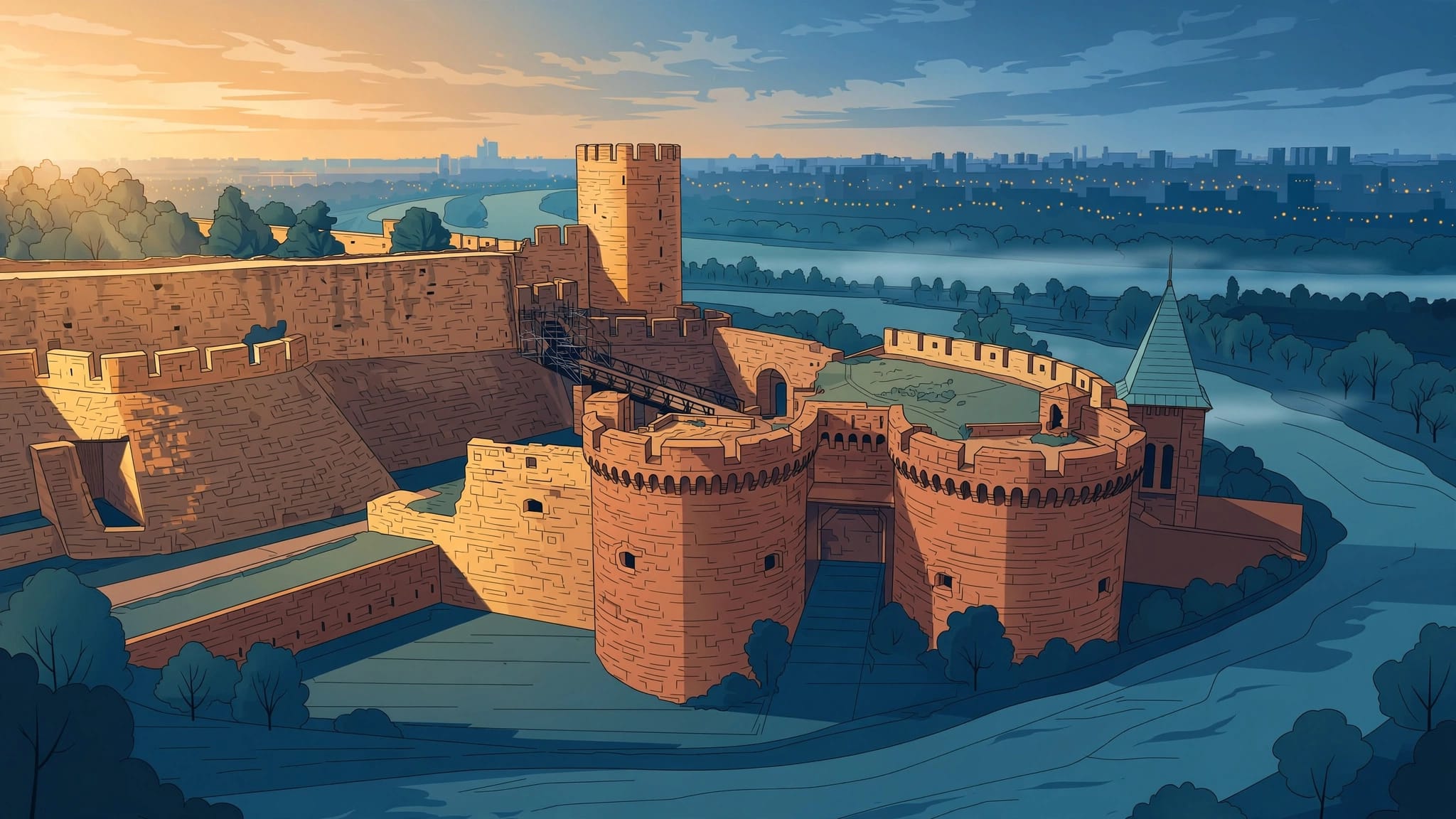
Belgrade gives photographers a rare combination: medieval stone, broad rivers, and a skyline that changes character by the minute. This Belgrade photography guide focuses on Kalemegdan Fortress, where the Danube meets the Sava beneath some of the city’s strongest viewpoints.
Come for sunset, but don’t ignore the hours around it. Side light reveals worn masonry, rain turns the paths reflective, and blue hour lets the fortress hold its shape against the city lights.
A patient walk produces better frames than a rushed landmark hunt.
Belgrade Photography Guide: Start at Kalemegdan’s Upper Town
Kalemegdan is both a park and a fortress complex, so the best route depends on what you want to photograph. Enter on foot from the Knez Mihailova side, cross Great Kalemegdan, then move toward the Upper Town edge above the river confluence.
The outdoor grounds are free to explore, while museums, towers, and underground attractions may have their own tickets and seasonal hours. Check plans before you arrive if interior architecture is part of your shoot.
The Tourist Organization of Belgrade’s fortress guide points visitors toward the Great Kalemegdan Staircase and its wide views of the Sava, Danube, Novi Beograd, and Zemun.
Walk slowly through the main photo zones
Give yourself at least two hours for the Upper Town alone. The most productive route runs from the park paths toward Pobednik, then along the walls and gates before descending to the Lower Town.
At the top, shoot expansive river scenes. Along the inner paths, turn your attention to wall surfaces, arrow slits, stone steps, and old brick repairs. The Lower Town offers more intimate subjects, including Ružica Church, Saint Petka Chapel, and Nebojša Tower.
Stone, water, weather.
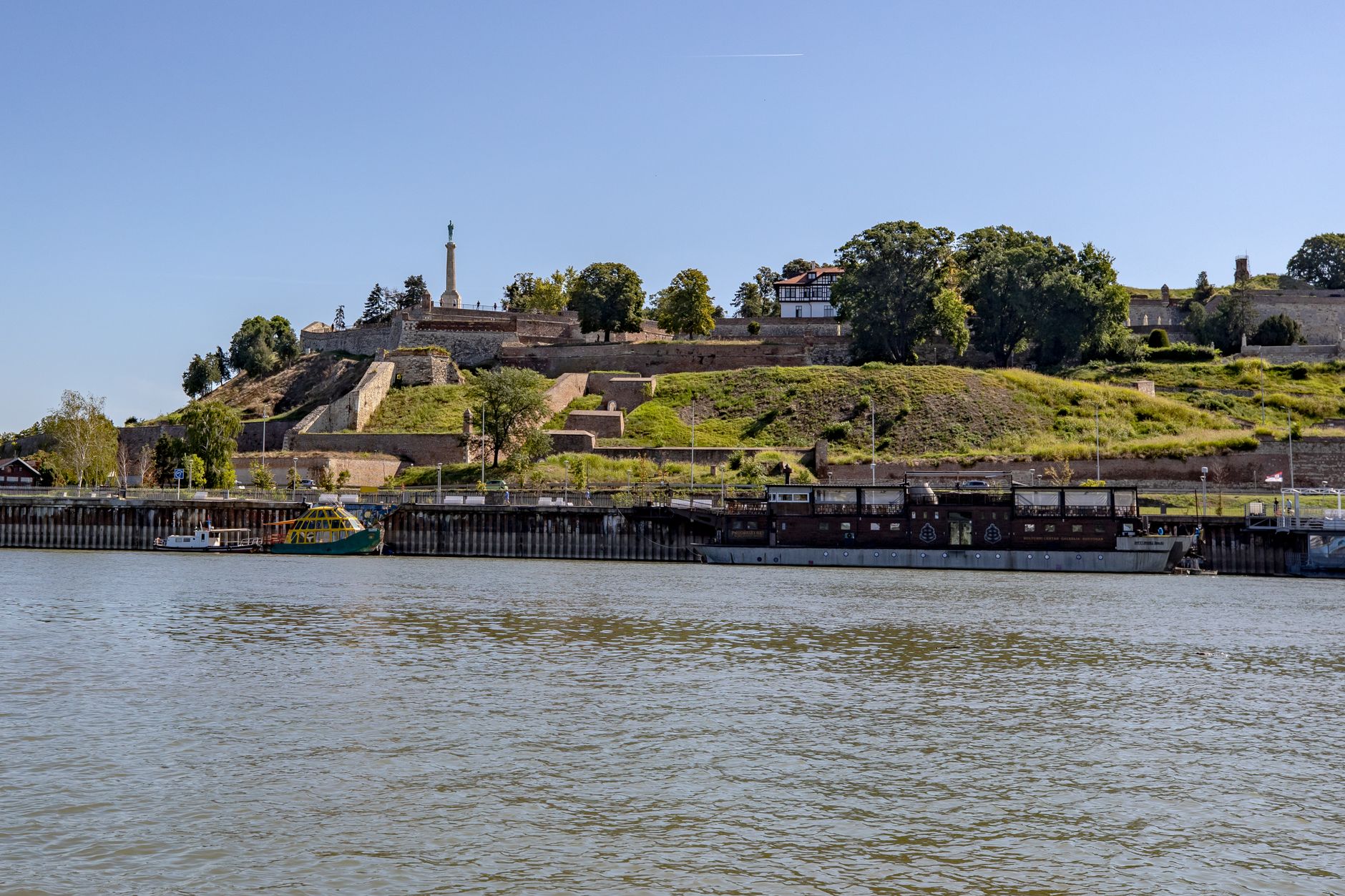
Photo by Boris Hamer
Choose one visual priority at a time
A wide lens can hold a wall, sky, and both rivers, yet it can also make the city feel distant. Use it when the fortress edge is a strong foreground anchor.
A 50mm or short telephoto lens simplifies the scene. It works well for catching a distant barge under a glowing horizon, isolating the Victor monument, or compressing layers of wall and riverbank.
Don’t carry every lens around the complex. Carry the lens you intend to use for the next 20 minutes.
Find the Right Light on the Danube and Sava
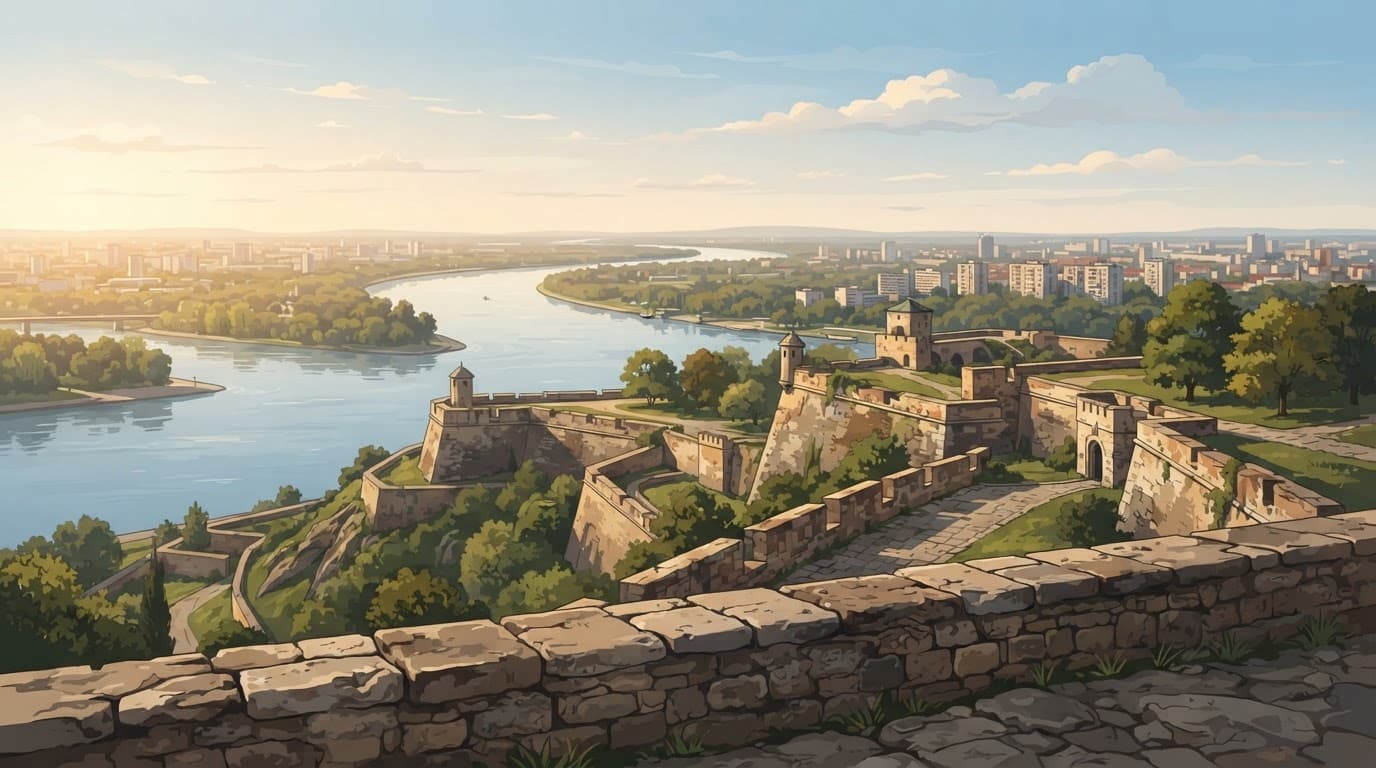
The Upper Town faces west and northwest toward the confluence. That orientation makes late afternoon the most rewarding time for broad views, especially when the sun drops behind New Belgrade and Zemun.
Sunlight often strikes the fortress walls from an angle before it reaches the water. Work the masonry first, then move to the overlook as the river starts to brighten.
Use late afternoon for texture
Midday light flattens the pale stone and creates deep eye-socket shadows in arches. By late afternoon, shallow side light catches cracks, repairs, and rough edges without turning every shadow black.
Set exposure for the highlights on the sunlit river or bright sky. Then lift darker wall detail later if you shoot RAW. A modest underexposure protects the color around sunset better than a blown-out horizon.
Spring and autumn are especially comfortable for a long photo walk. The official Serbian Travel Kalemegdan visitor page also recommends late afternoon for views, which suits the fortress’s west-facing overlooks.
Return after rain when possible
A storm clearing over the Danube can be better than a cloudless day. Moist air softens the far bank, while broken clouds create bright strips of light across the water.
One October afternoon, a brief shower emptied the terrace near Pobednik. Ten minutes later, sunlight broke through over Great War Island, and a thin reflection ran along the wet stone parapet. The wider view was impressive, but the stronger frame came from a puddle, one wall corner, and a small piece of river.
Photograph Fortress Walls Without Making Them Flat
Belgrade Fortress has enough stone to fill a memory card. The challenge is giving those walls direction, scale, and a reason to stay in the frame.
Look for paths that bend along a wall or staircases that climb toward a gate. These lines guide the eye and stop the image from becoming a simple record of old masonry.
Work close before stepping back
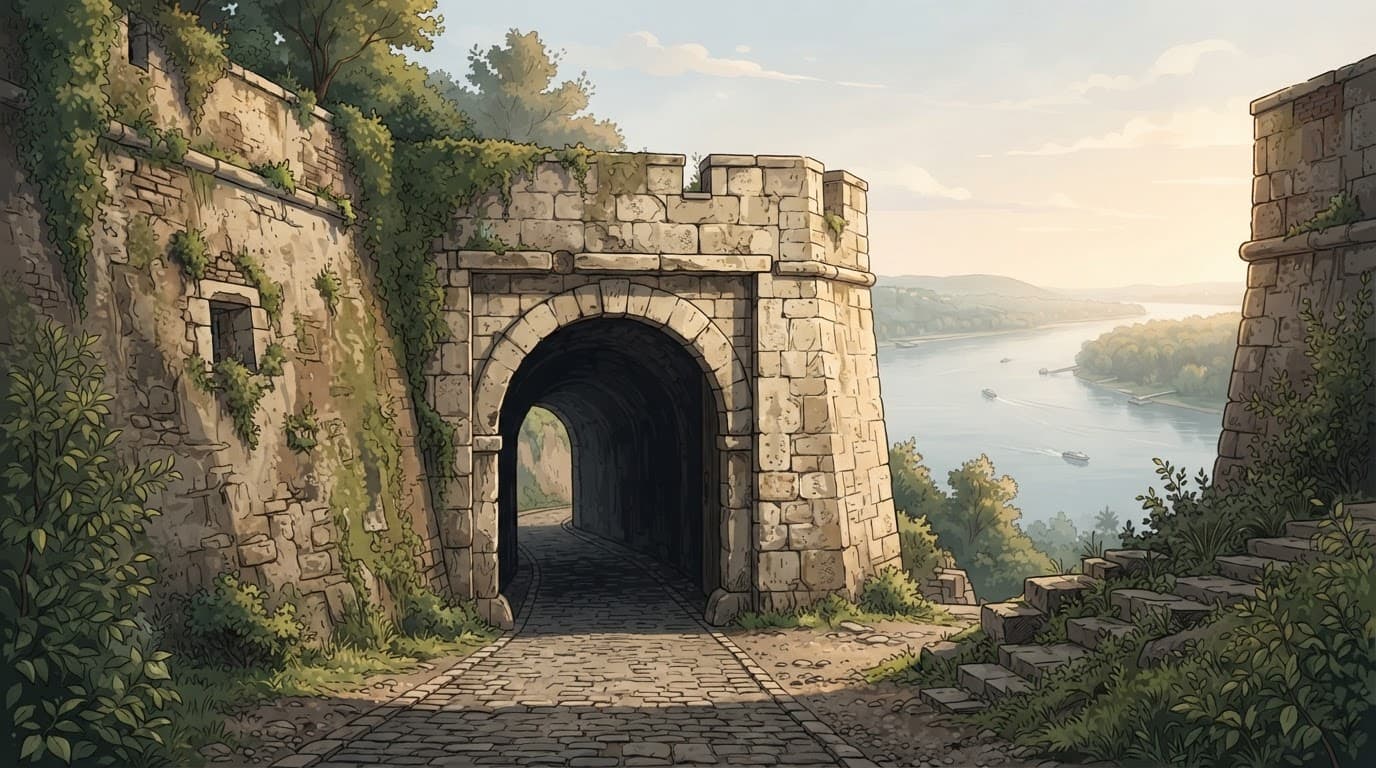
Start within a few feet of a wall. A 24mm or 28mm lens can exaggerate a rough stone corner, especially if the river appears through an opening in the distance.
Then move farther away and include a human figure only when it adds scale. Visitors can make the ramparts feel immense, although crowded walkways often distract from an otherwise quiet composition.
Avoid placing the horizon through the center of every image. Raise it when the wall matters most, or lower it when the sky has shape and color.
Search for repairs and transitions
The fortress was altered over centuries, and its surfaces show different eras in a single stretch of wall. Look for a shift from rough stone to brick, a patched arch, or vegetation emerging from a crack.
These small transitions make compelling detail photographs, particularly in soft morning light. They also give a photo series pacing between wide river panoramas.
The most revealing fortress images often show a wall’s imperfections, not its entire length.
Frame the Danube Confluence With Pobednik
Pobednik, or The Victor, is the visual anchor of the Upper Town. The 14-metre bronze monument was unveiled in 1928 and stands at the fortress’s highest point above the rivers.
The Pobednik monument page identifies the monument as a work by Ivan Mestrovic and connects it with the breakthrough of the Salonika Front. For photographers, its position matters as much as its history.
Give the monument room to breathe
A close-up from below can feel dramatic, but the statue gains meaning when the confluence sits behind it. Place Pobednik on one side of the frame and leave open water in the remaining space.
With a wide lens, keep the camera level unless you want obvious vertical distortion. A short telephoto view can place the bronze figure against a clean band of water or distant buildings.
Watch the flagpoles, railings, and heads of other visitors. Move a few steps rather than fixing distractions later.
Separate the two rivers visually
On clear days, the Sava and Danube can show different tones where they meet. Use a polarizer carefully because it can darken one part of the sky too heavily with wide lenses.
Instead, wait for raking light or cloud cover that separates water surfaces naturally. A 70mm to 200mm lens helps isolate the junction, river traffic, and Great War Island without including every building along the horizon.
Set Exposure for Bright Skies and Dark Stone
The fortress creates a difficult exposure range near sunset. The sky may be bright, while interior arches and old walls fall several stops darker.
RAW files give you more freedom, but deliberate exposure still matters. Turn on highlight warnings and inspect the histogram after the sun touches the horizon.
Start with practical camera settings
For landscape frames, use ISO 100 or 200, an aperture around f/8, and adjust shutter speed for the light. This setting keeps walls and distant riverbanks reasonably sharp without forcing slow exposures too early.
When you photograph moving people or flags, raise the shutter speed first. A wide scene can tolerate a little shadow noise, while blurred movement often feels accidental.
For handheld blue-hour images, image stabilization helps, but don’t trust it blindly. Make several frames at different shutter speeds and inspect them at full magnification.
Bracket scenes with deep contrast
Bracketing is useful when the sun remains visible and a wall dominates the foreground. Shoot one exposure for the sky, one for the stone, and one balanced frame.
Keep the camera steady between frames. A compact tripod is helpful near quiet overlooks, but don’t block narrow paths or set up where visitors need to pass.
Ask staff before using a tripod inside any ticketed interior. Rules can differ between the open grounds and enclosed attractions.
Make Blue Hour Part of the Plan
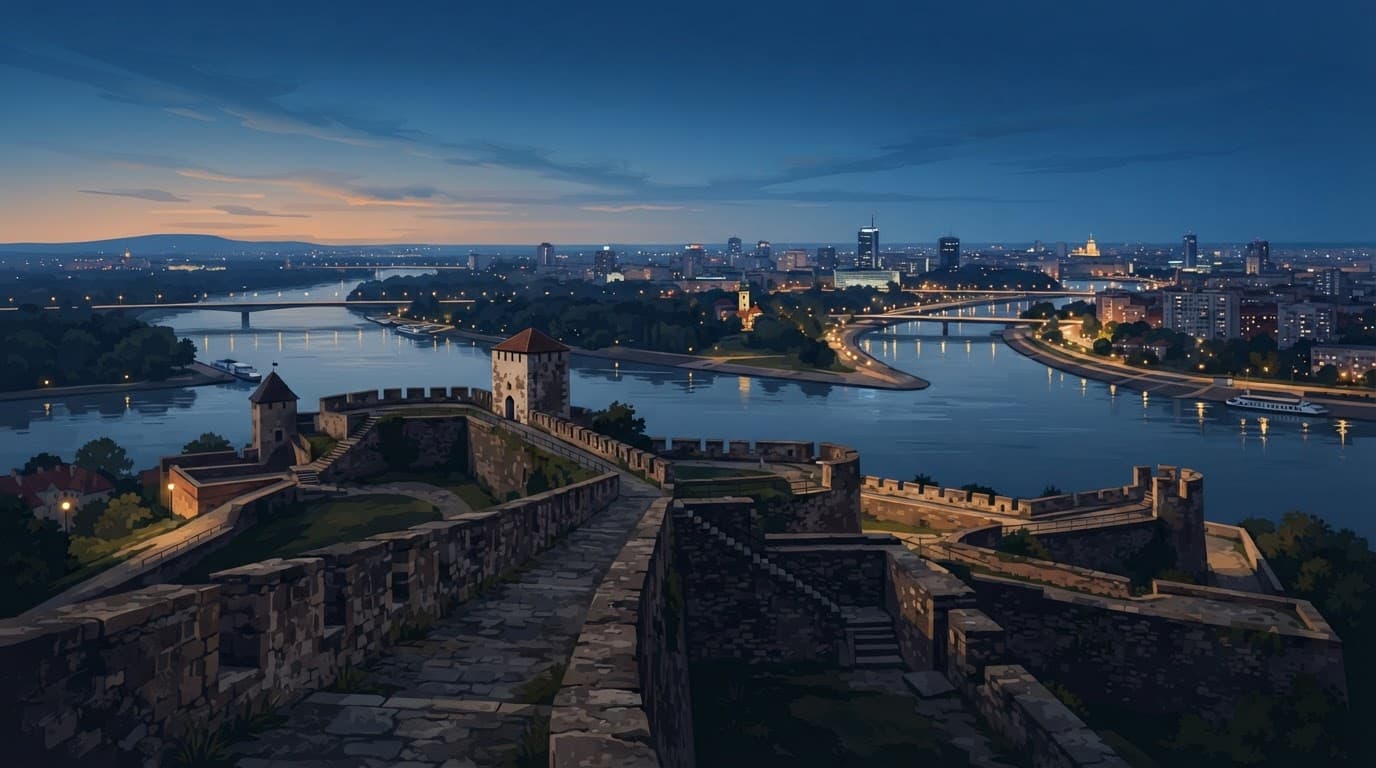
The best color often arrives after the sun disappears. Blue hour gives the river a cooler tone, while lamps and city lights start to define the fortress edges.
Stay near the Upper Town overlook rather than racing back through the park. This is when the walls become dark shapes and the river can carry the composition.
Balance artificial light with the sky
Begin shooting before the sky turns black. When the scene still has blue detail, warm lamps and windows sit more naturally against it.
Use a tripod for exposures longer than about one second. Set a two-second timer or remote release to avoid movement, and turn off image stabilization if your lens manual recommends it for tripod use.
A 10-second exposure can smooth small ripples in the river, but it may erase the character of boats and moving reflections. Try a few slower frames, then make a faster one for comparison.
Pack Light and Respect the Location
Kalemegdan’s uneven paths and stairways make a heavy kit tiring. A weather-sealed camera body is useful, though a simple rain cover and microfiber cloth solve most short showers.
Bring water, a charged power bank, spare battery, and shoes with reliable grip. The stone can be slick after rain, especially around worn steps and sloped paths.
Work around visitors with patience
Early morning offers fewer people, while late afternoon brings walkers, couples, and local photographers. Crowds are part of the place, so use them deliberately when they add scale or movement.
If someone enters a carefully built frame, wait instead of reacting. Most people move on within seconds, and a better composition is often one pause away.
The Kalemegdan Park overview is useful for understanding the site as a public park as well as a historic fortress. Treat it that way: keep pathways clear, avoid climbing on unstable masonry, and leave no gear unattended.
Final Frames at the Fortress
The strongest Kalemegdan photographs depend on observation more than equipment. Let the angle of light decide whether you work the wall, the monument, or the water.
Arrive before the glow, stay through blue hour, and keep one lens ready for details. On a clear evening, the last blue reflection often appears beside the stone parapet below Pobednik.
