
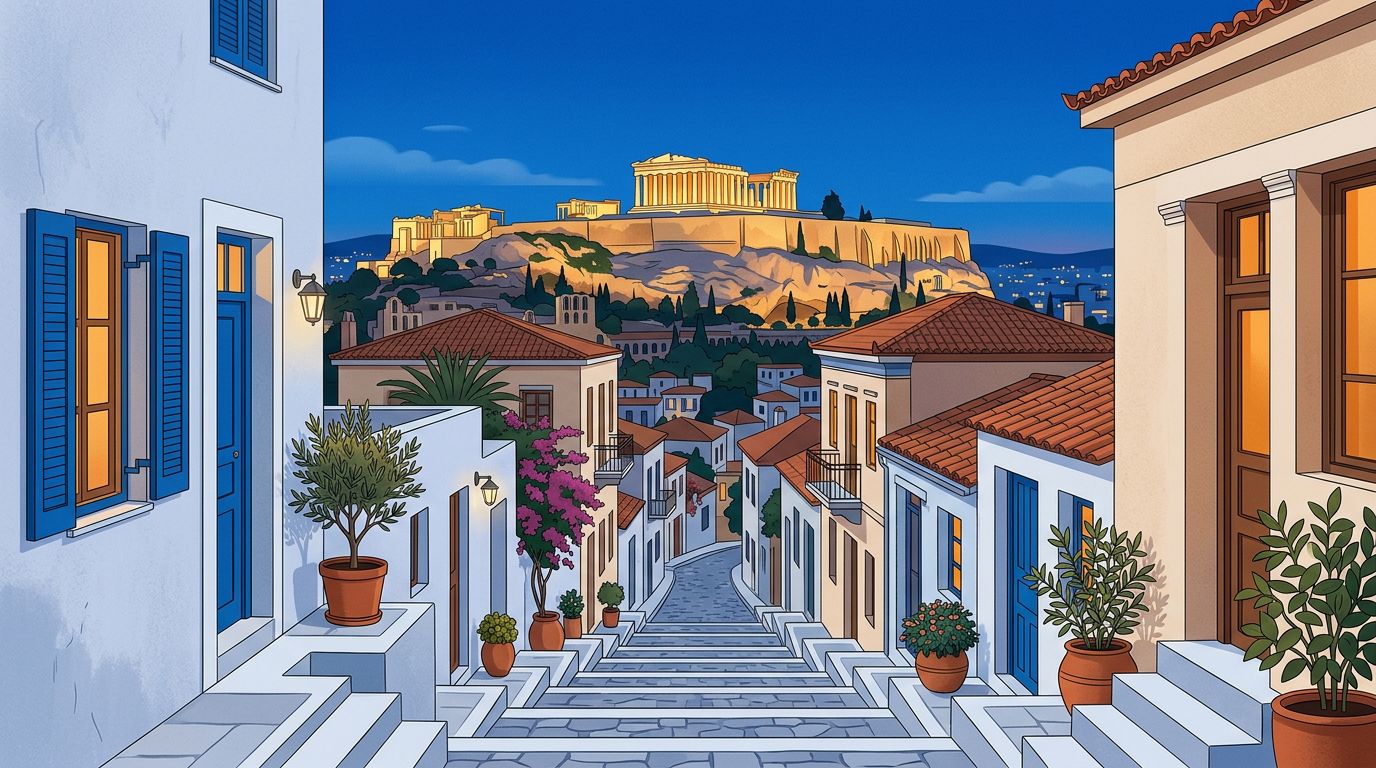
At dawn, Athens can put the Parthenon at the end of a stairway, above a row of shutters, or behind a passing metro train. That variety makes Athens photo spots more demanding than they first appear, because the strongest frame depends on light, elevation, and how much of the modern city you want to include.
The Acropolis is easy to see but harder to photograph with character. Plan around the sun, walk beyond the busiest corners, and give yourself time to wait for a clean frame.
Athens photo spots with wide Acropolis views
Start with the view you want before choosing a hill. A close angle makes the Acropolis feel monumental, while a distant ridge gives it space above the city. The light moves fast. At sunset, arrive at least 45 minutes early, especially if you need to test lenses or claim a safe place along a viewpoint.
Blue hour is often even better than sunset. About 20 to 30 minutes after the sun drops, the sky holds color while the Acropolis lights come on. Keep your tripod compact and use a remote or a two-second timer.
Filopappou Hill for the classic Acropolis frame
Filopappou Hill is the most reliable place for an Acropolis image that feels open rather than crowded. It faces the Sacred Rock across a green slope, so you can include pine trees, stone paths, or a lone figure without turning the monument into a tiny background detail.
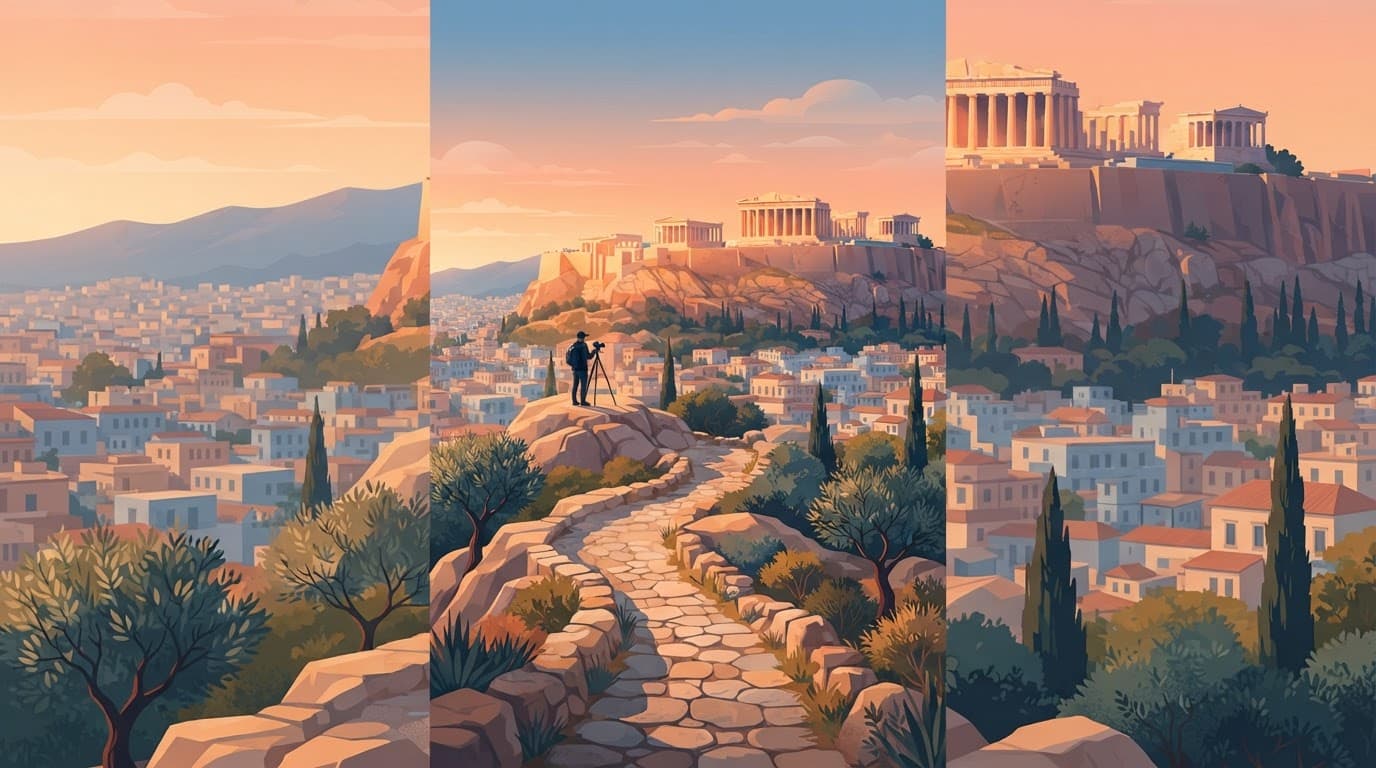
Because the hill sits across the valley rather than directly under the walls, you can leave generous room around the Sacred Rock and still make the Parthenon’s columns feel large enough to anchor a horizontal frame.
A 50 mm lens gives the temple more presence. Use 24 mm or 28 mm if you want the winding path and city below. For a useful range of lesser-known angles and timing ideas, consult this local guide to Athens photography spots.
Stay on marked paths after dark. The ground is uneven, and loose stones disappear in low light.
Areopagus, Pnyx, and Lycabettus viewpoints
Areopagus, also called Mars Hill, sits beside the Acropolis and creates a dramatic near-field view. The rock surface is steep and smooth in places, so wear shoes with grip and keep your hands free when descending.
At Areopagus, the trip down can be harder than the climb after dark. Put the camera away until you reach the lower path.
Pnyx offers a calmer alternative nearby, with more room to place the Acropolis against the city. Meanwhile, Lycabettus Hill works when you want Athens itself to dominate the composition. Its high viewpoint makes the Acropolis smaller, but the result shows how the ancient citadel rises from the dense blocks below.
These Athens photo spots reward patience. Wait for the last warm light to hit the marble, then stay for the first illuminated frames.
Whitewashed lanes in Anafiotika and Plaka
The Acropolis isn’t only a distant subject. In Anafiotika and upper Plaka, it can appear above staircases and white plaster walls, which gives your photos the feeling of a hidden island village.
White paint can fool your camera meter. Protect the highlights by checking your histogram, then slightly lower exposure if the walls lose texture. Shadows will be easy to recover later.
Anafiotika’s island-like corners
Anafiotika sits on the northeastern slope beneath the Acropolis. Its narrow passages, blue doors, potted plants, and bright walls look closer to the Cyclades than central Athens.
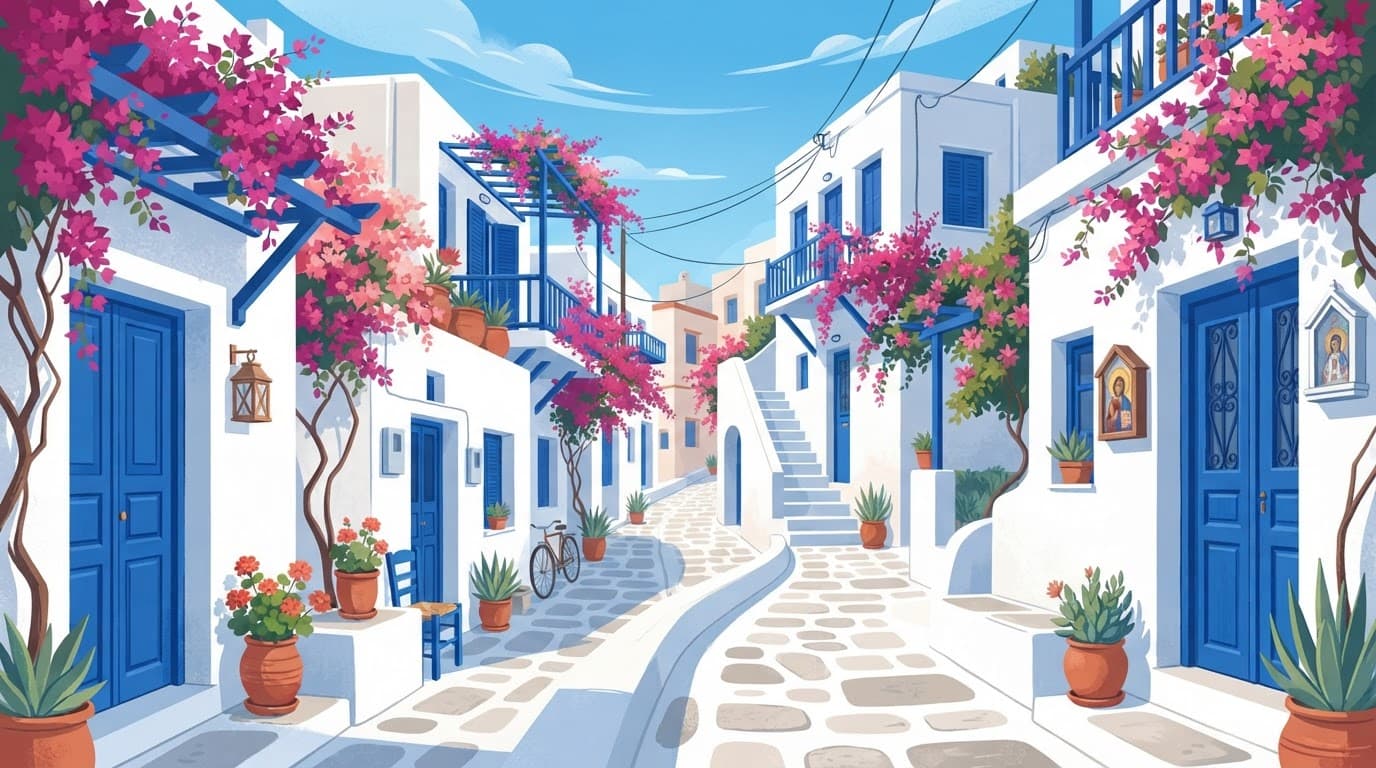
The neighborhood has a memorable origin story. During the 19th century, builders from the island of Anafi settled beneath the Acropolis and built homes that recalled their island village. That history explains why these lanes feel so different from nearby Plaka.
Go early, ideally between 7:00 and 9:00 a.m. The passages are calmer, delivery traffic is limited, and pale walls catch soft light before the sun rises high. A 28 mm or 35 mm lens works well because the lanes are tight.
One small warning, though: slippery polished stone.
Don’t treat Anafiotika as a set. People live here, so keep doorways clear, don’t move pots, and avoid photographing residents at close range without permission. For more location ideas, this Athens photo map includes Anafiotika alongside the Ancient Agora and Monastiraki.
Plaka steps, shutters, and small details
Plaka has a busier rhythm than Anafiotika, yet its upper streets still offer strong foregrounds. Mnisikleous Street is known for its long stairway, café tables, balconies, and rising sightlines toward the Acropolis.
Shoot the stairs first thing in the morning if you want the architecture to lead the eye. Later, let the street remain active. A person carrying coffee or climbing the steps gives scale and keeps the image grounded in Athens rather than a postcard version of it.
For detail shots, look for weathered brass knockers, chipped blue paint, and bougainvillea against white walls. Keep the frame simple. Too many signs and tables can pull attention from the textures you came to photograph.
Monastiraki and night views of the Acropolis
Monastiraki Square gives you a different kind of Athens image. The Acropolis rises above market streets, metro activity, and people moving through the square. It is less serene, but it feels immediate.

Photo by Bruna Santos
Use this quick guide to match a place with the frame you want.
| Location | Best composition | Strongest timing |
|---|---|---|
| Monastiraki Square | City activity beneath the Acropolis | Early morning |
| Mitropoleos Street | Balconies and façades leading to the monument | Blue hour |
| Acropolis Museum terrace | A close, elevated temple view | Late afternoon |
| Lycabettus Hill | Wide city panorama with Acropolis | Clear sunrise |
Mitropoleos Street is especially good after sunset. The road and balconies create a corridor toward the illuminated Acropolis, and a 35 mm or 50 mm lens can tighten the composition without flattening every building.
Rooftops near Monastiraki add height without a hill climb. A for Athens Hotel is close to Monastiraki Metro Station and has direct views toward the Acropolis. Reserve enough time for a drink and changing light, rather than arriving only after the sky turns black.
Timing, gear, and good photo manners
A two-part plan works well: photograph whitewashed streets in the morning, then return to hills or urban viewpoints late in the day. Midday is better for museums, cafés, and editing a few selects than for chasing harsh light on exposed stone.
Bring one versatile lens if you don’t want to carry a heavy bag. A 24-70 mm covers broad lanes, street scenes, and most Acropolis views. Add a 50 mm or 85 mm if you want compressed layers of balconies and marble. A light tripod helps at blue hour, although some sites and terraces restrict larger equipment.
Shoes matter here. Athens has steep steps, polished slabs, and rough rock within a short walk of each other.
Current conditions can change with construction barriers, events, or access limits. A photographers’ discussion of Athens locations can point you toward recent observations, but confirm access when you arrive. Leave drones packed unless you have checked the rules for your exact location.
The best images also depend on restraint. Don’t block paths for a shot, avoid flash near residents, and step aside when a narrow lane becomes someone’s route home. Keep moving gently.
A final frame for Athens
The picture that stays with you may be a small scene rather than the widest panorama. A blue door below the Acropolis, a stairway catching early sun, or a late city frame can feel more personal than a perfect postcard.
Give each location a few unhurried minutes. Athens changes when the crowds thin and the marble begins to glow.
At 30 minutes after sunset, the lit Parthenon sits between the balconies on Mitropoleos Street.
