
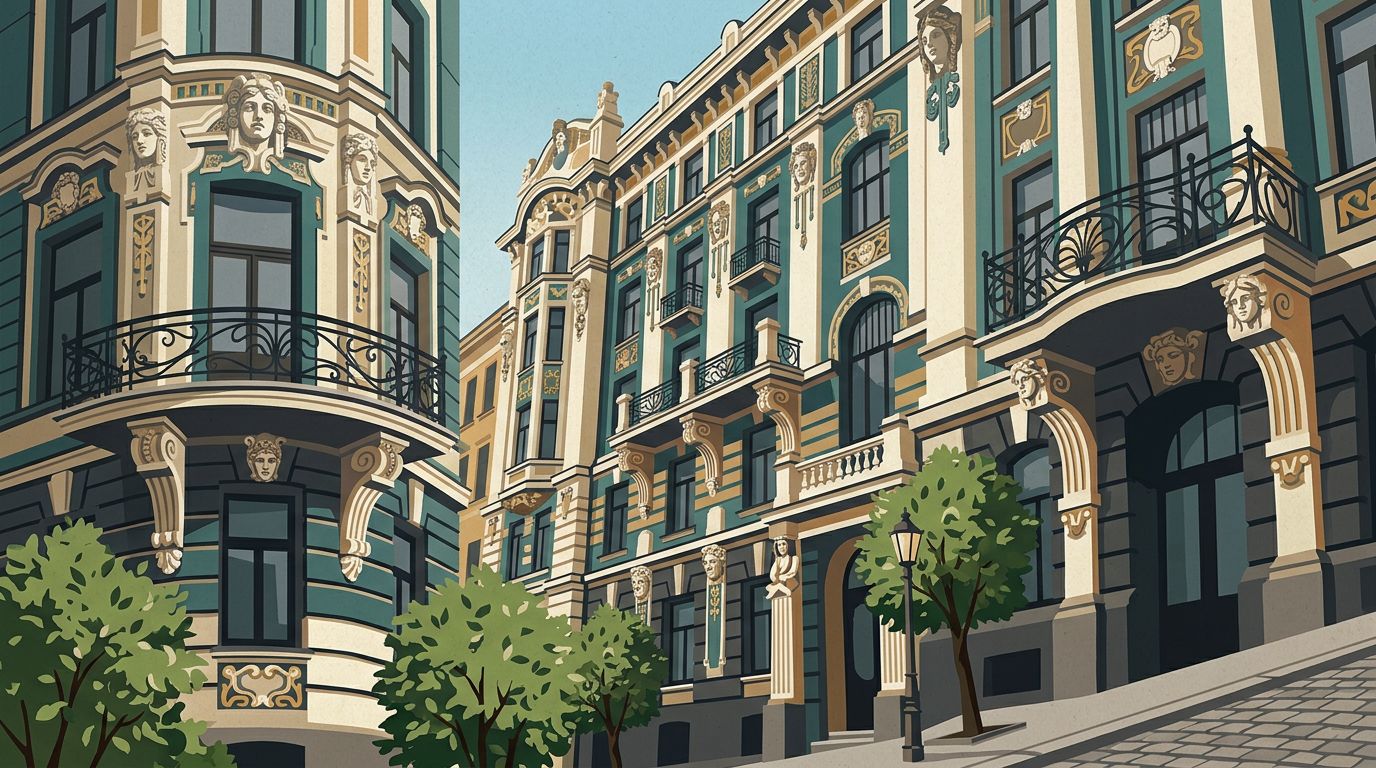
Riga rewards photographers who slow down and look up. Its sculpted faces, sweeping balconies, and river skyline can fill a frame before you have walked a single block.
The most memorable Riga photo spots sit close enough to link into one unrushed day, yet each needs a different eye. Wide streets suit architectural studies, while the Daugava asks for space, weather, and patience.
Start with the details that made the city famous.
Riga photo spots in the Art Nouveau quarter
Alberta iela is the essential first stop. The street concentrates lavish early 20th-century facades into a short stretch, so you can work deliberately instead of chasing scattered landmarks. Mikhail Eisenstein’s building at Alberta iela 2a is a focal point, with oversized faces, ornamental bands, and a facade that changes shape as you shift position.
A visual guide to Riga’s Art Nouveau buildings is useful for spotting Eisenstein’s work before you arrive. Still, don’t try to photograph every decoration at once. Use one simple rule, details before grandeur, then step back for the full elevation.
With a 24 to 35 mm lens held level and enough pavement below the facade, you can photograph an entire building while keeping its repeated ornament, bay windows, and sculpted faces clear rather than stretched at the edges.
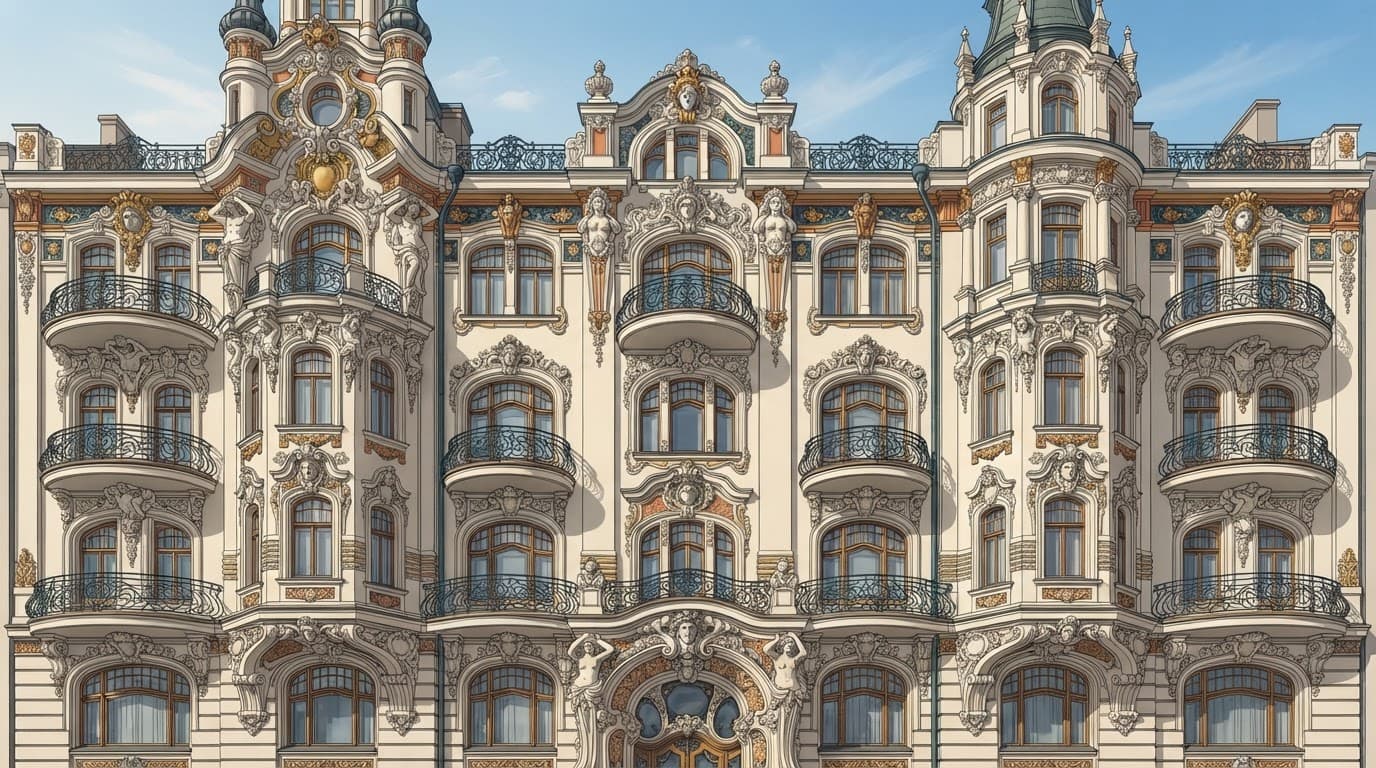
Early morning helps. Before 8:00 in summer, the pavement is calmer and the soft side light gives the stonework depth without filling every window with glare. Cloud cover helps.
At the Alberta and Strelnieku iela corner, a practical little morning scene repeats: after a traffic-light cycle, walkers often bunch at the curb for a few seconds. That pause can give you one clean vertical frame before the pavement fills again.
Elizabetes iela adds a different rhythm. Here, look for a wider composition that includes neighboring facades, trees, and the street’s long perspective. A 50 mm or 85 mm lens is often better than an ultra-wide lens because it isolates a mask, balcony, or window surround without bending the building’s lines.

Photo by Alex Does Pictures
The self-guided Art Nouveau walking itinerary is handy when you want to move beyond the headline streets. It also helps prevent a common mistake, photographing only the most elaborate facades and missing the restrained geometric buildings nearby.
For interior context, the Riga Art Nouveau Museum on Alberta iela has period rooms and its well-known spiral staircase. Check museum ticket and visitor listings before planning a stop, especially if you want time for the exterior and interior in one morning.
Overcast light often records Art Nouveau ornament better than hard sun because shadows do not swallow the recessed faces and floral reliefs.
Daugava River views worth waiting for
The Daugava changes the scale of Riga. After close facade work, river viewpoints open the frame toward bridges, church spires, and the low silhouette of Old Riga. The strongest light usually arrives late in the day, when the western sky separates the historic skyline from the water.
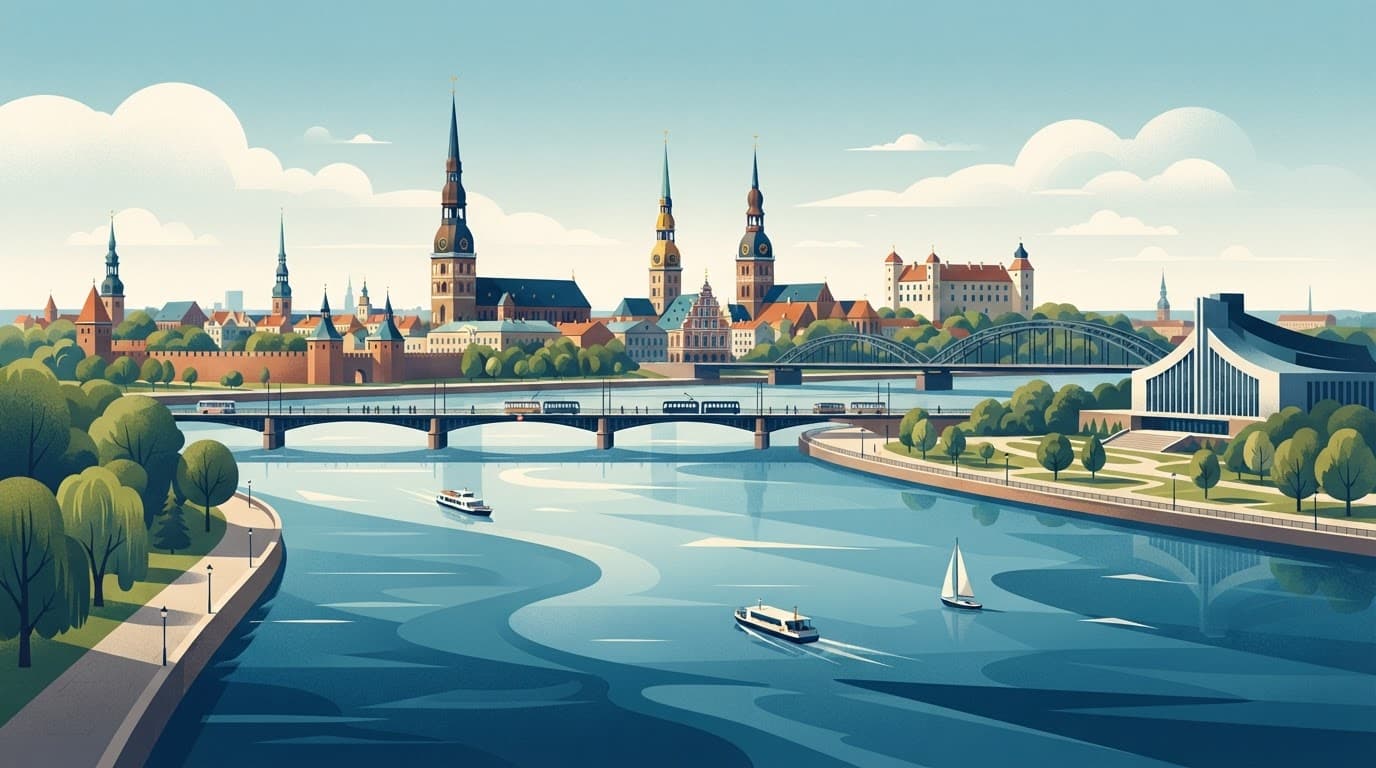
St. Peter’s Church gives the most central high-angle view. Its viewing platform sits 72 meters above the city, with the Old Town roofs below and the Daugava opening westward. A mid-range zoom works well here because you can frame the river and bridges tightly, then pull wider for the cathedral spires and street grid.
Window reflections can interfere with a tower shot. Press a lens hood gently to the glass if permitted, shade the lens with your hand, and keep your camera parallel to the window edge. Carry a longer lens.
For a low-angle river scene, head toward Vanšu Bridge and the riverside beneath it. The bridge structure can lead the eye toward Riga Castle, Old Town towers, or the distant railway bridge. Keep the horizon low if the sky has color. Raise it when the water carries a broken reflection worth keeping.
Panorama Riga, at the Latvian Academy of Sciences, offers a wider 360-degree perspective across the Daugava, Old Town, and the city beyond. It is useful when you want bridges and river bends in the same frame, rather than a close study of church towers.
These Riga photo spots work best as separate visual ideas. St. Peter’s favors layered rooftops. Vanšu Bridge suits leading lines. The Academy of Sciences gives you breadth. Treating them as distinct subjects keeps your edit varied.
Frame facades without crooked walls
Riga’s buildings punish rushed compositions. A facade may look square to your eyes, yet a slight upward camera tilt can make the top floors lean inward. Start farther back, keep the sensor parallel to the building, and crop later if you need to remove a strip of pavement.
A tilt-shift lens is useful but unnecessary. Most modern cameras and phones offer perspective correction, while Lightroom and similar editors can straighten verticals after the fact. Leave breathing room around the edges so correction does not cut off a cornice or balcony.
Watch the light on pale stone. Direct sun can blow out plaster while leaving doorways almost black. Expose for the bright facade, then lift shadows gently during editing. A three-shot exposure bracket can help when the contrast is harsh, especially around windows.
Rain changes the street in your favor. Wet paving reflects the facades, and umbrellas can add scale without turning the building into a crowded scene. Wait for a gap, then use the reflections as a second version of the facade.
For close work, move your lens away from the busiest doorway. Architectural details often sit above eye level, so a 70 to 200 mm lens can isolate a caryatid or curved window frame from across the street. The image feels less like a record shot and more like a portrait of the building.
Plan a walk around light and weather
Begin in the Art Nouveau district early, then move toward Old Riga and the Daugava in the afternoon. The route is easy on foot, although photography makes it slower than a normal sightseeing walk. Build in time for revisiting a facade when the sun moves or a parked vehicle leaves.
This simple schedule keeps subjects aligned with the best available light.
| Time of day | Area | Best subject |
|---|---|---|
| Early morning | Alberta and Elizabetes iela | Full facades and ornament |
| Midday | Old Riga or the museum | Details, interiors, street scenes |
| Late afternoon to blue hour | Daugava riverfront | Bridges, skyline, reflections |
A Riga Art Nouveau and Old Town walking route can help you link the districts without doubling back. However, a map should not dictate every frame. A side street with clean light can be more useful than a famous facade hidden behind delivery vans.
Bring a microfiber cloth, especially in wet weather, and keep a compact umbrella outside your camera bag. Riga’s rain can arrive fast. In colder months, spare batteries matter because low temperatures drain them faster.
Tripods deserve care. Use one only where it will not obstruct narrow pavements, bridge walkways, or busy viewpoints. A small tabletop tripod or image stabilization often handles blue-hour scenes without adding friction to the walk.
A final frame for Riga
Riga becomes more photographic when you stop treating its architecture as a checklist. Spend time with one facade, watch the pavement clear, then let the river provide a wider counterpoint later in the day.
The strongest images pair disciplined framing with a willingness to wait for changing light. Art Nouveau rewards close attention, while the Daugava rewards distance.
End the walk by the water after sunset, when St. Peter’s spire appears beside the Daugava’s dark blue reflections.
