
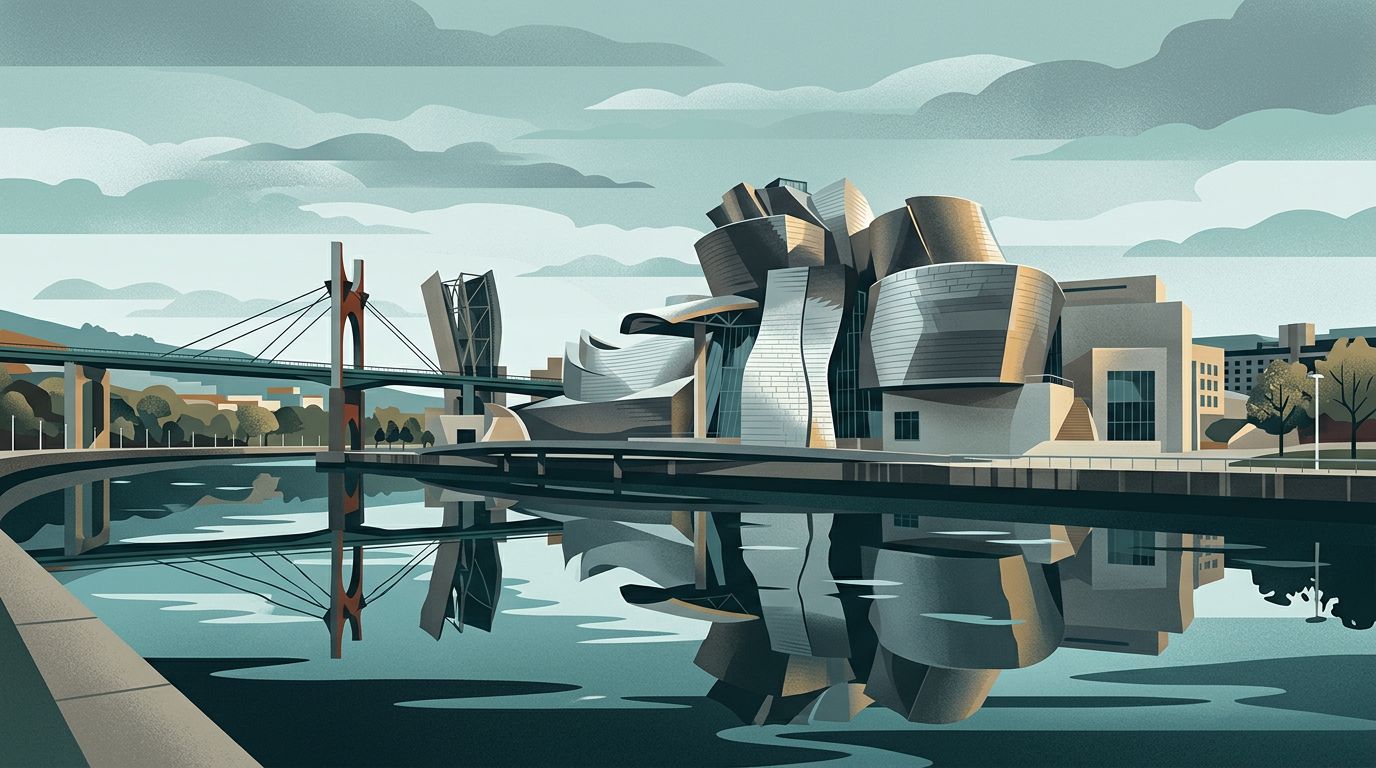
Bilbao’s titanium museum can look like a crumpled ribbon in one frame and an anchored ship in the next. The strongest Bilbao photography spots give its curved walls space, with the Nervion River carrying half the image.
Reflections reward patience, but they don’t require a rare lens or a cloudless forecast. You need a loose plan for riverbanks, bridges, public paths, and changing light.
Start close to the museum, then work outward as each viewpoint changes the geometry.
Read the Nervion before choosing a viewpoint
Bilbao’s river moves more than a postcard suggests. Wind, passing boats, rain, and tidal flow all change its surface in minutes.
Because the museum sits beside a working river rather than a still lake, the strongest images balance a recognizable museum curve with moving water, an active bridge line, and enough dark foreground to separate the shape. Wind ruins symmetry.
Get low enough for the reflection
Walk down to the riverside edge where the water fills the lower third of your frame. A standing-height shot often makes the river look narrow, while a lower angle gives the reflected titanium real weight.
At a focal length between 24 and 35 mm, the broad sweep works well. However, step backward until the water reaches deep into the foreground. The reflection needs room to read as architecture, not a decorative strip.
A still reflection is often short-lived on the Nervion, so set exposure and focus before the water settles.
A thin silver ribbon between stone walls. That is what the river can become at dawn when the sky is pale and the museum is still dark.
Let clouds shape the metal
Clouds are useful here. Broken overcast softens the museum’s bright panels and reduces harsh contrast on its curved surfaces.
Blue hour buys time. After sunset, city lights begin to glow while the sky stays blue enough to hold detail. Use a tripod only where it doesn’t interrupt the path, then lengthen your exposure gently rather than turning every ripple into glass.
Bilbao photography spots for Guggenheim reflections
The museum’s river-facing side is the natural starting point, but the best frame rarely comes from the first clear opening along the promenade. Move slowly and watch how the riverbanks overlap the building.
Work the bank opposite the museum
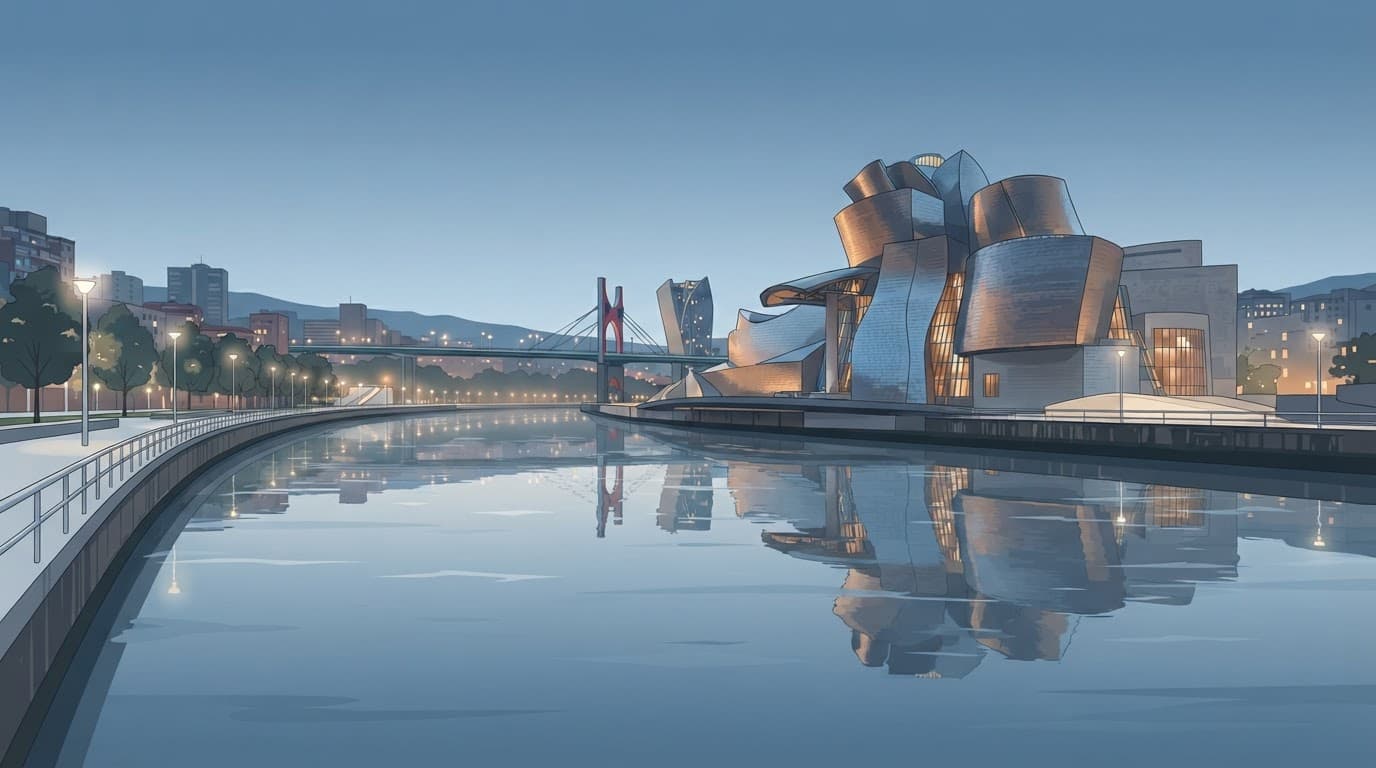
The bank across from the Guggenheim gives you the cleanest chance to show the full riverside facade and its reflection together. Start with a wide composition, then tighten the frame until one curved section of the museum meets its broken mirror image.
Avoid placing the horizon through the middle of the building. Instead, leave more water below the facade, especially when the river is calm. This makes the image feel deliberate rather than crowded.
An early morning frame can feel spare and graphic. In contrast, blue hour lets the bridge lights and warm windows add a second layer without hiding the museum’s silver tone.
Use Zubizuri as a leading line
Santiago Calatrava’s white Zubizuri footbridge sits west of the museum and gives river views more direction. Shoot along its railing or use its arch at the edge of the frame, with the Guggenheim sitting farther downriver.
Keep the bridge secondary. Its bright white surfaces can pull attention away from the museum, so lower your exposure slightly if the highlights start to clip.
If you want to enter the museum after shooting outside, check the official Guggenheim opening hours before planning a late visit. During the summer period, the museum lists longer evening hours through September 13.
Use bridges and sculpture to control scale
The Guggenheim looks enormous when photographed alone. Nearby structures and artworks give the building a human reference point, which helps its unusual curves feel more readable.
Frame the museum beneath La Salve Bridge
Puente de La Salve crosses directly over the northern end of the Guggenheim. Its elevated structure can create a strong industrial frame around Gehry’s flowing metal forms.
Photograph the bridge as a dark diagonal above the building, especially when the sky is bright. A longer focal length compresses the layers and makes the bridge feel close to the museum. With a wider lens, step back and let the river pull the eye toward both structures.
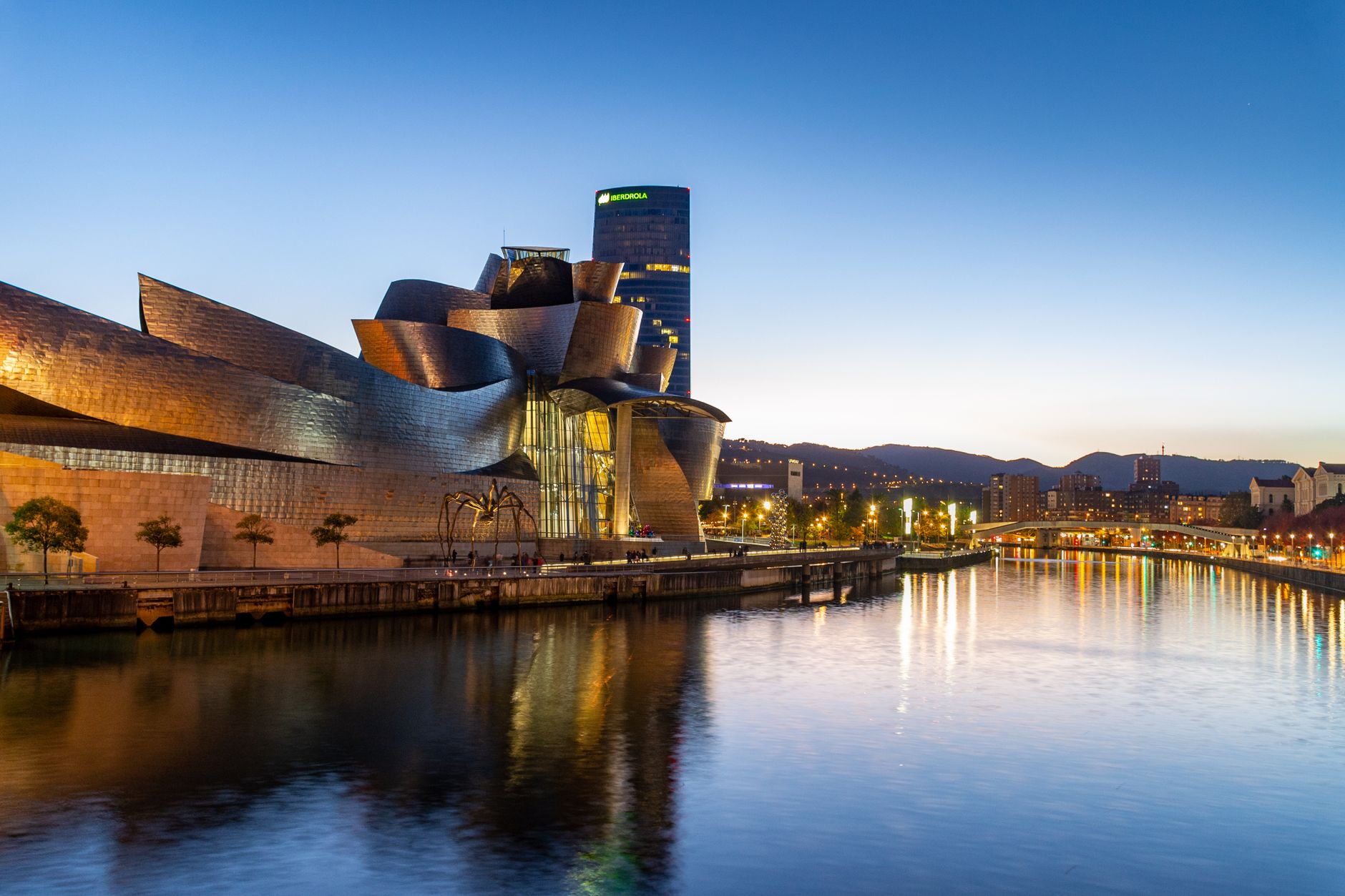
Photo by David Vives
Let Puppy or Maman change the mood
Jeff Koons created the flower-covered Puppy in 1992, and the Guggenheim acquired it in 1997. That small collection story gives the entrance a playful counterpoint to the hard metal walls.
Shoot Puppy from a low angle when the flowers are fresh, but don’t force the whole museum into the same frame. A partial curve of titanium behind the sculpture often feels more balanced.
Louise Bourgeois’s giant spider, Maman, offers the opposite feeling near the museum. Use its legs as a foreground frame and keep the background simple. People often rush toward the landmark, so wait for a gap rather than cloning distractions out later.
Follow the river toward Casco Viejo
The Guggenheim is the headline, yet the Nervion offers more variety as you follow its curves toward central Bilbao. These river views add context to a photo set built around the museum.
Walk through Campo Volantin
The riverside route between the museum, Zubizuri, and City Hall brings together stone facades, plane trees, bridge cables, and boats. It is better for layered city scenes than perfect reflections.
Shoot toward the museum when the water is calm, then turn back toward the older buildings as traffic and pedestrians increase. The contrast between Gehry’s panels and traditional facades is more interesting when both occupy the frame with purpose.
A 50 mm lens helps isolate small moments, such as a moored boat below a bridge or a cyclist passing a line of trees. Meanwhile, a 24 mm view works when the river itself needs to become the leading line.
Continue toward Arenal and La Ribera
Farther east, the river feels less like a museum setting and more like a lived-in part of the city. The Arenal area offers formal facades and open embankments, while Mercado de la Ribera brings color and activity closer to the water.
This stretch works well on overcast afternoons. Reflections become softer, but window light and river texture create mood without the hard shadows of midday. Keep your camera ready when crossing bridges, since the best sightline can appear halfway across.
Among Bilbao photography spots, this route is where a Guggenheim-focused shoot becomes a fuller portrait of the city.
Add Artxanda to your Bilbao photography spots plan
River-level images show Bilbao’s details. Artxanda shows how the river bends through the city and places the Guggenheim within its surrounding streets.
Take the funicular for a wider city view
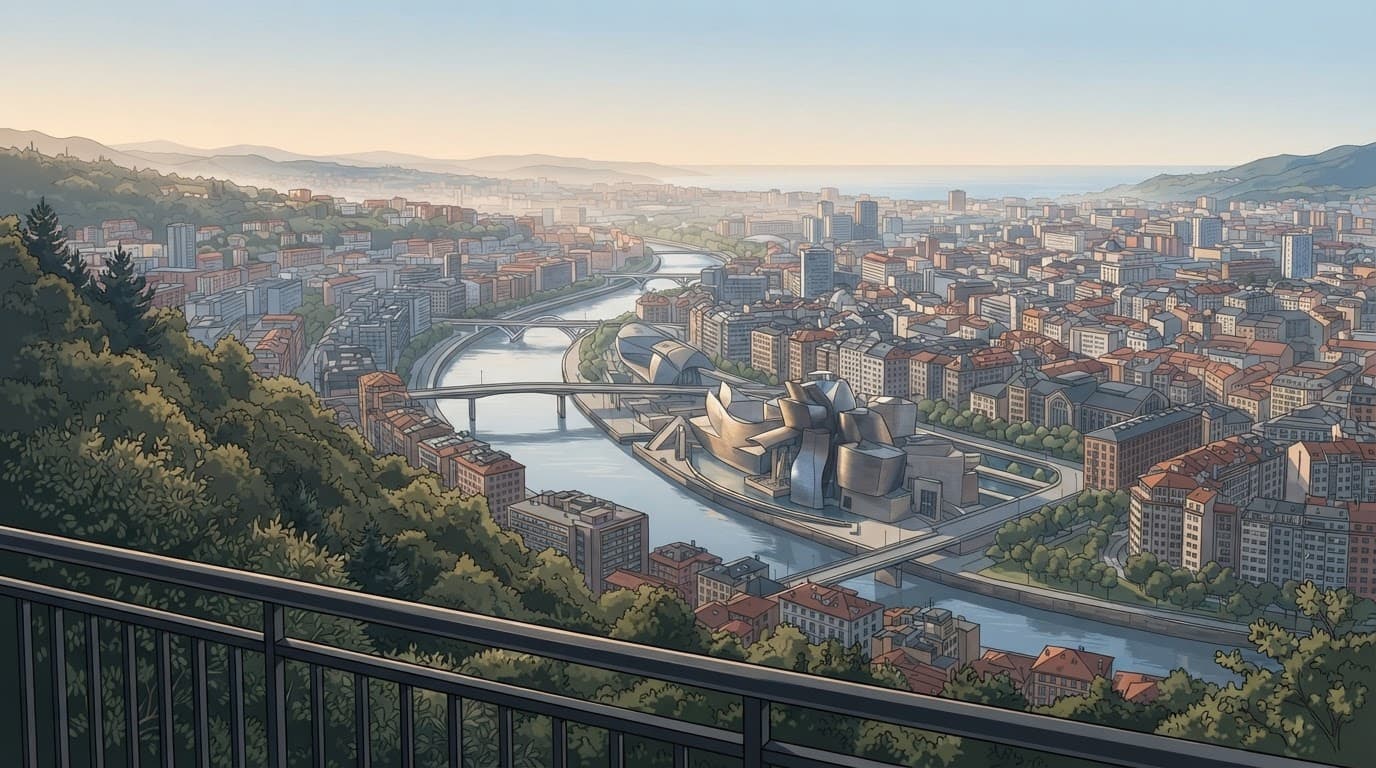
The Artxanda Funicular leaves from Plaza del Funicular, near City Hall. It is a quick route to a broad viewpoint where the museum becomes one bright shape beside the Nervion.
The official Artxanda timetable and fare page lists a 3.50 EUR one-way fare and a 6 EUR return fare. Summer hours, service frequency, and holiday schedules can change, so confirm them before setting out.
At sunrise, use the river as a long curve through the frame. The Guggenheim won’t dominate, but its pale roof catches light before many surrounding buildings do.
Keep the high viewpoint simple
A higher view tempts you to include everything. Resist that urge. Build the composition around the river’s curve, then use the museum as a visual anchor.
A moderate telephoto lens can pull the Guggenheim closer to the river and eliminate distracting foreground streets. On hazy days, black-and-white conversion can also work, because the bridge shapes and tonal layers remain strong.
For updated station access information, Bilbao Turismo’s funicular guide is useful before an early or late session.
Protect your shot and respect the spaces
Bilbao is easy to photograph on foot, but narrow pavements and busy bridges demand awareness. Keep bags close, avoid blocking stairways, and move aside after setting a frame.
Know the museum’s camera rules
Outdoor photography gives you more freedom, but gallery conditions are different. The Guggenheim permits private photographs without flash, while tripods and selfie sticks are prohibited inside its galleries, as explained in the museum’s visitor photography tips.
Use a small handheld setup indoors. Leave the long exposure work for the river, where your tripod won’t create a hazard for other visitors.
Carry tools that match the river
A microfiber cloth matters in Bilbao’s frequent damp weather. Wipe spray from the front element before every blue-hour sequence, since a single water drop can turn bridge lights into a smeared halo.
Bring a spare battery, a compact tripod, and a lens hood. A circular polarizer deserves care.
A circular polarizer can remove the river’s reflection, so rotate it only after comparing the effect in live view.
Rain doesn’t end the shoot. Wet paving stones can echo the museum’s curves, and low clouds can make the titanium look richer than it does in flat noon sun.
When the water finally settles
Bilbao rewards photographers who stay by the river after the first obvious frame. The cleanest image often appears when a boat has passed, the wind has dropped, and the reflected museum begins to reform.
Return to the same riverside spot at another hour if you can. On a calm evening, save the last frame for the thin white arc of Zubizuri above a copper-toned Nervion.
