
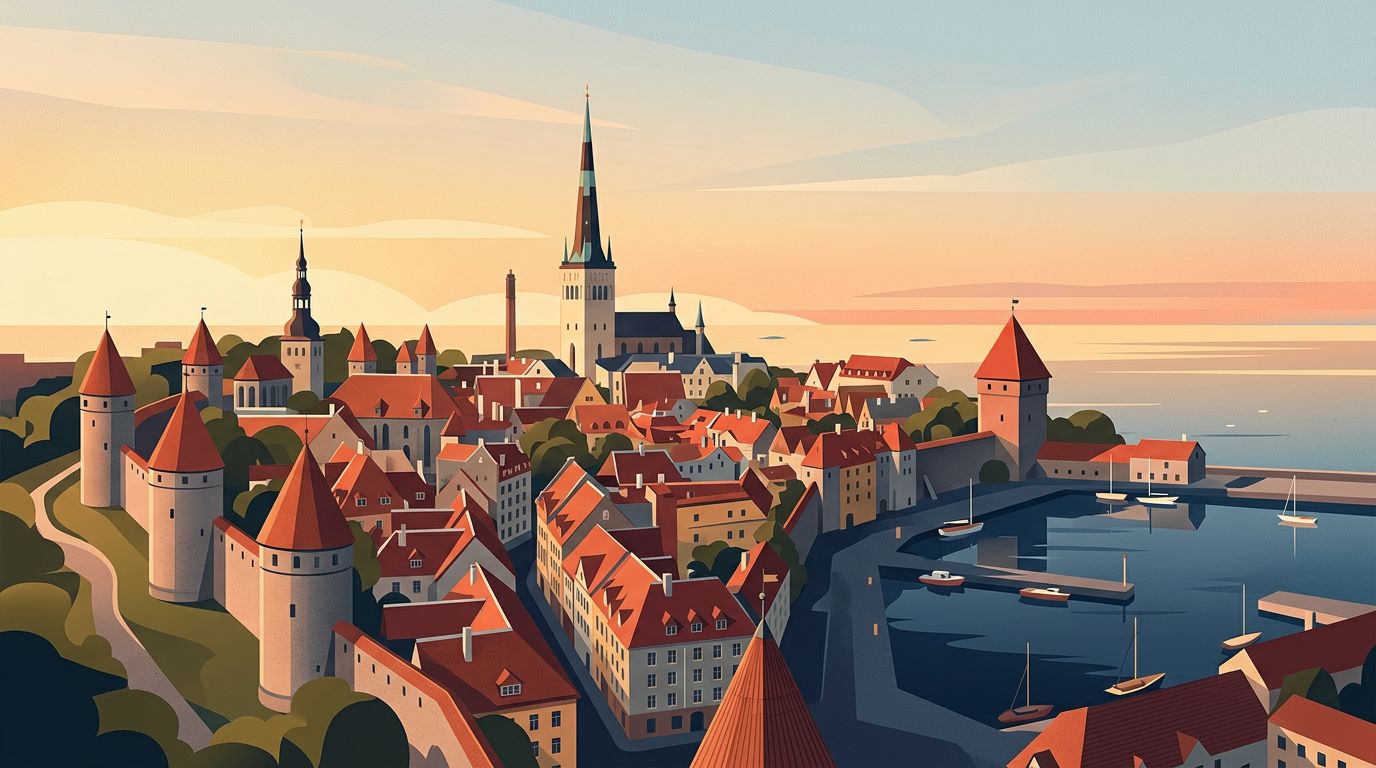
Tallinn rewards photographers who are willing to climb a few stairs, wait for a cloud break, and look beyond the busiest square. Its red roofs, defensive walls, needle-like spires, and open sea sit close together, so a single afternoon can produce wildly different frames.
The best Tallinn photo spots pair strong foregrounds with an uncluttered skyline. Get your tower views early, then move west as the Baltic light softens toward sunset.
Start before the tour groups arrive.
Key Takeaways
- Kohtuotsa gives the classic Old Town panorama, with rooftops leading toward Tallinn Bay.
- Patkuli is stronger for medieval walls, towers, and summer sunset light.
- St. Olaf’s Church offers a high, all-around angle when its seasonal tower access is open.
- Müürivahe and Vene Street work best for intimate stone, arches, and street-level compositions.
- Linnahall gives sunset photographers a wide, raw view toward the Baltic Sea.
Tallinn Photo Spots on Toompea Hill
Toompea Hill is the place to begin if you want Tallinn’s skyline in one frame. The hill rises directly above the Old Town, and its platforms look over rooflines crowded with church spires and old fortifications. You can walk between its main viewpoints in minutes, although the stairs can feel steep with a camera bag.
Kohtuotsa Viewing Platform is the city’s familiar postcard angle. From here, red roofs fill the lower half of the frame, while St. Olaf’s Church and the harbor pull the eye toward the horizon. Its view is east and northeast, so it works well after sunrise and again during blue hour, when the warm windows begin to separate from the cool sky.
A useful guide to Old Town viewpoints confirms the contrast between Kohtuotsa and Patkuli. They are close together, yet their compositions feel completely different.
Patkuli Viewing Platform faces west. That makes it one of the most dependable Tallinn photo spots for a summer sunset, when warm side light catches the stone towers and the long city wall below. Use the railing as a leading line, but don’t press your lens through it. Step back and frame the nearby trees at the edge instead.
Patkuli is better for the defensive character of Tallinn, while Kohtuotsa is better for the packed roofscape and distant bay.
One July evening, I reached Patkuli about 40 minutes before sunset and watched the hard gray stone turn amber in stages. A thin bank of cloud hid the sun at first. Ten minutes later, the gap near the horizon lit the walls while the rooftops stayed in shade, which made the tower silhouettes far more dramatic than a clear sky would have.
Wind changes every exposure. Bring a microfiber cloth.
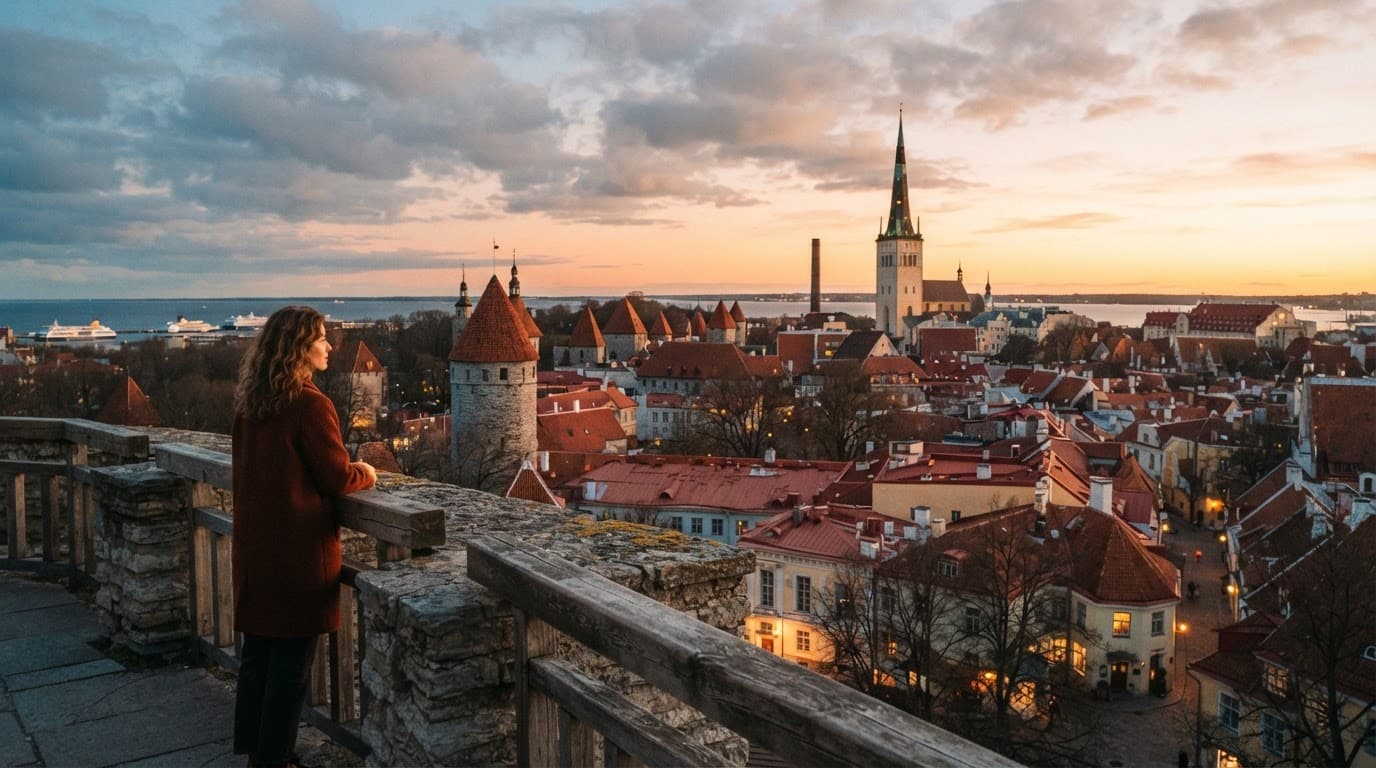
Work the viewpoint before sunset
Arrive early enough to test more than one focal length. A wide lens can include the city walls, treetops, and layered buildings at Patkuli. However, a short telephoto lens lets you isolate St. Olaf’s spire against a pale sky or compress the circular tower forms near the wall.
Keep an eye on people leaning into the frame. The platforms are free and open around the clock, so popular evening windows can get crowded. Early morning, especially before 08:00, gives you room to use a tripod without blocking anyone.
St. Olaf’s Tower and the Old Town Skyline
St. Olaf’s Church, known locally as Oleviste, dominates many Tallinn views. Photographing it from Toompea gives you scale, but climbing its tower changes the perspective entirely. The seasonal viewing platform offers a 360-degree view over the Old Town, port, and newer districts beyond the medieval core.
The climb is narrow and physical. Take a smaller camera setup if you have one, and check current opening dates and ticket prices at the church before building your day around it. Access usually runs only during the warmer months, and hours can change.
At the top, avoid photographing every direction with the same wide frame. Search for patterns instead. The Old Town’s red-tiled roofs create a textured field, while the harbor cranes and ferry routes make a sharp visual contrast behind the old walls. In cloudy weather, use that contrast. The lower, softer light can hold detail in both rooftops and sky.
For a fuller visual preview of the platform angles, this Tallinn photography guide shows why Kohtuotsa remains popular and how the towers anchor the cityscape.
Use height with restraint
Tallinn’s skyline looks strongest when one vertical element takes control. Let St. Olaf’s spire sit off-center, or position a turret against negative space. A frame crammed with every church tower can feel more like a record than a photograph.
If you’re shooting on a phone, tap the brightest part of the sky and lower exposure slightly. That protects sunset color and prevents the clouds from turning into a flat white mass. Later, bring back a little shadow detail during editing rather than pushing the image too far on location.
Medieval Street Frames Below the Viewpoints
The hilltop panoramas are memorable, but the lower streets give Tallinn its texture. Vene Street is one of the strongest choices for narrow perspectives, with worn stone facades, uneven pavement, and architecture that rewards patient framing. Visit early, when delivery vans and café tables haven’t yet crowded the lane.
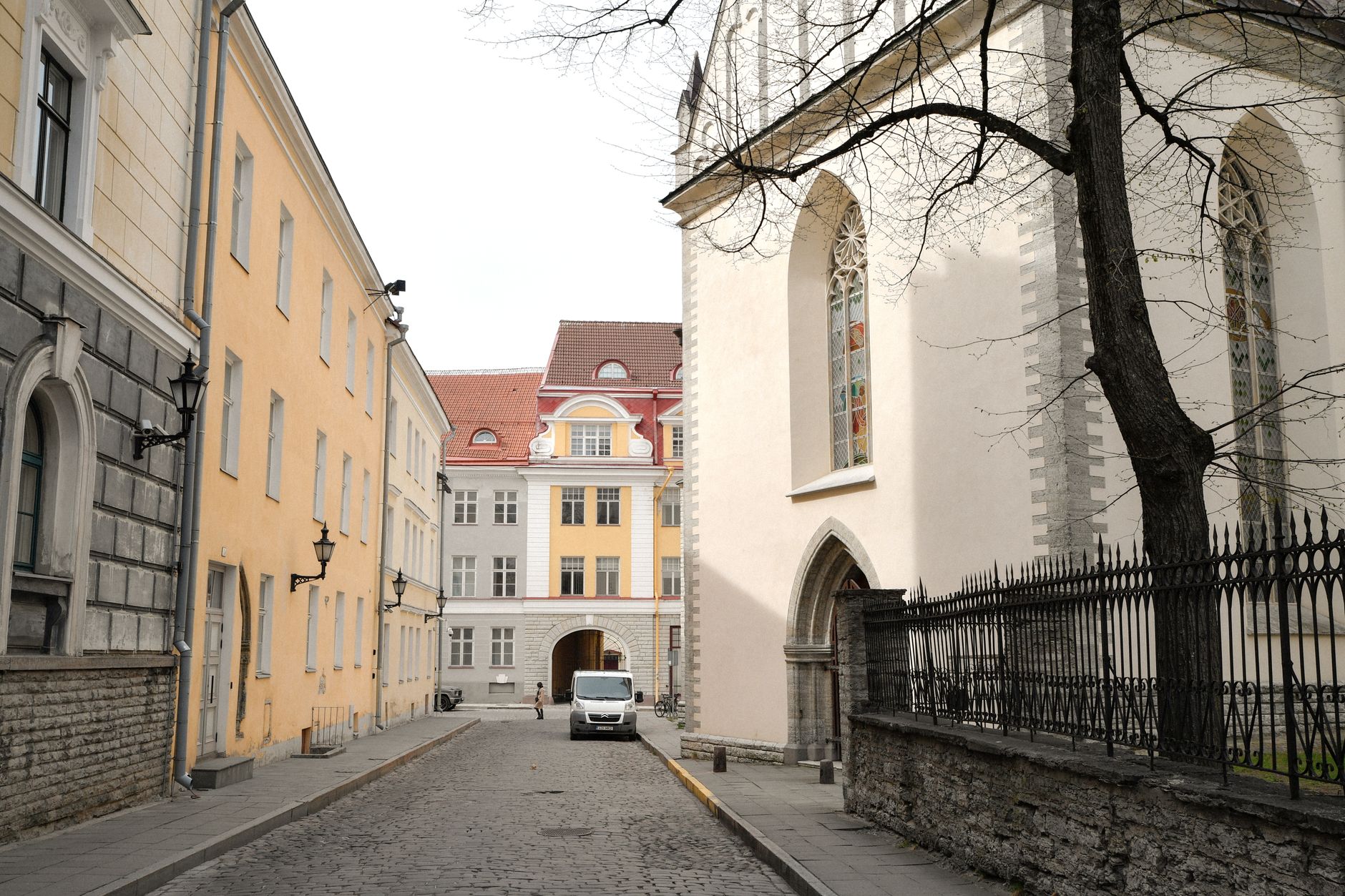
Photo by Margo Evardson
Müürivahe Street runs alongside a long section of the city wall, with towers rising at intervals behind it. Its roughly 200-meter wall stretch is ideal for portraits, detail shots, and vertical images. Aim upward from close to the stone so the wall feels tall rather than distant.
Late-afternoon light can be awkward here because the lanes fall into shadow early. That isn’t a reason to leave. Overcast conditions suit the weathered limestone, and rain darkens the cobbles until they reflect window light. For social posts, a person in a plain coat walking away from the camera gives scale without turning the historic setting into a costume backdrop.
No tripod, no problem.
Town Hall Square is useful when you want human activity in the frame. Instead of shooting straight across the open plaza, stand near an edge and use an awning, lantern, or stone arch as foreground. The old Town Hall’s tower rises cleanly above the square, but it needs a little breathing room around it.
Baltic Sunset Views Beyond the Walls
Tallinn’s medieval center is compact, so you can leave the Old Town and reach open water before sunset. Linnahall, the vast concrete structure beside the harbor, gives you broad steps, sea views, and a tougher visual mood than the warm roofs behind Toompea. Its geometry can work especially well with a low sun.
The setting is not polished. Broken surfaces, graffiti, and exposed concrete are part of the picture. Keep them if you want contrast between Soviet-era architecture and the Baltic horizon. Crop tightly if you only want the sea, the sun, and a lone figure on the steps.
For clearer skies, check cloud cover rather than only the sunset time. A thin layer near the horizon catches color. A dense blanket can erase it. On windy evenings, waves and ferry wakes add movement, although you’ll need a faster shutter speed if you want sharp water texture.
Sunset arrives late in Tallinn’s summer. Around June and July, evening light can remain usable well after 22:00, so plan dinner after your photo walk. In winter, the sun sets earlier and the blue-hour window is shorter, yet the low sun can produce softer, more forgiving tower light.
A Practical Route for One Photo-Focused Day
Begin at Kohtuotsa shortly after sunrise. The rooftops are still, and the soft light helps you capture the city before its streets fill. Then walk to Patkuli for the wall-and-tower panorama while the platform remains quiet.
After breakfast, photograph Vene Street, Müürivahe, and Town Hall Square. These lanes benefit from slower work, so leave enough time to wait for clear corners and better pedestrian spacing. If St. Olaf’s tower is open, climb it when the light is high and less flattering at street level.
Return to Toompea in the late afternoon. Choose Patkuli for sunset, then walk down toward the harbor for blue hour at Linnahall. Carry spare battery power, since cold Baltic wind drains phones and mirrorless cameras faster than expected.
The Frame Tallinn Gives You
Tallinn becomes more photogenic when you stop chasing every landmark at once. Let one tower dominate, use a street or wall to guide the eye, and wait for the low sun to give the stone a warmer edge.
The strongest Tallinn photo spots are close enough to connect on foot, yet each asks for a different pace. Save Patkuli for a clear summer evening, then watch the final light settle behind the wall’s round towers.
