
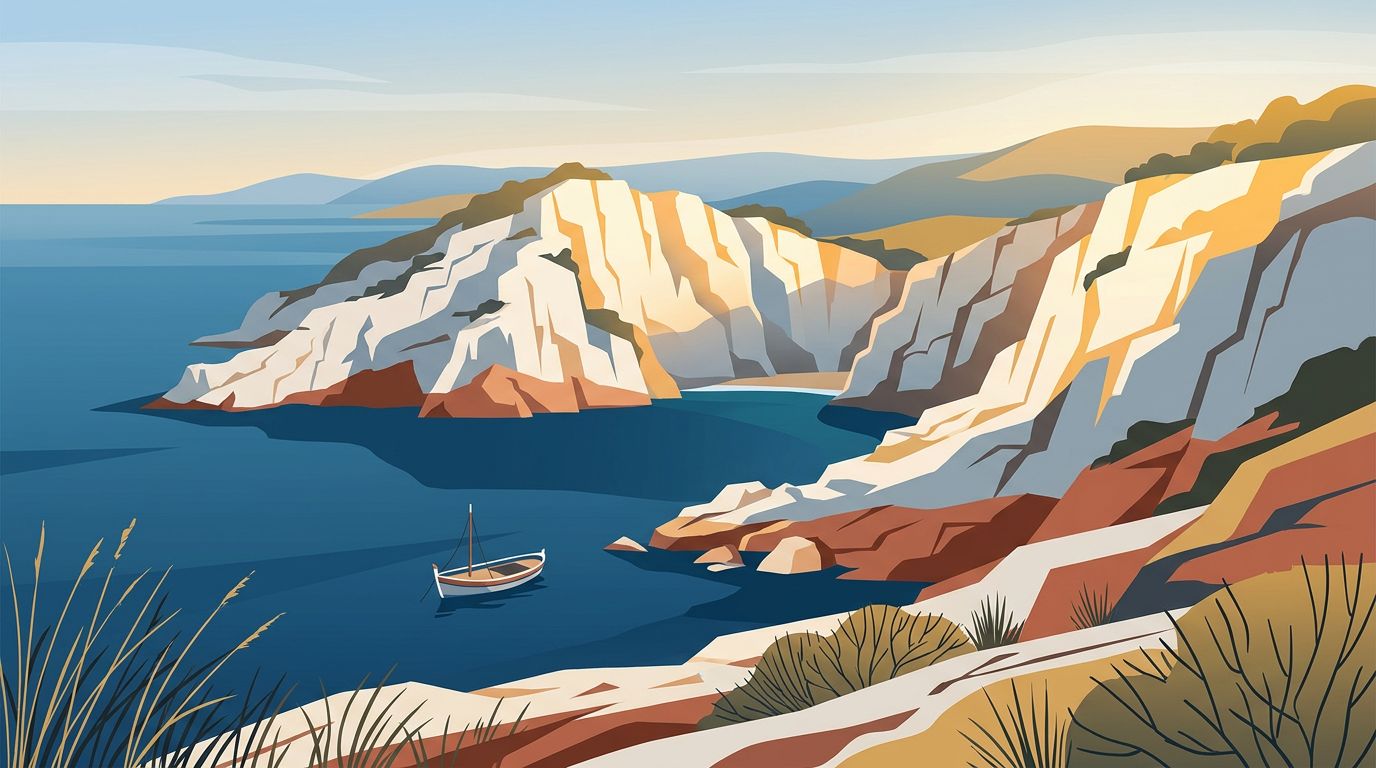
At 9 a.m., the Calanques can look almost too bright to photograph. Successful Marseille photography depends on reading that hard Mediterranean light before it flattens the limestone and turns the sea into glare.
White cliffs, small fishing ports, and steep streets give you plenty to work with. However, the strongest frames usually come from patience, careful timing, and a plan that survives wind and access restrictions.
Start with the light, then choose the cove.
How Mediterranean Light Shapes Marseille Photography
The sun has a sharp edge. In Marseille, it rises quickly above the sea and bounces off pale rock, boats, windows, and water.
For Marseille photography, the useful hours are often earlier and later than you expect. Midday can still work, but it calls for a different approach.
Use sunrise for texture and depth
Arrive before sunrise when you can see the shape of the terrain without harsh contrast. Low side light reveals the gouges in limestone, the dry grasses around a trail, and the ripples that disappear later in the day.
Because limestone faces can sit in deep shade while the water receives direct sun, a single frame often holds more contrast than your camera can keep without clipped highlights or heavy foreground shadows. Shoot in RAW, check your histogram, and bracket exposures when the cove contains both shadow and open sea.
Morning also brings fewer people to popular viewpoints. That matters at Sugiton and En-Vau, where a lone figure can add scale, but a crowded trail can quickly pull attention from the cliffs.
Protect highlights on white rock
Cloudless noon is demanding. Rather than forcing a wide coastal view, look for compressed details: a fishing boat beside a dark quay, a cave entrance, or wave patterns against the rock.
Expose for the brightest limestone, then lift shadows later if needed. A circular polarizer can reduce water glare, although it can produce an uneven blue sky on an ultra-wide lens. Keep it subtle.
On bright days, a slightly darker file often holds far more recoverable detail than a white cliff with no texture left.
Wind matters as much as light. The mistral can clear haze and sharpen distant contours, yet it can also shake a tripod and throw salt onto your front element.
Where Marseille Photography Earns Its Steps
The Calanques run between Marseille and La Ciotat, cutting pale limestone into narrow inlets above vivid water. The official overview of Marseille’s Calanques is useful for getting your bearings before choosing a route.
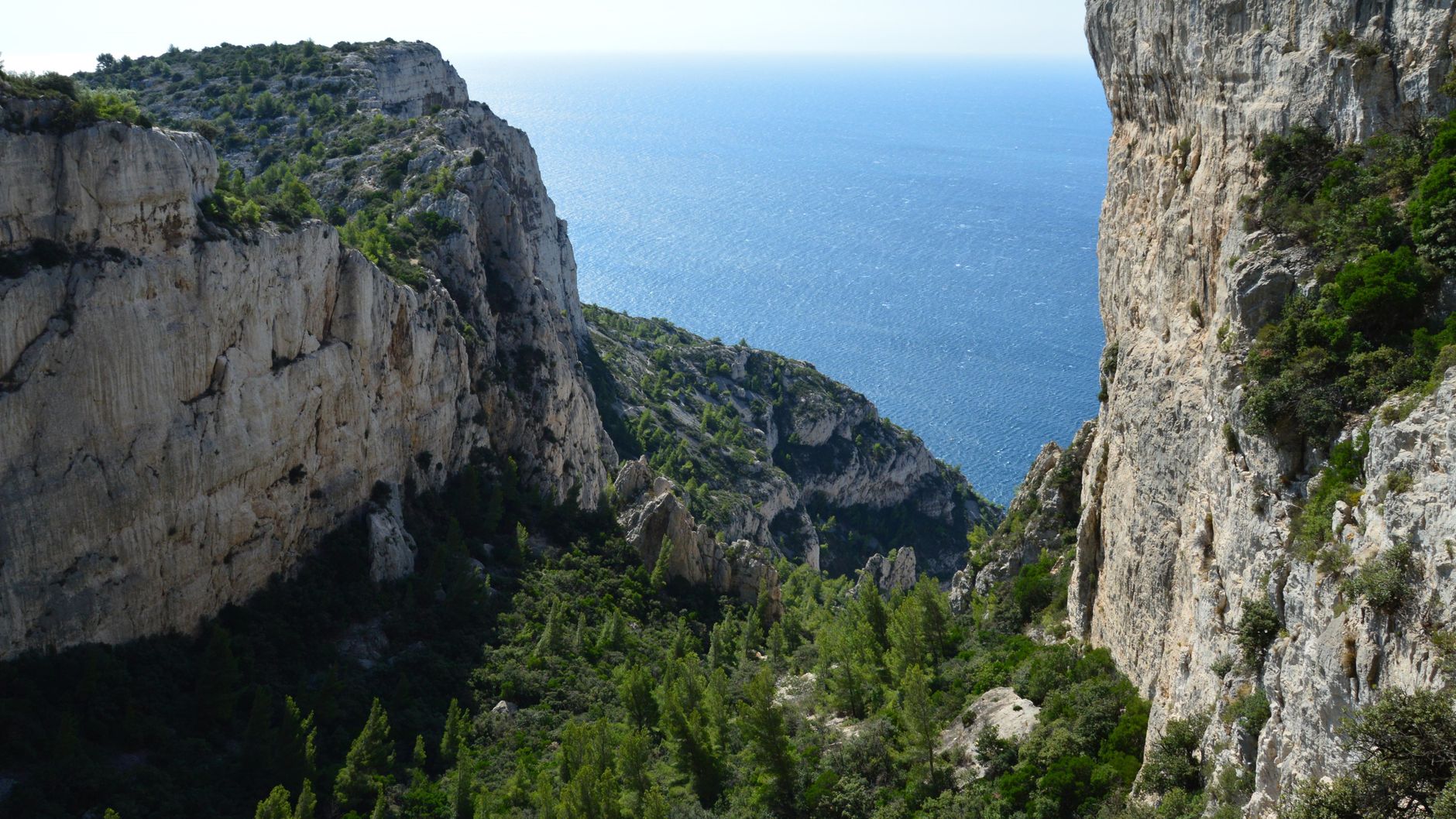
Photo by SlimMars 13
Sugiton and En-Vau reward a wide frame
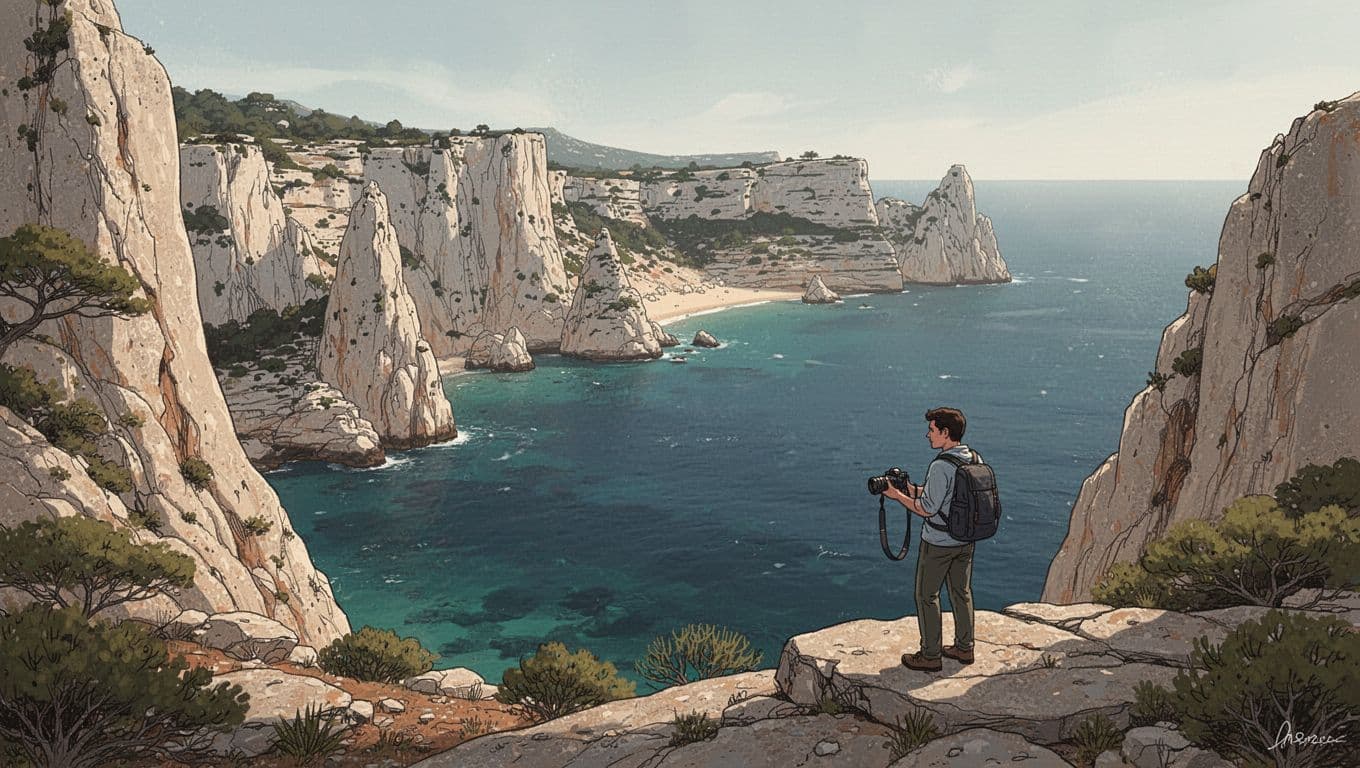
Calanque de Sugiton gives you broad shelves of rock, clear water, and elevated viewpoints that suit a 16-35mm or 24-70mm lens. The view toward the water works best when the foreground has a crack, shrub, or ledge that leads into the cove.
En-Vau feels more enclosed. Its tall walls create a dramatic frame around the water, especially when you keep the camera low and let the cliff faces rise through the image. A longer focal length can isolate a sunlit section of rock or a small boat crossing the opening.
Watch your footing. Loose limestone and steep paths are a poor place to step backward while checking a screen.
Sormiou, Morgiou, and Cap Croisette offer variety
Sormiou has a wider beach and a more open coastal feel. Work along the edge of the bay to include shallow water and the layered hillside beyond it. Early light is kinder to the pale sand and white structures near the shore.
Morgiou is tighter and more intimate. Its boats, stone walls, and sloping hills make a strong case for a 50mm or short telephoto lens. Instead of photographing every element, choose one visual relationship, such as hulls against rock or a bright wall beneath a shadowed ridge.
Cap Croisette and the road near Les Goudes offer exposed sea views. Go there when the forecast promises clean air, because distant islands and headlands need contrast to hold their shape.
Build a Marseille Photography Day Around Time
A good itinerary leaves room for hard light, tired legs, and changing access conditions. Carry water, a charged phone, and a small cloth for salt spray.
A mid-August light-window anecdote
On August 16, 2026, Marseille’s sunrise fell at about 06:44 and sunset at about 20:41. That one date left time for a dawn cove, a long midday break in town, and a blue-hour session at Vieux-Port after dinner.
The gap matters. After a sunrise hike, don’t spend the brightest hours repeating the same wide view. Use noon for editing, scouting harbor angles, or photographing shaded details in Le Panier and the Old Port.
A full-frame camera isn’t required. A stable stance, clean lens, and a clear idea of the light usually matter more.
At blue hour
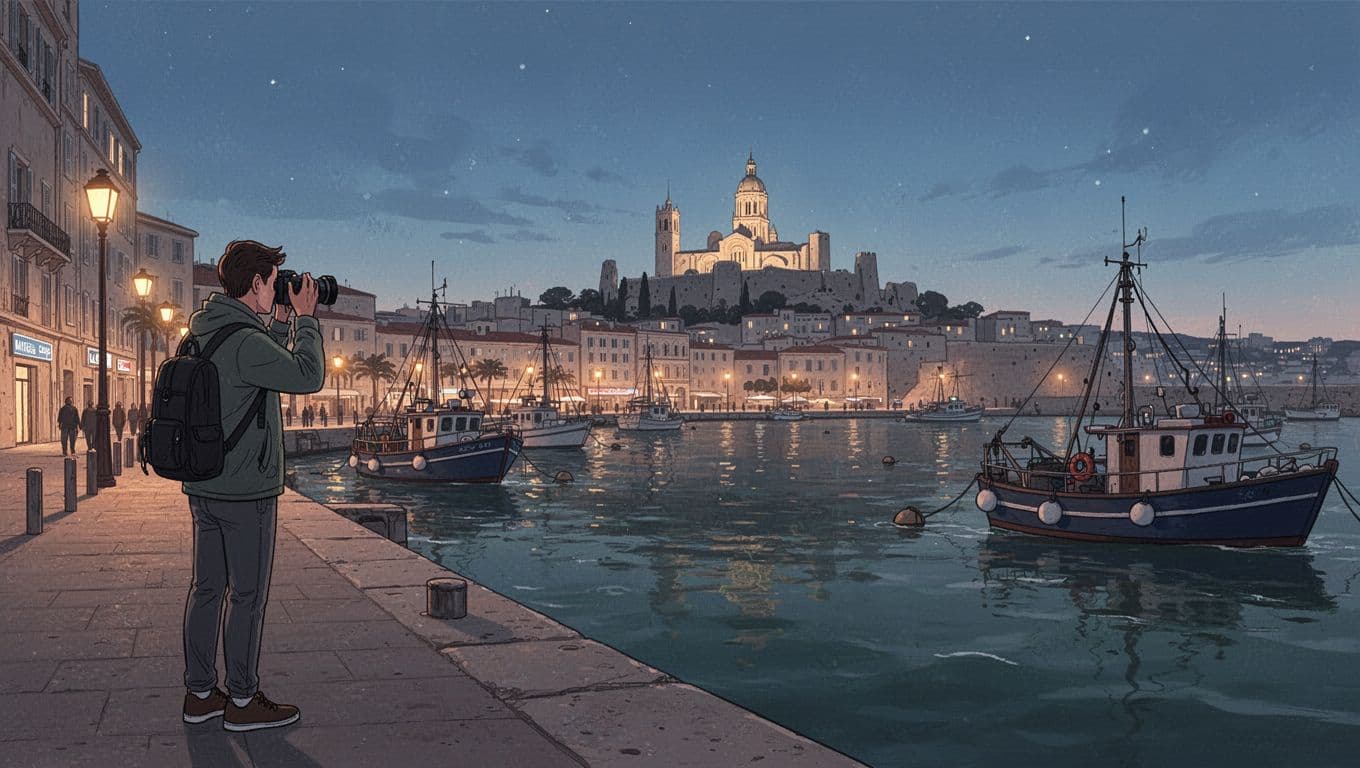
After sunset, the city shifts from white glare to blue water and warm lamps. This is the time for boats at Vieux-Port, reflections near the quays, and the silhouette of Notre-Dame de la Garde above the rooftops.
Bring a compact tripod if you want crisp architecture at lower ISO. If you shoot handheld, use image stabilization and accept a little grain rather than pushing a slow shutter speed too far.
For water movement, test a few exposures rather than assuming a long exposure will improve the frame. A two-second shutter can preserve texture, while 15 seconds may turn the harbor into a smooth surface that loses its character.
Check Calanques Access Before Packing Your Camera
Summer access is not a minor detail. Between June 1 and September 30, fire-risk decisions can restrict entry to the massif, and red-risk days prohibit land access for the full day.
Always check the current Calanques access rules before you leave. A screenshot from yesterday is useless if conditions change overnight.
Road closures can disrupt sunrise plans
During the 2026 summer season, the roads to Sormiou, Morgiou, and Callelongue have scheduled restrictions for cars, including daily closures from June 12 through August 30 between 07:00 and 19:00. Morgiou and Sormiou also have weekend restrictions in September.
That schedule can complicate sunrise and sunset photography, even when the light is perfect. Plan public transport, a taxi drop-off, cycling, or a legal walking route rather than assuming you can park beside a cove.
Sugiton also used a free reservation system on busy 2026 dates. Confirm the current requirement before committing to a shoot.
Photograph without damaging the place
The Calanques look rugged, but their vegetation is fragile. Stay on marked paths, don’t move rocks for a foreground, and don’t climb into closed areas for a higher angle.
The park’s land-access regulations cover rules that matter beyond photography, including protected areas and seasonal restrictions. A wider lens is never a reason to cross a barrier.
Marseille Photography Beyond the Cliffs
The Calanques may be the headline, yet Marseille’s smaller scenes often make the most personal photographs. Vallon des Auffes has boats, weathered cabins, and a bridge that frames the inlet. The Corniche gives you changing perspectives toward the islands and open water.
Use the harbor for scale and story
At Vieux-Port, avoid placing every boat in the center. Stand near the edge of a quay and use masts, ropes, and reflections as layers. Notre-Dame de la Garde can sit high in the frame, small but unmistakable.
Marseille photography gets stronger when you pair its grand scenery with human-scale details. A chipped blue boat, a sun-bleached shutter, or a single gull on a harbor post can carry the same Mediterranean character as a sweeping cliff view.
Final Frame
Return to one location instead of racing through five. The same cove can look hard and silver at noon, then soft and dimensional near sunset.
Keep your plan flexible around access rules and wind, but be deliberate once you arrive. Leave the last 10 minutes for the harbor water turning cobalt beneath Notre-Dame de la Garde.
